Pedal feedback and a warning light mean different things
- ABS means anti-lock braking system. It helps prevent wheel lock during hard braking so you can keep steering.
- First, separate pedal feedback during a hard stop from a dashboard warning. Pulsing during ABS activation is normal.
- An ABS light that stays on after startup's bulb check or comes on while driving calls for qualified service.
A pedal pushing back against your foot and a lamp glowing on the dashboard give you different information. We'd first separate those two observations, because one can be the system actively helping you brake, while the other can flag a system issue.
Why keeping the wheels turning helps you steer
A wheel can stop turning while your vehicle keeps moving forward. During forceful braking without ABS, the brake pads can grip harder than the tires grip the road, leaving the vehicle sliding and making it very difficult to steer. That's the lockup ABS helps prevent.
Sensors monitor wheel speed, and a computer-controlled hydraulic system rapidly pulses brake pressure when you brake hard. Those automatic adjustments help preserve control while you're still braking, including the ability to steer around an obstacle. You can apply strong braking force while the system manages the pressure changes that help prevent skidding.
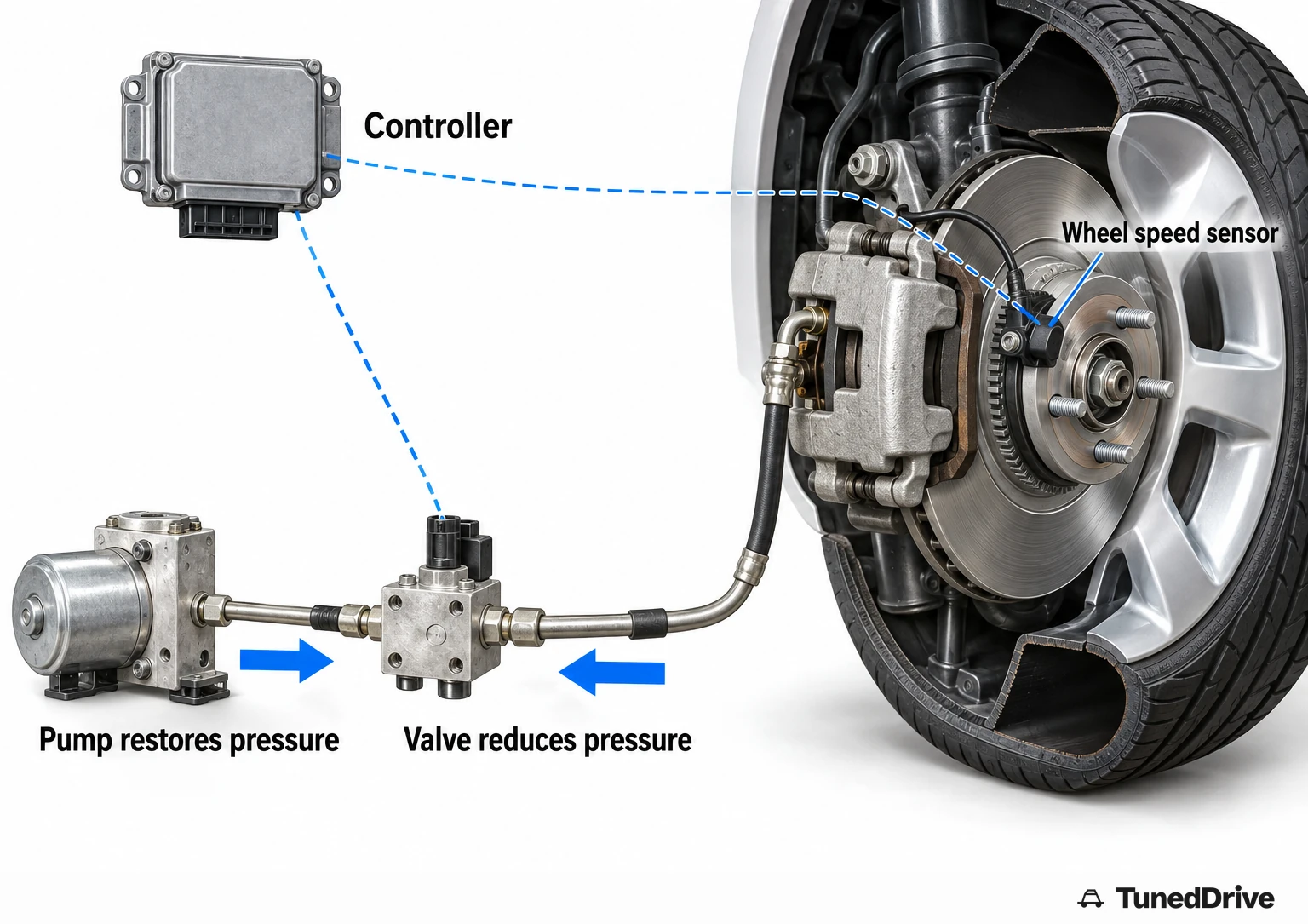
The four-wheel system described in Mazda's ABS explanation (opens in a new tab) uses speed sensors, a controller, valves and a pump. Sensors at each wheel measure how fast it rotates. The controller receives those readings and compares each wheel's speed with the vehicle's speed.
If a wheel slows too quickly or stops rotating, the controller signals a valve. The valve reduces pressure in that wheel's brake line to help prevent lockup. Once the wheel regains traction, the pump restores pressure, and the valve releases pressure as the cycle continues.
That process repeats multiple times per second until the vehicle stops. The sensors supply the information, while the controller and hydraulic components make the braking adjustments. This is what people mean when they say ABS pulses the brakes automatically.
You may also encounter the names anti-lock brakes or anti-skid braking system, and some brands use their own terminology. Electronic stability control, abbreviated ESC, and traction control, abbreviated TC, are separate systems. When you're checking your vehicle's equipment, look specifically for its ABS information.
Confirm the equipment in your vehicle
Does every car have ABS? Mazda describes it as standard on most US passenger vehicles, trucks and SUVs made after September 1, 2011. For your own vehicle, confirm the equipment through your owner's manual or dealer if you can't find an ABS indicator on the dashboard.
As a Mazda-specific availability example, the company says ABS is standard on all its new vehicles, naming the CX-5, CX-30, CX-90 and CX-70 PHEVs. That gives you examples within Mazda's range, while the manual-or-dealer check establishes what your particular vehicle has.
Safety-system availability differs by model and market. For Mazda availability details, contact your local Mazda dealer. Before applying the emergency-braking technique below, read your vehicle's owner's manual for its system details, limitations and warnings, so the guidance matches the equipment you're using.
Your foot holds pressure while ABS does the pulsing
During an emergency stop with ABS, press the brake pedal firmly and maintain continuous pressure while steering toward safety. Don't pump the pedal, because ABS performs the rapid pulsing automatically (opens in a new tab). Your foot supplies sustained pressure while you focus on directing the vehicle.
The system engages automatically when you brake forcefully or, in some cases, when its sensors detect tires skidding across a wet or loose surface. That automatic response is how ABS takes over the rapid brake-pressure adjustments during the stop.
Stay attentive and drive carefully throughout the maneuver, because ABS and other safety systems can't prevent every accident. Keep your attention on the road and on controlling the vehicle instead of relying on the technology to prevent a collision.
What normal activation can feel and sound like
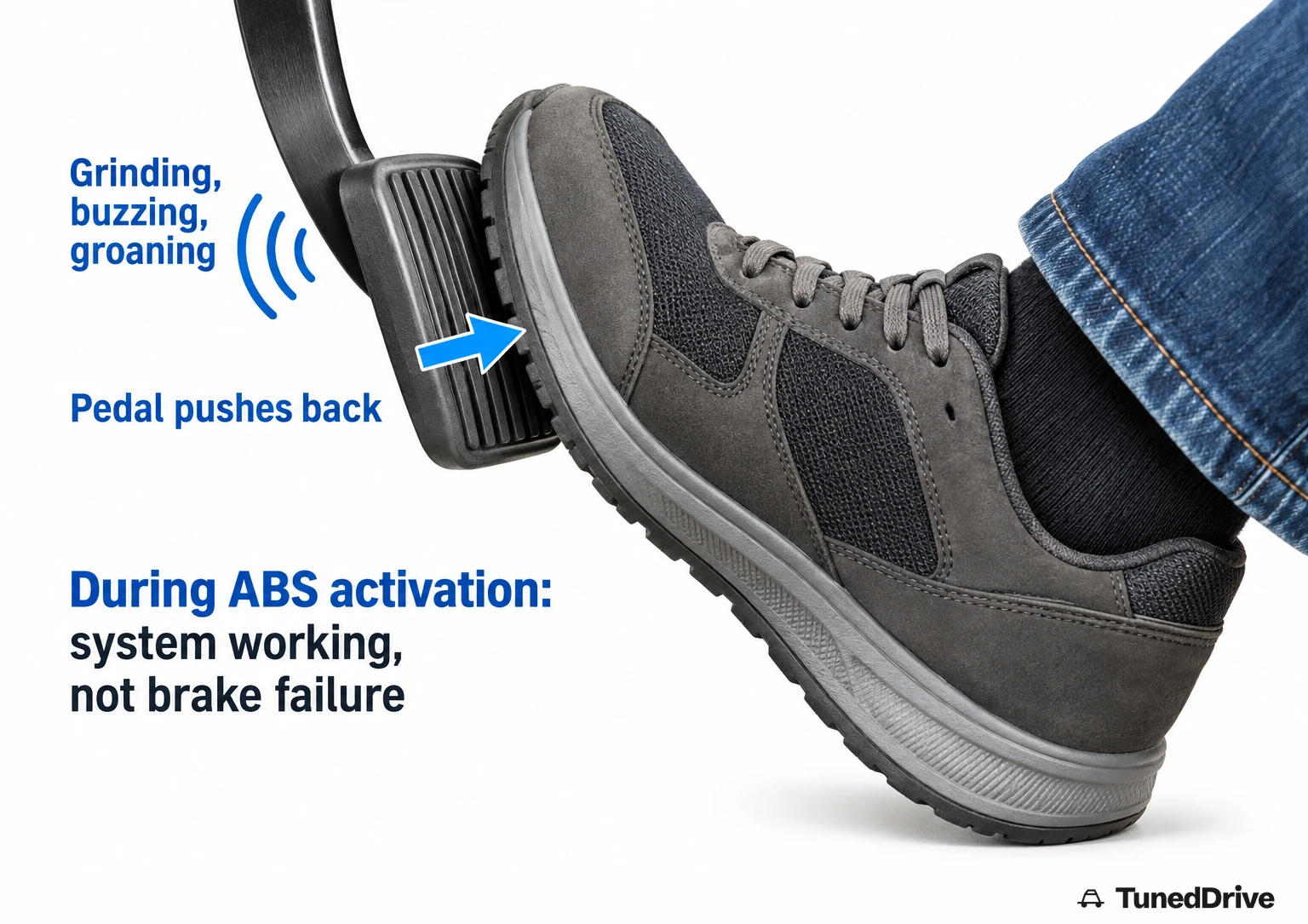
Under firm braking during ABS activation, you may feel rapid pulses through the pedal, almost as though it's pushing back against your foot. That's feedback you can feel while the system is intervening. The sensation can be part of the emergency stop even though you're maintaining steady pressure.
You may also hear grinding, buzzing or groaning during that activation. In these conditions, the pedal feedback and operating sounds signal that ABS is working. This reassurance applies to the sounds and sensations accompanying ABS activation during the described braking conditions.
Stopping distance still depends on the surface
Four-wheel ABS can shorten stopping distance on dry pavement. Mazda describes it as most beneficial on wet or slippery roads, but says it may increase stopping distance on gravel or loosely packed snow. Keep those surface conditions attached to any claim about stopping sooner.
ABS can also help maintain traction and reduce skidding on wet or gravel surfaces. On gravel, that benefit can coexist with a longer stopping distance: retaining steering control and stopping in less space are different outcomes. The ability to influence your direction still matters while you're braking.
Mazda cites a 2009 NHTSA study using data collected between 1995 and 2007 that found reduced involvement in non-fatal crashes, collisions with pedestrians and collisions with vehicles on wet roads. It also reports no improvement in the rate of fatal run-off-road collisions. Those findings describe specific crash outcomes, with benefits that differed by the situation.
When the dashboard light calls for service
While parked at startup, notice what the ABS warning light does when you turn the vehicle on. Mazda's general guidance describes initial illumination as a bulb check. The useful observation is whether that initial light goes out afterward, or whether you noticed it coming on while driving.
ABS includes a self-diagnostic feature that checks for faults or malfunctions. A warning can relate to several potential issues, including a malfunctioning ABS module, low fluid reservoir levels, or wheel-speed sensors that are malfunctioning or obstructed. That range of possibilities is why the light calls for diagnosis.
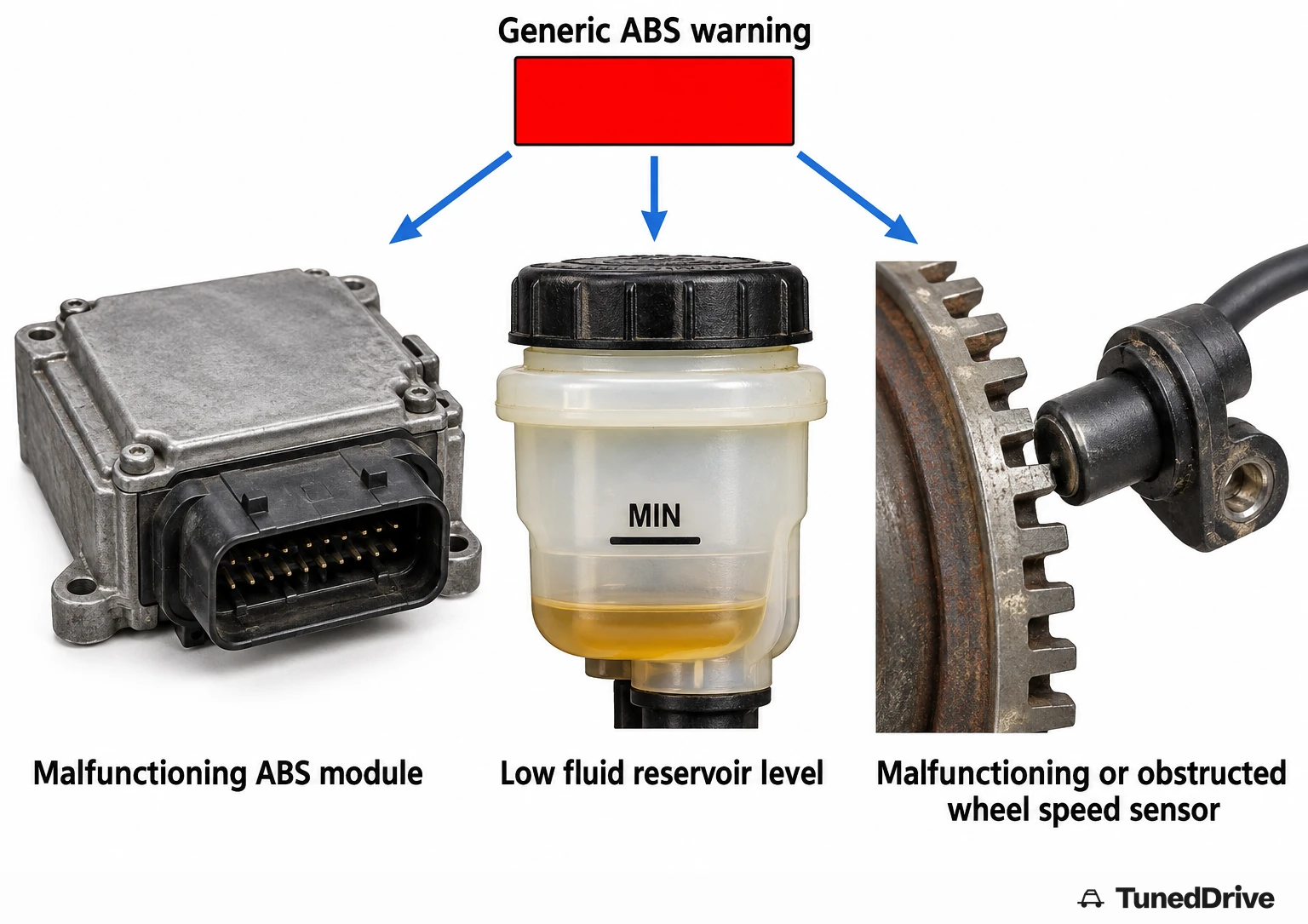
If the light remains on after the bulb check or illuminates while you're driving, contact a qualified mechanic for service, following Mazda's ABS warning-light guidance (opens in a new tab). Tell them which behavior you observed so they can investigate the system and check that ABS is working properly.
More in this category