A soft pedal means park it and get it checked
- A soft or spongy pedal means something in the brake system is wrong, and the car isn't safe to drive.
- Air in the hydraulic system is one of the most common causes. Fluid leaks and a worn master cylinder can do it too.
- No visible leak and no warning light? It still needs immediate attention.
- Park it and have a mechanic inspect it right away.
Your foot is telling you the pedal no longer pushes back the way it should, and that change matters more than how mild it feels. We'd stop driving the car now instead of waiting to see if it gets worse, because a small leak can turn into a large one with a single press, and a full blowout leaves you unable to stop at all.
How the pedal misbehaves can point the mechanic in the right direction, and there may be more than one cause. Pick the closest match below.
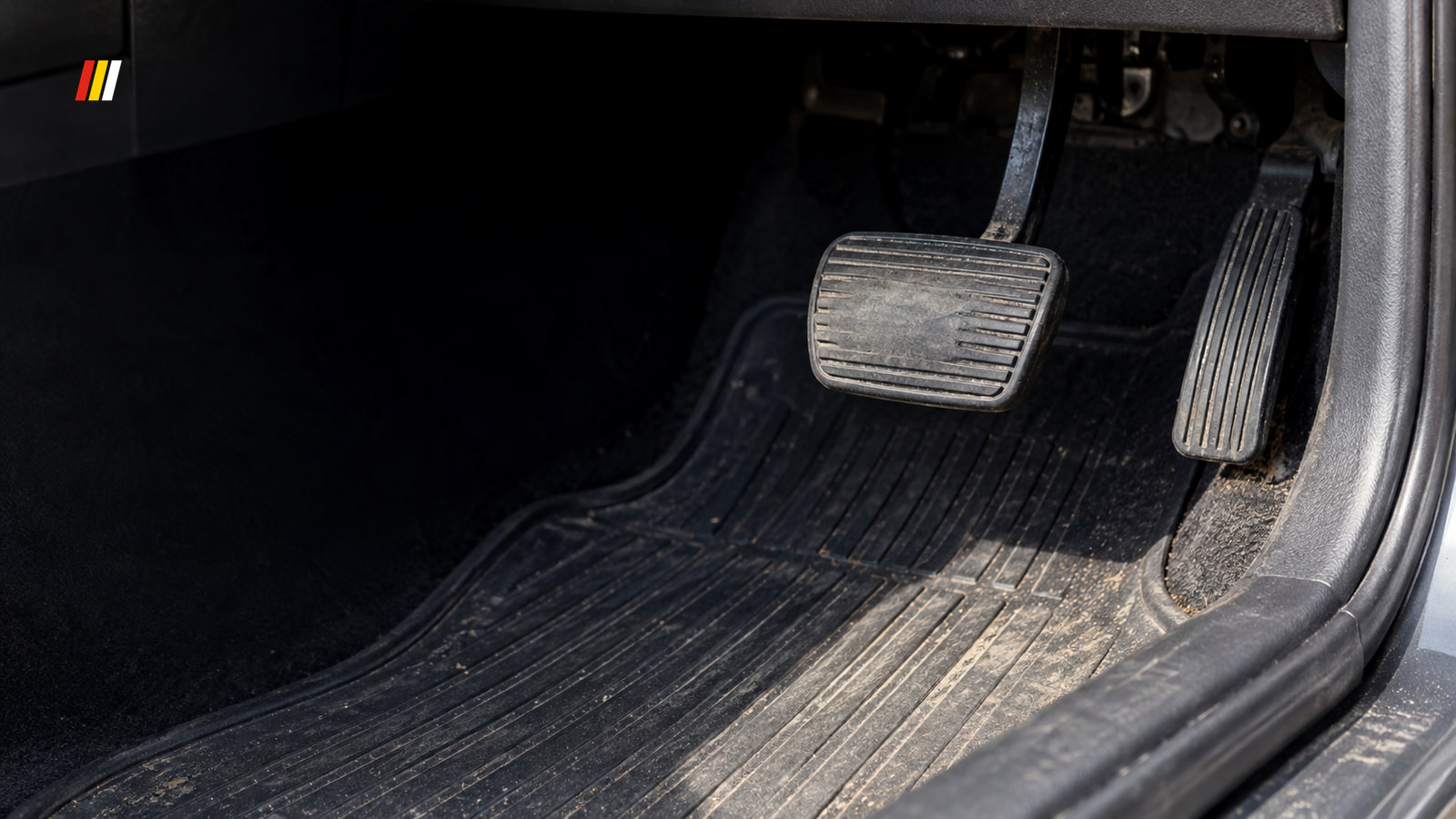
The pedal sinks toward the floor
Healthy brakes push back the moment you press them. When the system can't hold pressure the way it should, the pedal sinks with little resistance.
Lost fluid is one way that happens. Steel brake lines can rust through in small holes, and the fluid that leaks out takes hydraulic pressure with it, so the pedal goes low, soft or all the way to the floor.
A rusted disc brake caliper can leak past its internal piston seal and do the same, sometimes with the car pulling to one side under braking.
The master cylinder is another suspect. It holds the fluid and generates the pressure for the front and rear brakes, and it can leak externally or internally through a damaged piston seal. Either way, pressure drops and the pedal can fail and go to the floor.
Pumping the pedal makes it firmer
If you've had to pump the brakes repeatedly to slow down or keep the car from creeping ahead, that points to a brake problem, possibly a fluid leak.
A pedal that firms up after rapid pumping fits air in the system too, since air keeps the fluid from flowing properly.
On cars with rear drum brakes, there's a third possibility: rear shoes that aren't adjusting as they wear. Checking shoe wear and adjusting them is work for the mechanic.
Because one symptom fits all three causes, a firmer pedal after pumping is a clue to pass along, not a fix or a green light to drive.
The brake warning light is on, or it isn't
A brake warning light can mean several things, from low fluid to a parking brake that's still on. It can also flag a problem with brake fluid pressure, which is why the whole brake system deserves a check when it lights up.
A dark dashboard doesn't let you off the hook. With no visible leaks and no warning light, a worn or leaking master cylinder is still possible, and the car needs maintenance immediately.
It went soft after brake work or hard braking
Air can get trapped in the system if it isn't bled properly after a part is replaced. If the softness started right after a repair, tell the shop that did the work exactly what changed.
Heat is another way air gets in, because an overheated caliper can boil the brake fluid. Brake fluid also absorbs moisture over time, and old fluid can boil and cause a low pedal.
Contaminated fluid can soften the pedal as well. Rust or debris in the system can contaminate it, and defective components can have seals that change shape, swell or leak.
What the mechanic has to find
The goal is to identify and repair the underlying problem as quickly as possible, and the inspection may turn up more than one cause.
- Air in the brake lines
- Leaking steel brake lines or disc brake calipers
- A master cylinder leaking externally or past its piston seal
- Leaking wheel cylinders, on cars with rear drum brakes
- A valve not working properly in the ABS modulator, on cars with anti-lock brakes
- Contaminated or moisture-laden brake fluid
Flushing the fluid, also called bleeding the brakes, pushes air out of the system and replaces fluid that has absorbed moisture, so it may be part of the repair. We'd still want the shop to find out why the air or pressure loss happened, since a leak left in place can grow.
Get the car inspected by a mechanic without driving it there. Tell them how the pedal behaves and whether it began after brake work, since air can be left behind when a part is replaced.
Jot these down before the car is inspected.
Tick what applies and add details; the note above fills in as you go.
A firm pedal is the result you're after
After the repair, the pedal should feel firm and resist as soon as you push down, with the brakes engaging on the first press.
If it needs pumping again or sinks under your foot, that's the same warning sign as before, so park the car and have it rechecked right away.
Preferred source
See more TunedDrive on Google
Select TunedDrive in Google’s source preferences. It takes a few seconds and costs nothing. Our car news, reviews and fixes become more likely to appear in your Top Stories, and AI Overviews can mark them as preferred.
More in this category