Only Maps is misbehaving
- Park somewhere safe before you check or change anything.
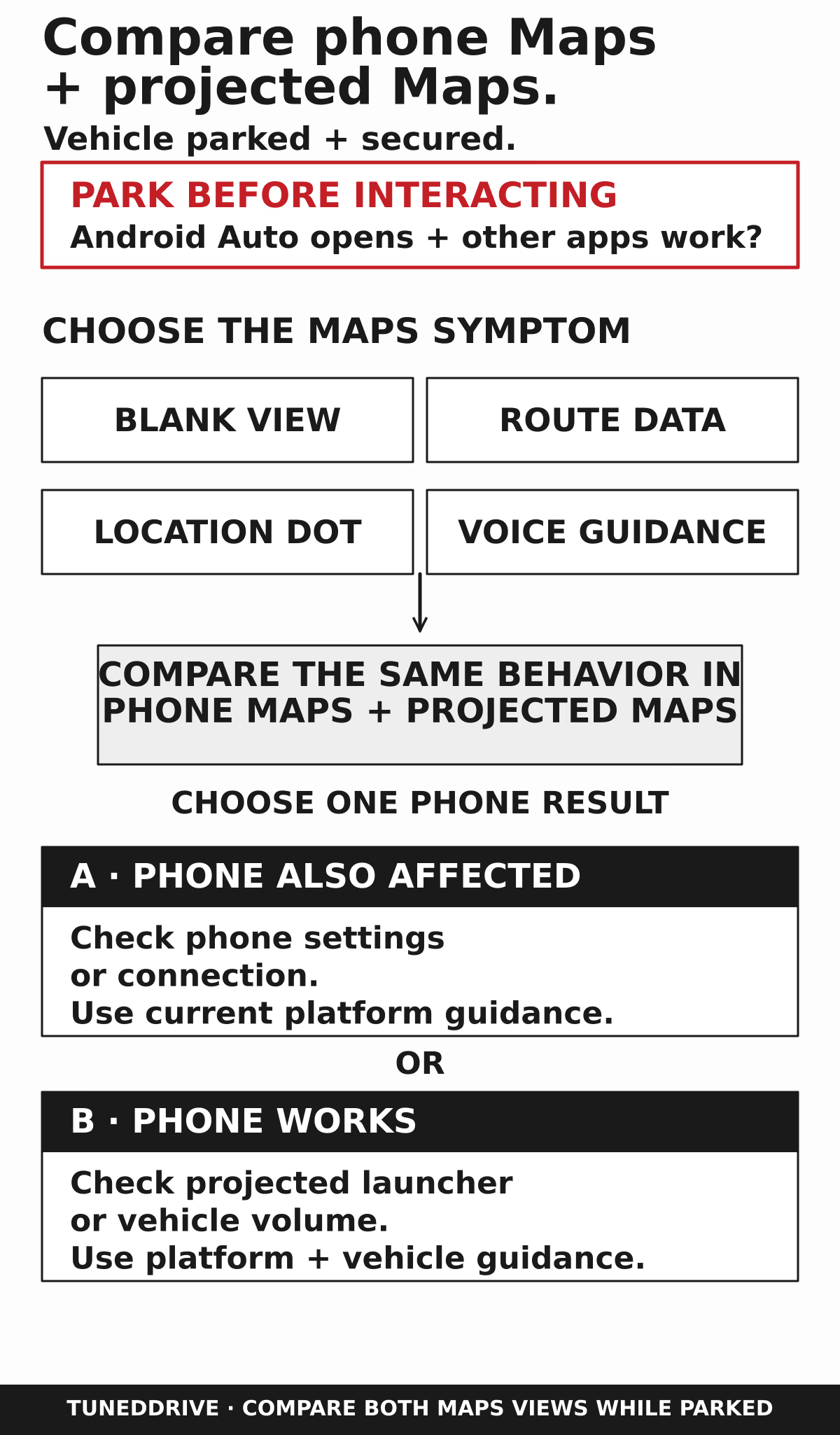
- Try the same thing in Maps on your phone with the car disconnected. That tells you whether to fix Maps on the phone or report a problem with Maps on the car display.
- Blank, frozen or crashing? Restart the phone, update Maps, force stop it, then clear its cache.
- Wrong location? Turn on Location and let Maps use precise location. Silent directions? Check the Maps Sound setting, then the car's navigation volume.
When music and other apps keep working but Maps won't behave, start by pinning down where it fails. We'd run the same check on your phone, disconnected from the car, before changing any settings.
These checks cover Android Auto running from your phone while it stays connected and the Maps problem repeats. Maps built into a vehicle, including Android Automotive OS systems, can have different controls. If the connection drops or other projected apps fail too, skip to the last section.
Compare Maps on the phone and car display
Change one setting at a time and repeat the same check, so you can tell whether it helped.
- Disconnect the phone from Android Auto and open Maps on it. Check the thing that failed: the map drawing, a familiar public destination loading, your position showing or guidance making sound (for sound, use the parked test under silent directions).
- Reconnect while parked and repeat the same check on the car display. Put the vehicle in Park before typing a destination (opens in a new tab).
- Note the difference and any exact error message, and whether you have a missing icon, a blank view, a frozen map or an app that closes. If it fails on the phone too, follow the phone-side checks below. If it works on the phone but fails on the car display, do the matching basic checks and keep the comparison for Android Auto feedback.
Maps is missing, blank or frozen
On Samsung phones, apps you haven't used in a while can be temporarily disabled (opens in a new tab) and disappear from the Android Auto launcher. Open Maps on the phone, then check the launcher again.
If the icon keeps disappearing on a Samsung Galaxy, open Settings → Battery and device care or Device care → Battery → Background usage limits (opens in a new tab) and check Sleeping apps and Deep sleeping apps. If Maps is listed, choose More options → Remove apps, select Maps and tap Remove. Sleeping apps can run in the background again once you use them, while deep sleeping apps only work when you open them. Menu names vary by software version.
If Maps opens but stays blank, freezes or closes, work through Google's app-fix steps (opens in a new tab) in this order and test after each one. We'd stop at Clear cache and leave Clear storage (or Clear data) alone, because clearing the cache only removes temporary data, while clearing storage permanently deletes the app's data.
- Restart the phone. Reopen Maps, reconnect while parked and repeat the action that failed. If it works, stop there.
- Open Google Play → profile icon → Manage apps & device → Updates available → See details (opens in a new tab) and update Maps if offered. If the failure only happens on the car display, check for an Android Auto update too. Test again.
- If Maps still freezes or crashes, open Settings → Apps → Maps → Force stop, reopen Maps and repeat the check on the disconnected phone. Menu labels can vary.
- Still there? Open Settings → Apps → Maps → Storage & cache → Clear cache (opens in a new tab), reopen Maps and test again. The path can vary by phone.
Places or routes won't load
While parked, type a destination on the car display, then search for the same place in Maps on the disconnected phone. Use a search for this, since the map on screen may already be stored on the phone. If typing works but a spoken request fails, use Android Auto's voice-command help (opens in a new tab) instead of clearing Maps data.
If search works on the phone but not on the car display, reconnect once while parked and search again. If it still fails, save the result for Android Auto feedback.
If search fails on the phone too, try loading a new webpage, because Maps needs a stable internet connection for its online features (opens in a new tab). If that fails as well, get mobile data or a working Wi-Fi internet connection back and retry Maps. If the internet works but Maps still can't load the destination, go back to the restart and update checks and note the exact loading error.
Heading somewhere without mobile data? Download an offline map first. In Maps on your phone, tap your profile picture → Offline maps → Select your own map, choose the area and tap Download. It has to cover the whole route, and offline driving directions (opens in a new tab) don't include traffic information or alternate routes. If the route leaves the downloaded area, get internet access back or plan another safe way to navigate.
Your location is wrong or stops updating
A gray or missing dot means Maps can't find your current position and may be showing your last location, and a wide blue circle means the position is uncertain. Garages and tall buildings can interfere with positioning (opens in a new tab), so start with the phone's settings and your surroundings.
Turn on the phone's Location setting if it's off, then tap the location button in Maps on the phone. If the blue dot appears near where you're parked, reconnect and compare the car display.
Next, touch and hold Maps → App info → Permissions → Location (opens in a new tab) and allow access while using the app. Once access is allowed, turn on Use precise location too, if your phone offers it.
In a garage or among tall buildings, move somewhere with a clearer view of the sky only if it's safe and practical, and park again before you retest. If the blue circle shrinks, check the result before changing more settings.
Still inaccurate? Devices with Google Play services also have Location Accuracy, which is separate from Maps' precise-location permission. It can use Wi-Fi, cellular and sensor information to improve the estimate, and turning it on lets Google periodically collect wireless-signal and sensor location information using rotating identifiers. If you accept that tradeoff, turn on Settings → Location → Location services → Location Accuracy (opens in a new tab) and retest. On Android 11 and earlier it may be under Location → Advanced → Location Accuracy.
On a Samsung Galaxy, power-saving features may restrict location services and background activity (opens in a new tab). If the problem starts when the screen turns off or power saving kicks in, check those restrictions and the sleeping-app lists above.
Directions are silent
Music can play normally while directions stay silent, and some vehicles have separate navigation, media and voice volume controls (opens in a new tab). Check that Maps on the phone can speak first, then the vehicle's navigation volume.
- Parked, with navigation started, make sure the phone isn't muted and turn up its media volume. In Maps, tap Sound (opens in a new tab). Alerts leaves out turn-by-turn directions, and Mute silences guidance.
- Disconnect Android Auto. In Maps on the phone, open profile picture → Settings → Navigation (opens in a new tab). For a test through the phone's speaker, turn off Play voice over Bluetooth. Set Guidance volume, then tap Play test sound.
- If you hear a chime instead of words, keep Maps open on the phone with a working internet connection so the voice directions can download or update, then replay the test sound.
- After the phone test, set Play voice over Bluetooth back to how it was if you changed it, and reconnect Android Auto while parked. If the phone was audible but guidance in the car is still silent, use the vehicle or aftermarket receiver's navigation volume control, and its navigation-volume indicator if it has one, to confirm what changed.
If the phone speaker plays the test but the car stays silent, contact the dealer's service department or your receiver installer and tell them that result and the volume checks you tried.
When the problem goes beyond Maps
If Android Auto disconnects, the whole projected display drops out or other projected apps fail too, go to Android Auto connection troubleshooting (opens in a new tab), even if music is still playing.
For a wider wired-connection failure, reconnect both ends of the cable while parked and see whether the failure repeats. If you have a known-good data cable, try one under 3 feet (1 meter) long, without a hub or extension.
Before contacting support, write down the exact symptom or error, when it began, what happened on the disconnected phone versus the car display, and which changes you tried. Include the phone model, Android version, Maps and Android Auto versions, any beta enrollment, the vehicle or receiver model, and whether the connection is wired or wireless. Mention any link to the screen turning off, power saving or an update.
If Maps also fails on the disconnected phone, use Maps' feedback option (opens in a new tab) and contact the phone maker about device-specific settings or wider phone problems. If Maps works on the phone but keeps failing on the car display, send Android Auto feedback (opens in a new tab) from Settings → Connected devices → Connection preferences → Android Auto → top-right menu → Send feedback (the path can vary by phone). For a display problem specific to your vehicle, contact the dealer's service department or the aftermarket receiver installer.
More in this category
Continue at the systems desk
More from the wire