Test before you buy another battery
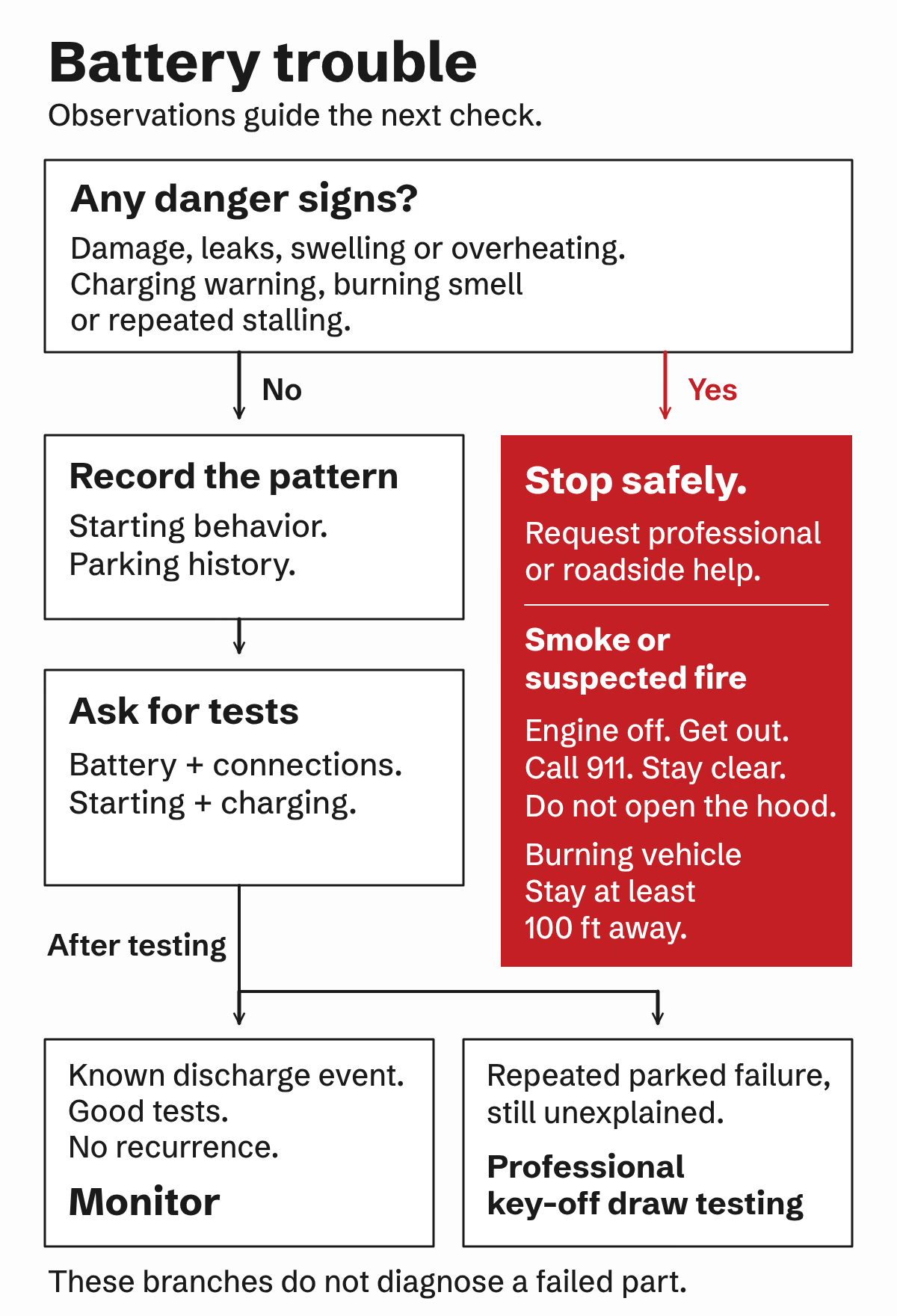
- Battery swollen, leaking, apparently overheating or possibly frozen? Don't try to start, jump or charge it. Keep away and call roadside assistance.
- Charging warning or repeated stalling while driving? Pull over safely and call for help.
- Otherwise, have the battery, its connections and the charging system tested before you buy a new battery.
- Note what happened when you tried to start and how long the car had been parked.
- Still going flat after parking once those tests come back good? Ask for a vehicle-specific key-off draw test.
A battery that keeps going flat might be worn out, undercharged or poorly connected, or something could be drawing power while the car's parked. A charging-system problem can leave it flat too. We'd have the battery's charge, condition and connections checked (opens in a new tab) first, then the starting and charging systems, before buying another battery, because a new battery can go flat for the same reasons.
Two details point the testing in the right direction: what happened when you tried to start, and how long the car had been parked. Write both down. If the basic checks don't explain repeated failures after parking, ask for vehicle-specific key-off draw testing.
These checks are for the low-voltage starter battery in a conventional car. On an EV or hybrid, follow the owner's manual and your roadside assistance instructions, and leave high-voltage equipment alone.
Stop and call for help if you see these signs
Don't try another start, jump or charge if the battery looks swollen, leaking or damaged, or seems to be overheating (opens in a new tab), or if you think it might be frozen, because a frozen battery may rupture or explode (opens in a new tab) if you charge or jump it. Keep away from it and call roadside assistance. Don't touch it to check whether it's hot.
If a charging warning comes on while you're driving, or the car keeps stalling, pull over safely, follow the car's warning instructions and call roadside assistance.
If you smell something burning, stop safely, switch off, get out and call for help, and keep the hood closed. If there's smoke or you suspect a fire, get everyone out, call 911 and move at least 100 feet away, clear of traffic (opens in a new tab). Don't open the hood or trunk to look.
Look for something left on
If none of those signs is there, look for an obvious drain before the service visit. We'd start here, because Subaru's own draw-test procedure (opens in a new tab) calls for ruling out things like a dome light left on, a door ajar, a key fob left in the car or a charger left plugged in before any draw test. Keep your checks visual, and stick to the controls you'd normally use.
- Park safely, switch the ignition off and take the key or fob with you. Don't work near a running engine.
- Look through the windows for an interior, cargo-area, mirror or vanity light that's still on. Switch off a regular cabin light you left on, or close a door that's ajar. Note any light that won't turn off.
- Note anything plugged in, like a phone cable, USB adapter or device in a power outlet. Unplug only accessories that come out of an ordinary power outlet, and leave hardwired equipment alone.
- Write down anything that was wired in later, like a stereo, dashcam, alarm or remote starter. Add-ons such as dashcams, alarms, remote starters and GPS trackers can draw power all the time. Leave their wiring and fuses alone.
- If you can already see the battery and cables without removing any covers, look for corrosion, looseness or damage. Don't touch, clean, tighten, disconnect or measure anything.
One flat battery after an interior light was left on can be a one-time drain. Have the battery properly charged and tested anyway. If the results are good and it doesn't happen again with similar use, keep an eye on it. If it goes flat again with no explanation, book service soon.
What happened when you tried to start
Describe what happened on your last attempt, even if the problem comes and goes. An engine that turned over slowly, one that didn't turn over at all, and one that turned over normally but wouldn't start are different clues.
| What happened | What to ask for next |
|---|---|
| Rapid or repeated clicking | Low battery power or a poor connection can be involved. Ask for battery charge and condition results, a connection inspection and starting-system testing. |
| The engine turned more slowly than usual | Start with battery charge, condition and connections. If those results are good, have the starting and charging systems tested. |
| Nothing happened at all | Lost battery power, a connection problem or another control or starting-system fault can cause this. Report whether the interior lights, warnings, locks and accessories worked, and ask for a diagnosis before buying a battery. |
| The engine turned at normal speed but wouldn't run | Look beyond a weak starter battery. Tell the technician the engine turned over normally, and mention any warning or security message. |
| It started with a jump | Outside power got it going, and the charging system still needs checking, because a car can start with a jump even when the alternator is faulty (opens in a new tab). Ask for battery and charging-system tests. |
When it goes flat matters too
Charge is the energy in the battery right now. Condition is how well it can still deliver starting power. A flat battery can sometimes be fine once it's recharged, while a worn one can struggle even after charging. Deep discharges, heat, and ongoing undercharging or overcharging can all shorten a battery's life (opens in a new tab).
Frequent short trips can keep a battery from fully recharging, even if you've just driven. If trouble comes back soon after driving, ask for battery, connection, starting-system and charging-system results.
Going flat after a weekend or longer parked still calls for the basic charge, condition and connection checks, because how full the battery started, its wear, normal background use and self-discharge all affect how long it lasts while sitting. If good basic results don't explain repeated failures, ask for vehicle-specific key-off draw testing.
A new battery can go flat too, since a connection, charging or parked electrical problem can still be there after the swap. Before you pay for another battery, ask the installer to check the specified battery type and size, the installation, connections and hold-down, and any setup the car needs after a new battery goes in.
If the battery and alternator passed but the problem came back, bring the printed results and ask what was tested and under what conditions. A short test can miss a problem that comes and goes, or the parked state that sets it off, and a good battery result covers only the battery.
If the battery went deeply flat, have it charged and tested by a service provider. A long drive may still leave it undercharged, because the alternator may not be able to fully charge a deeply discharged battery (opens in a new tab).
Ask for results before approving another battery
Give the shop the car's year, make, model and engine, the battery's install date if you know it, and the exact pattern: how long it was parked, your usual trip length, the starting sound, any warning text and how soon it went flat again after a charge or jump. Mention the weather, any visible damage or corrosion, plug-in and hardwired accessories, and recent repairs or accessory installs. Bring any earlier test results.
Ask for the battery's state of charge and condition results, a connection and hold-down inspection, and starting- and charging-system results (opens in a new tab). Ask whether the battery needed charging before its condition could be judged.
If they suggest a replacement, confirm the specified group size, cold-cranking rating and battery technology, plus any setup the installation needs. Some start-stop vehicles use an enhanced flooded battery, or EFB (opens in a new tab), so fit the specified type instead of choosing by size alone.
If the car keeps going flat after parking and the basic checks come back good, we'd ask an automotive electrical diagnostic technician or a dealership service department to run the car's current key-off draw procedure. Electronics can stay active after shutdown (opens in a new tab), so a reading taken before they go to sleep can be misleading, and the conditions and timing depend on the vehicle.
Leave electrical measurements and circuit tracing to the technician. Don't disconnect the battery, pull fuses or probe wiring to hunt for the drain. That can cause a short, wake up modules that had gone to sleep or wipe out the evidence needed to reproduce the problem.
Explore the desk
Continue at the systems desk
More from the wire