Decide whether the car can move
- To stop an engine oil leak, find its source and have the leaking component repaired.
- While the car is parked, catch a drip on white cardboard and check the oil level using your vehicle’s instructions.
- If the oil-pressure light comes on or you smell burning oil, stop driving immediately.
With a fresh spot under the parked car, we’d check the oil level before naming a gasket, because that reading affects whether even a short trip is an option. The spot gives you a place to begin looking, but oil can travel down the engine before it reaches the ground.
For a small leak, a short drive is conditional on the oil level staying in its safe range, and it still isn’t recommended. Oil below that range loses lubrication, so use your vehicle’s guidance and arrange help if the level is low.
See what landed beneath the car
Put white cardboard where the car drips while it’s parked, then leave it overnight. Look at the mark before moving the cardboard: its color, slick feel and position under the car are useful first clues.
Engine oil is typically brown to black and feels slick. If you can’t tell what landed on the cardboard, have the fluid identified before choosing an oil-leak repair.
Record where the mark sits relative to the car so you can describe it later. Oil flows downward, which means the place it lands can differ from the place it escaped. The mark helps guide the next look; it doesn’t name a gasket.
A clean piece of cardboard tells you there was no drip on that spot during the check. Keep the result alongside the oil-level reading. If you’ve had to top off more than once in a week, arrange professional diagnosis even without a mark to point to.
Let the dipstick guide the next move
Check the dipstick while the car is parked, following your vehicle’s owner’s manual for the oil-level procedure. Record whether the reading is in its safe range so you can compare it with what you saw on the cardboard.
A low dipstick reading together with oil puddles confirms an active leak. That combination gives the shop more than a stain to investigate: it shows oil is leaving the engine and the level needs attention.
If the reading is in the safe range, keep the driving decision tied to the other signs too. A small leak and a safe oil level are the conditions for a possible short trip, though driving still isn’t recommended. An oil-pressure light or burning-oil smell remains an immediate stop.
Write down the reading rather than relying on your memory of where it sat. If the cardboard stays clean while you keep needing top-offs, that pattern belongs in the description you give a mechanic, especially if you also see blue exhaust smoke or notice rough running.
A low drip can start higher up
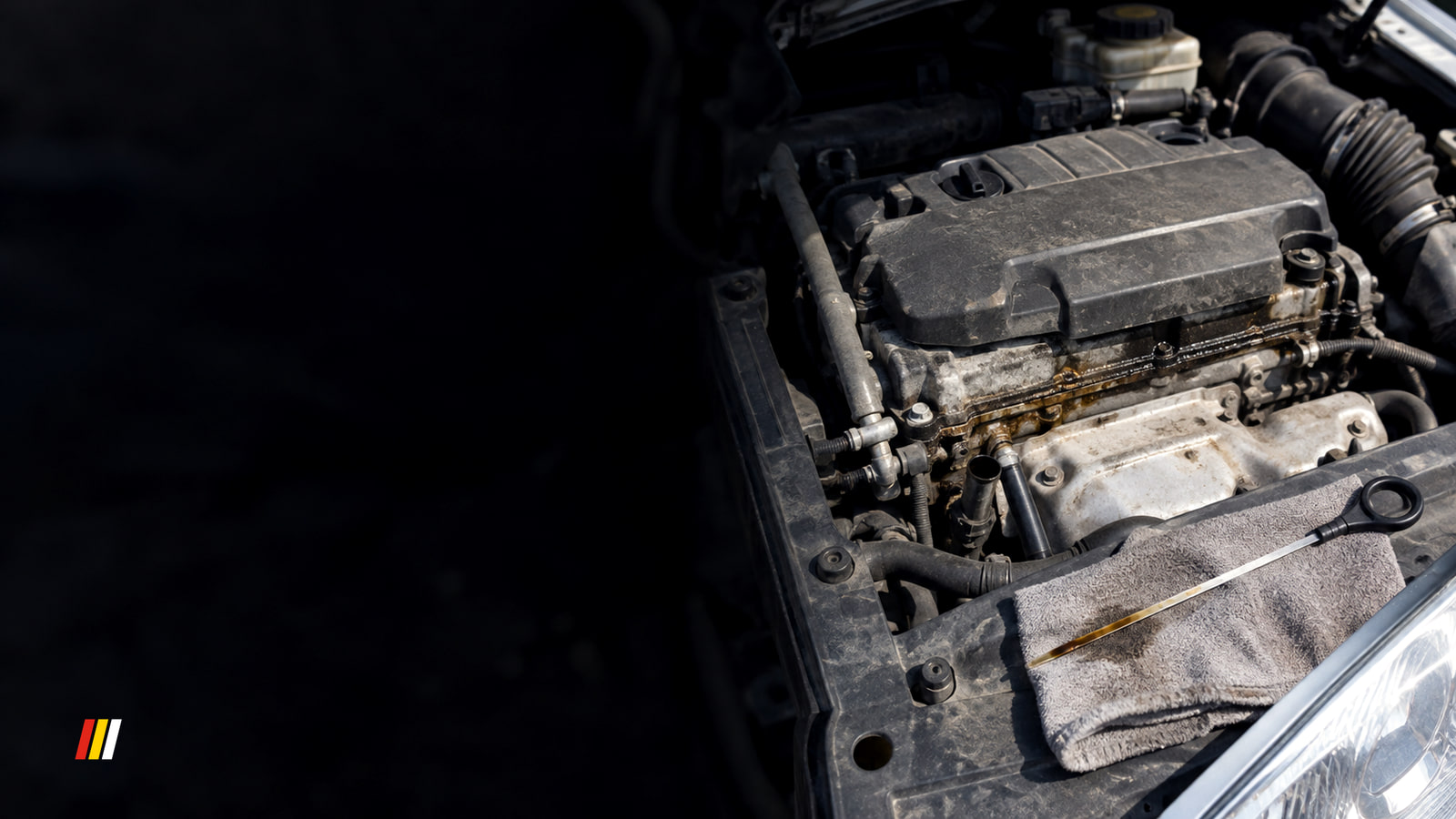
From above, look for visible oil around the valve covers and follow what you can see downward. Oil can move along the engine before it drips, so an upper wet area can explain a mark beneath a lower part.
Keep the upper wet area and the cardboard mark as separate observations. Together they give the mechanic a direction for tracing the leak without turning the lowest visible oil into a repair diagnosis.
If you see no clear starting point from above, leave the source identification to a professional. The repair depends on which component is actually leaking, and complicated gasket or seal work needs the correct tools, parts and vehicle-specific procedure.
Recent service changes what to mention
Think back to when the spot first appeared. If it followed an oil change that included a filter, tell the shop that timing and ask it to include the filter connection in its inspection. An improperly installed filter is one possible source.
A loose oil filler cap is another possible accessible source. A gasket or seal may also be involved, especially when the visible oil begins elsewhere on the engine. These possibilities guide where to look first; the repair choice comes after the source is identified.
Leave filter installation and gasket or seal replacement to the applicable vehicle-specific procedure and the person doing the repair. Complicated work needs matching replacement parts and tools, so a parked stain alone isn’t a set of repair instructions.
Give the shop one clear account
Take the car to a qualified mechanic if the source remains unclear, a suspected seal is hard to reach, or you’ve topped off more than once in a week. Blue exhaust smoke or rough running also calls for professional diagnosis. Ask the mechanic to identify where fresh oil begins before approving a repair to a particular component.
Give the shop one account of what you found:
- When the spot first appeared and whether it followed an oil change or filter work.
- Where the cardboard caught a drip, or that it stayed clean overnight.
- The dipstick reading and whether you’ve needed repeated top-offs.
- Any visible oil you could see from above, including around the valve covers.
- Any oil-pressure warning, burning-oil smell, blue exhaust smoke or rough running.
The identified source determines the repair: an accessible cap or filter problem calls for different work from a gasket or hard-to-reach seal. Use your vehicle’s manual and a qualified mechanic for the specific repair guidance, parts and procedure.
Catch drips while repair is arranged
If you’re in San Diego, place an oil drip pan with absorbent material beneath the leaking vehicle wherever it’s parked while you arrange prompt repair. Capture the fluid before it reaches the street or gutter and can enter a storm drain.
The pan deals with escaped oil on the parking surface for now. Keep the component repair moving: catching a drip doesn’t stop oil from leaving the vehicle.
Check the parked result
After the repair, place fresh white cardboard under the parked car overnight where you caught the original drip. Check for a new mark and compare its position with the one you recorded before the work.
Check the dipstick again using your vehicle’s oil-level instructions. A clean piece of cardboard and a reading in the safe range give you two useful parked observations after the repair.
If a fresh oil mark appears, keep the new cardboard result and oil-level reading together so the repaired area can be checked again. If the cardboard stays clean, continue watching the oil level using your vehicle’s instructions.
Preferred source
See more TunedDrive on Google
Select TunedDrive in Google’s source preferences. It takes a few seconds and costs nothing. Our car news, reviews and fixes become more likely to appear in your Top Stories, and AI Overviews can mark them as preferred.
More in this category