The warning signs come first
- If the oil-pressure light comes on, pull over safely and shut off the engine. Stop driving if you smell burning oil.
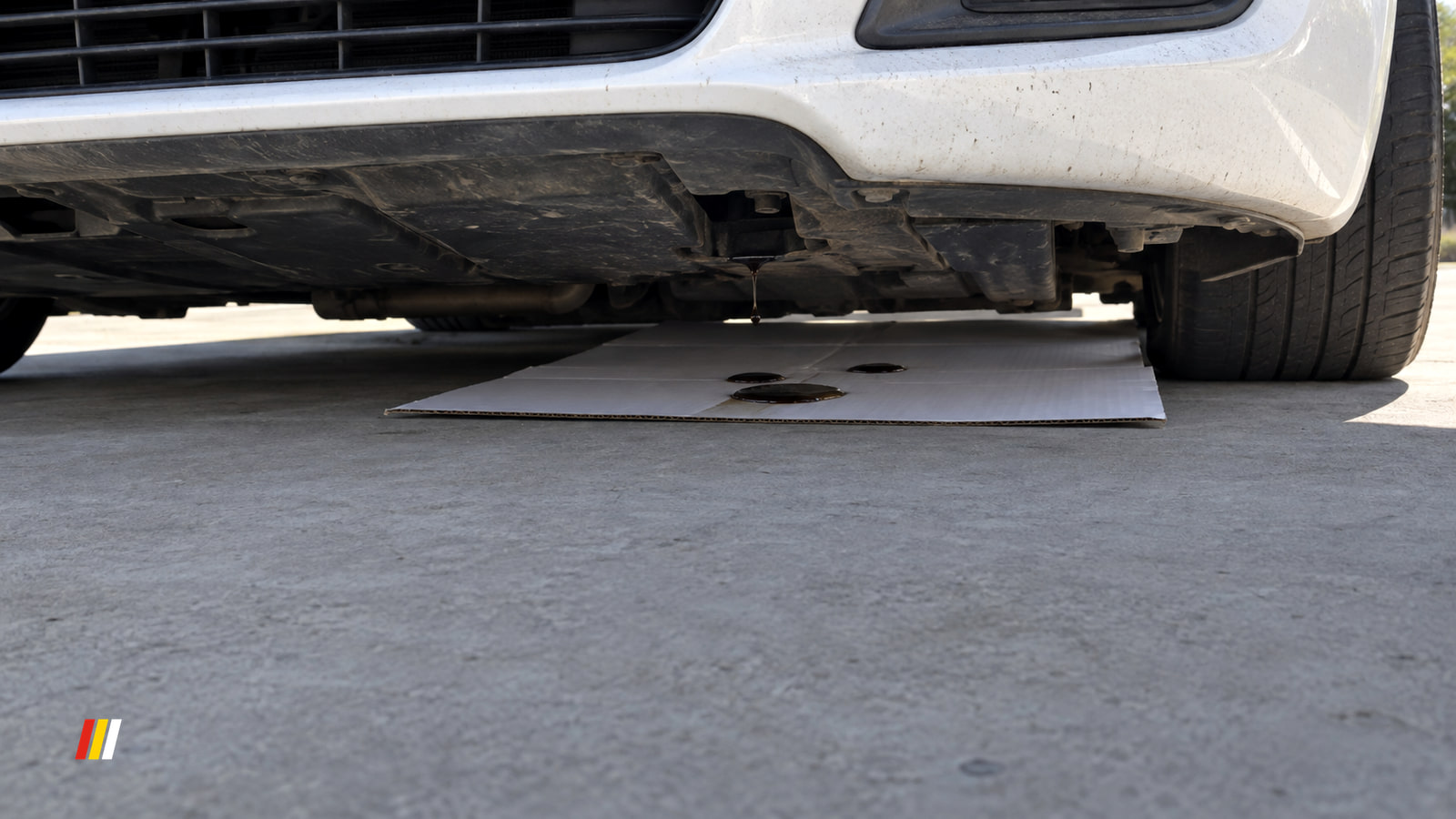
- With the car parked, check the dipstick and catch fresh drips on white cardboard overnight.
- Trace fresh oil upward before choosing a repair. A loose or damaged filler cap is one part you can address.
A dark spot on the ground gives you a starting point for the search. We'd check the dipstick and filler cap before naming a gasket, because a loose cap is accessible from above and oil can run down from a higher leak.
What might be leaking
Worn gaskets and seals are common causes of engine oil leaks. A faulty oil filter or loose drain plug can also let oil escape. If the drip appeared after an oil change, make the filter and drain-plug area an early part of the shop's inspection.
A loose or damaged oil filler cap is worth checking from above before moving on to harder-to-reach parts. Oil can escape there, while a leak higher on the engine can run down and appear to come from a lower part.
Read the drip and dipstick together
Put white cardboard under the parked car overnight. Engine oil is typically brown to black and slick, so the fresh mark gives you a fluid clue and a landing position.
Check the oil level with the dipstick, using your vehicle's instructions for its specific procedure. A low reading alongside fresh oil puddles points to an active leak. Record the reading and where the drip landed so you can compare them later.
A falling oil level without a puddle can mean the engine is burning oil. Blue-gray exhaust smoke or a burning smell may accompany it, and a car can burn oil and leak it at the same time.
Follow fresh oil to where it starts
Look from the valve-cover area downward for the highest fresh oil you can see from above. Oil flows down the engine, so even a drip from the oil pan may have started higher up.
If old residue hides the path, spray the suspected area with engine degreaser and rinse it with low-pressure water. Fresh oil is easier to spot against the cleaned area.
Some leaks appear only when the engine is hot. A 10-minute drive followed by another look is a tracing option only when the leak is small and the oil level stays in the safe range, and driving with a leak is still discouraged. If the oil-pressure light appears or you smell burning oil, stop driving immediately.
For a source that stays hard to find, a shop can decide whether to use UV dye for your vehicle. With that method, fluorescent dye goes into the oil, the engine runs for 15 minutes, and a UV light reveals the glowing source.
If the filler cap is the source
Inspect the filler cap for cracks and check its rubber gasket. Replace the cap if either is damaged. If it's loose, secure it using its closure: turn a click-style cap until it clicks, and follow your vehicle's instructions for another type.
If the cap is sound and fresh oil appears elsewhere, follow the wet trail rather than replacing the cap. The repair needs to address the place where oil first escapes.
Match the repair to the confirmed source
A confirmed filter or drain-plug leak calls for the applicable vehicle and part instructions. Gasket and seal repairs need the right parts, tools and vehicle-specific procedure; a poorly done gasket repair can create another leak or damage. Use your vehicle's instructions and a qualified mechanic to settle the repair.
A front or rear crankshaft seal can require removal of belts, pulleys or even the transmission to reach it. Unless you have significant mechanical experience, leave that repair to a professional.
If you can't find the source, have topped off the oil more than once in a week, or notice blue exhaust smoke, rough running or a burning-oil smell that won't go away, contact a qualified mechanic. Tell them where the fresh drip landed, what the dipstick showed and whether the leak followed an oil change, then ask them to identify the highest fresh-oil point before replacing a gasket or seal.
Check for fresh drips afterward
After securing or replacing a leaking cap, put clean white cardboard under the parked car overnight and check the dipstick again. Compare the new mark and oil reading with your first observations: fresh drips or a falling level mean oil is still escaping or being used.
Keep checking the dipstick after the cardboard stays clean. A steady reading alongside no new drips is the result you're looking for.
Preferred source
See more TunedDrive on Google
Select TunedDrive in Google’s source preferences. It takes a few seconds and costs nothing. Our car news, reviews and fixes become more likely to appear in your Top Stories, and AI Overviews can mark them as preferred.
More in this category