What you can expect to pay
- Plan on $580 to $1,150 for two conventional front struts, including parts, labor and alignment at an independent shop.
- Find out whether the quote covers one corner, an axle pair or all four corners.
- A rear-shock quote covers a different job from a rear-strut quote.
- Stop driving and arrange recovery if steering or braking feels unstable, a spring is broken, or a tire touches surrounding parts.
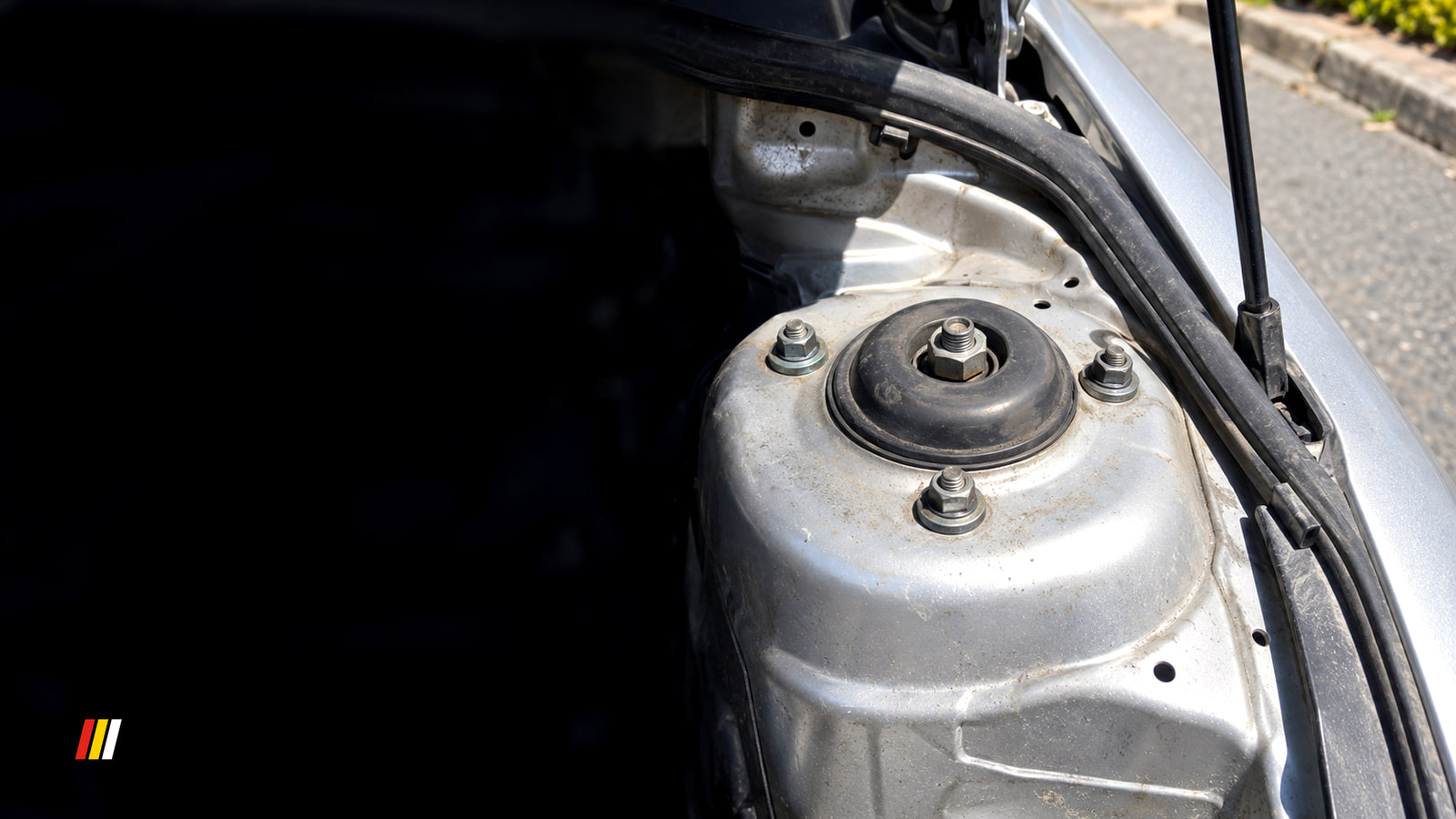
A strut controls the spring’s bouncing and forms part of the suspension’s structure. When its damping wears out or it leaks badly, the wheel can lose firm contact with the road. We’d first confirm which units your car has and which ones failed, because a rear shock quote and a front strut quote buy different work. A dealer’s factory-parts quote will generally run higher than the same job built with aftermarket assemblies. Many cars have front struts and separate rear shocks.
| Vehicle class and job | Price | What it includes |
|---|---|---|
| Ordinary car, front pair with aftermarket parts, no alignment, independent shop | $480 to $950 | Two complete assemblies and installation; alignment is extra. |
| Ordinary car, front pair with aftermarket parts, independent shop | $580 to $1,150 | Two complete assemblies, installation and one alignment. |
| Car with rear struts, rear pair with aftermarket parts, independent shop | $580 to $1,150 | Two complete assemblies, installation and one alignment. |
| Car with four struts, all four with aftermarket parts, independent shop | $1,060 to $2,100 | Four complete assemblies, both axle-pair labor jobs and one alignment. |
| Pickup or heavier vehicle, front pair with aftermarket parts, independent shop | $840 to $1,380 | Two complete front assemblies, installation and one alignment. |
If your car has front struts and separate rear shocks and both axles need replacement, compare a quote that names both axle jobs and counts the alignment once. The all-four-struts price describes different rear hardware.
An aftermarket air-strut assembly for certain luxury SUVs and sedans costs $380 to $710 for the part alone; labor, alignment and any calibration are extra. A dealer fits factory parts at a higher labor rate, so compare its air-strut quote by unit count and included work.
Why two prices can be far apart
For an ordinary car, one aftermarket complete conventional assembly costs $120 to $204. An axle pair uses two. Replacing an axle pair bills 2 to 3 hours at $120 to $180 an hour for an independent shop or $200 to $349 at a dealer. One separately billed four-wheel alignment adds $100 to $200. If your quote specifies front-wheel alignment only, front-end alignment pricing explains that separate job.
For a pickup or heavier vehicle, aftermarket complete front assemblies cost $250 to $322 each. The priced pair uses 2 to 3 labor hours at the $120 to $180 independent-shop hourly rate, plus one $100 to $200 alignment. For an ordinary car with separate rear shocks, aftermarket shocks cost $60 to $150 each, with 1 to 2 labor hours at the same rate. That rear-shock-pair price excludes alignment.
A bare strut reuses the old spring and mount. A complete assembly brings those parts together, so the old compressed spring does not need to be transferred. The complete part costs more up front but generally takes less installation labor. Compare the parts package and billed hours together, and have a reused spring or mount inspected before approving that option.
An itemized conventional-pair example could show $300 for two struts, two hours at $150 an hour ($300), and a $150 alignment: $750 before tax. A typical front pair on an ordinary car at an independent shop lands near $850: about $324 in mid-range complete assemblies, 2.5 billed hours at about $150 an hour, and about $150 for alignment. Shops mark parts up over retail, so the parts line on a quote can exceed the assembly prices above. A separately proposed mount, link, spring or control arm needs its own physical finding and a revised estimate.
How to tell if the repair is needed
- When the ride becomes bouncy or noisy, write down when it happens and which corner seems involved. With the car parked, use a flashlight to look at visible strut bodies, brackets and tread without lifting the vehicle. Oil dripping from a strut or covering most of its body is a strong replacement finding; a slight film near the seal can be ordinary seepage. A bent rod or damaged bracket also needs inspection. The strut maker’s leakage examples (opens in a new tab) show the difference between seepage and a wet unit.
- If the car pulls, rides harshly or has uneven tread, measure each tire after at least three hours parked, set it to the front or rear pressure on the driver-door placard instead of the tire sidewall maximum, and arrange a tire and suspension inspection if the symptom remains at that pressure. Placard pressure rules out a current pressure problem; earlier tire wear and other faults still need inspection.
- Notice whether the car keeps bouncing after bumps, dives when braking or feels poorly controlled through turns, then look for repeated high and low tread patches. A clunk over bumps can come from a mount, mounting hardware or sway bar link; noise while turning can point to the upper bearing. Cupping can follow poor wheel contact, but balance and alignment can also contribute. A road test and suspension inspection must locate the failed part before a strut is ordered.
If a spring is broken, a corner sits low enough for contact, a tire rubs, steering or braking control feels unstable, or bouncing is severe, stop driving and arrange a tow. For active leakage while control feels normal, arrange prompt inspection. Tell a suspension shop which corner is affected, when the bounce or noise occurs, what the fluid and tread look like, and whether braking or steering changed. Get a second inspection if the proposed replacement has no leak, damage, looseness or road-test finding. For adaptive or air suspension, use a dealer or a suspension shop that diagnoses and calibrates that system, and get the failed unit and proposed calibration named on the estimate.
How to compare a written quote
The Federal Trade Commission’s auto repair guidance (opens in a new tab) calls for the condition, parts and anticipated labor charge on a written estimate. Keep a signed copy, and get an updated written amount before added work is authorized.
- Axle and count: name every proposed corner and identify rear shocks separately from rear struts, so each total buys the same repair.
- Parts: identify bare struts or complete assemblies, the part grade, and any separately priced mounts.
- Labor: compare billed hours and hourly rate for the same work; look for a second charge for a task already included.
- Alignment: count it once, whether included in the job or shown as a separate line.
- Total: compare tax, added repairs, and the written parts-and-labor warranty with its time and mileage limits.
Strut removal can change wheel angles, especially at a steering axle or adjustable mount. If alignment is omitted, the estimate should explain why this layout leaves the angles unaffected and how that was verified. After repair, the car should sit correctly, feel stable through braking and turns, and be free of the original leak or noise. When alignment was part of the job, get the final wheel-angle readings within the vehicle’s specifications; what an alignment report shows helps you read the result.
Can you save money doing it yourself?
For a conventional axle pair on an ordinary car, two aftermarket complete assemblies cost $240 to $410 in parts. If you have the vehicle’s fastening instructions, a jack, stands, sockets and a torque wrench, you can fit matching complete assemblies without paying the shop’s installation labor. If you are unsure whether an assembly suits your car, use the VIN to confirm its fit with a certified technician or the parts counter before buying. Compared with the same independent-shop axle-pair job without alignment, you avoid the shop’s labor charge before buying tools. Both paths still need an alignment assessment, and buying missing tools reduces that saving by their purchase price. A first-time job needs time to confirm fit, follow the vehicle’s fastening instructions and verify the finished suspension; the 2 to 3 billed hours describe shop labor, not a home-work time promise.
What the tools and finish checks involve
A complete-assembly job requires a floor jack, correctly placed stands, wheel tools and a torque wrench, plus the vehicle’s fastening figures. Before driving, confirm the assemblies fit and sit correctly, every disturbed fastener is secure, hoses and sensor wires are clear, and wheel angles meet the vehicle’s specifications when alignment is needed. Before deciding to do the job, review the complete-assembly installation instructions (opens in a new tab) for the distinction between outer mounting nuts and the spring-loaded center shaft nut.
Questions drivers ask before approving the job
Do I need to replace both struts on the same axle?
Usually, yes. Matching damping on both sides helps keep handling balanced. If one recently installed strut is damaged, inspect the opposite strut and consider replacing only the damaged one; the other axle needs its own finding.
Do I need an alignment after replacing struts?
Plan on an alignment measurement because strut removal can change wheel angles. A measurement may show no adjustment is needed, and a conventional rear shock job can be different. If alignment is separate, the charge is $100 to $200.
How long can I drive with bad struts?
Schedule an inspection for a mildly worn ride while control remains normal. Stop driving and arrange recovery for severe bouncing with lost control, a broken spring, a sagging corner with contact, or tire rubbing. Weak damping can affect braking, tire contact and tire wear.
How long do struts usually last?
Wear often becomes apparent around 50,000 to 100,000 miles on conventional passenger vehicles. Rough roads, potholes and heavy loads can shorten that span. Mileage calls for inspection; leakage, ride changes and tire wear decide the repair.
Is there a standard warranty on a strut repair?
No. Repair warranties differ by shop. Get the parts and labor coverage, time and mileage limits, and claim procedure in writing.
Are shocks and struts the same thing?
No. Both control spring bounce, but a strut also forms part of the suspension structure and can help locate the wheel. Many cars have front struts and separate rear shocks, so identify the parts at each axle before comparing quotes.
What does it cost when the car has front struts and separate rear shocks?
A car with front struts and separate rear shocks needs two distinct axle jobs, so price the front strut pair and rear shock pair separately. Two aftermarket rear shocks installed at an independent shop cost $240 to $660 without alignment; count the alignment included with the front struts only once.
Preferred source
See more TunedDrive on Google
Select TunedDrive in Google’s source preferences. It takes a few seconds and costs nothing. Our car news, reviews and fixes become more likely to appear in your Top Stories, and AI Overviews can mark them as preferred.
More in this category