What to know before booking
- A vehicle alignment adjusts your suspension so the wheel angles meet the vehicle manufacturer's specifications.
- Start with the uneven tire wear or steering changes you've already noticed, and write down the symptoms.
- Pulling has several possible causes. Discuss it with a technician before choosing a service.
If a worn patch on a tire or a change in steering has you considering an appointment, we'd start with observations because pulling can come from several different problems. Describing the behavior gives the technician something specific to assess before recommending alignment work.
This explanation follows Toyota's general alignment guidance for U.S. vehicles (opens in a new tab). It explains the service and its possible warning signs, with the actual suspension adjustments handled by an automotive technician using your vehicle manufacturer's specifications.
The suspension is what gets adjusted
Your suspension connects the car to its wheels. During an alignment, a technician adjusts that system to bring the wheel angles to the manufacturer's specifications, helping your tires make correct contact with the road.
The names wheel alignment and tire alignment describe the same relationship between suspension position and tire contact. When you're discussing the work, the useful question is how the wheel angles compare with the specifications for your vehicle. That's the target the technician is working toward.
The result should support stable steering, more even tire wear and better handling. Straight travel is one part of that job, while maintaining grip during turns is another. Understanding the different angles helps explain why an alignment concerns more than the direction the car points when you're going straight.
Caster, toe and camber in plain language
Picture the car from the side first. Caster is the forward or backward tilt of the steering axis from that viewpoint, and it affects balance and steering stability. The thing you're picturing is the axis the steering turns around.
Now picture looking down on the tires from above. Toe describes the direction they point relative to each other, which affects how evenly they wear. If the technician mentions a toe adjustment, that overhead relationship is the one being discussed.
From the front of the car, camber describes a tire's inward or outward tilt. It matters for maintaining grip on the road during turns. Keeping that front view in mind helps separate camber from toe, even though both describe aspects of a tire's position.
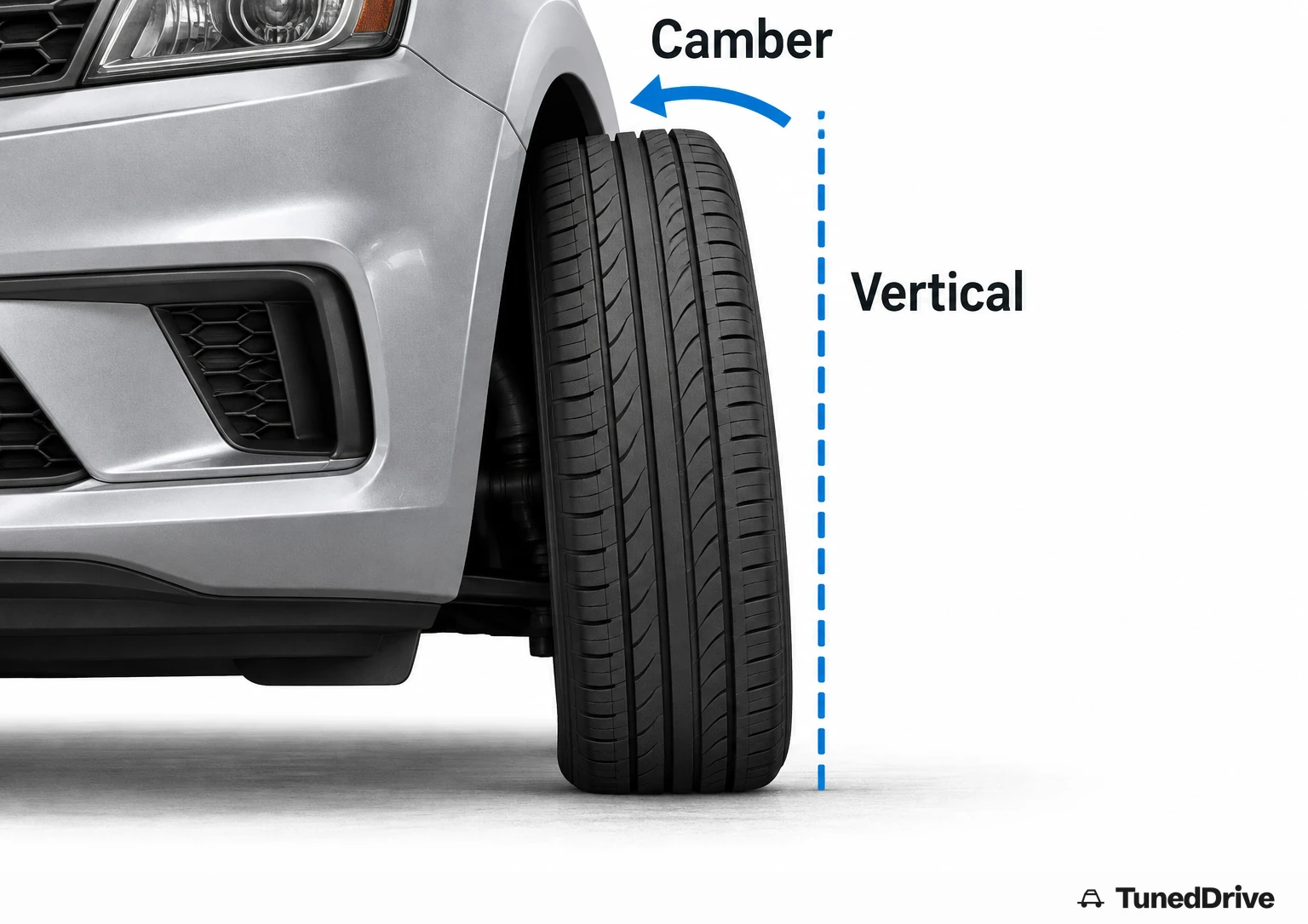
These are the three angles in Toyota's alignment explanation (opens in a new tab). Each needs to be properly set for smooth, even movement. When the shop explains its findings, ask which angle needs attention and how it relates to the wear or steering behavior you've noticed.
What you can observe before the appointment
With your car parked, look for uneven wear on the tires and note where you see it. Toyota identifies patchy areas and bald patches on the inner walls as strong indicators of misalignment, within its broader guidance on signs that may mean an alignment is needed.
For steering behavior, use what you've already experienced. Two particular signs Toyota identifies are a car that doesn't drive straight when the steering wheel is centered, and a steering wheel that doesn't re-center itself after a turn. Record which behavior you've noticed so you can describe it clearly.
Keep visible wear and steering behavior separate in your notes. A patch of wear describes something you can see on the tire, while the wheel's position and return after turning describe how the car behaves. Those details make your concern more specific than saying the car feels out of alignment.
Pulling can have more than one cause
A car that veers to one side on a straight road often has alignment issues, according to Toyota. But the same behavior can also come from tire conicity, uneven air pressure, steering wear or unevenly worn brakes. Ask the technician to consider those possibilities when assessing the pulling.
A change in ride quality belongs in the conversation too. An alignment issue may affect the suspension and make the ride rougher, especially on uneven roads. Describe that as a change you've experienced so the technician can consider it alongside the directional behavior.
Fuel use is another possible clue Toyota names. Misaligned wheels can reduce traction, increasing the effort needed to move the vehicle forward and causing it to use more fuel. If you've noticed reduced fuel efficiency as well, include it when describing the symptoms.
Toyota's symptom guidance (opens in a new tab) presents these as possible indicators that alignment needs attention. Together, your observations give the service conversation a focus: what has changed, and which possible causes need assessment.
Why the angles change and why that matters
Think back to any pothole impact, curb strike or minor accident when describing when the concern began. Those events can jolt suspension components out of alignment. Components also naturally wear down over time, so an impact is only one possible explanation.
Misalignment can put disproportionate pressure on particular areas of a tire. That uneven loading helps explain how a suspension problem can show up as uneven tire wear. The wear shortens tire life, may compromise safety and can make replacement necessary sooner.
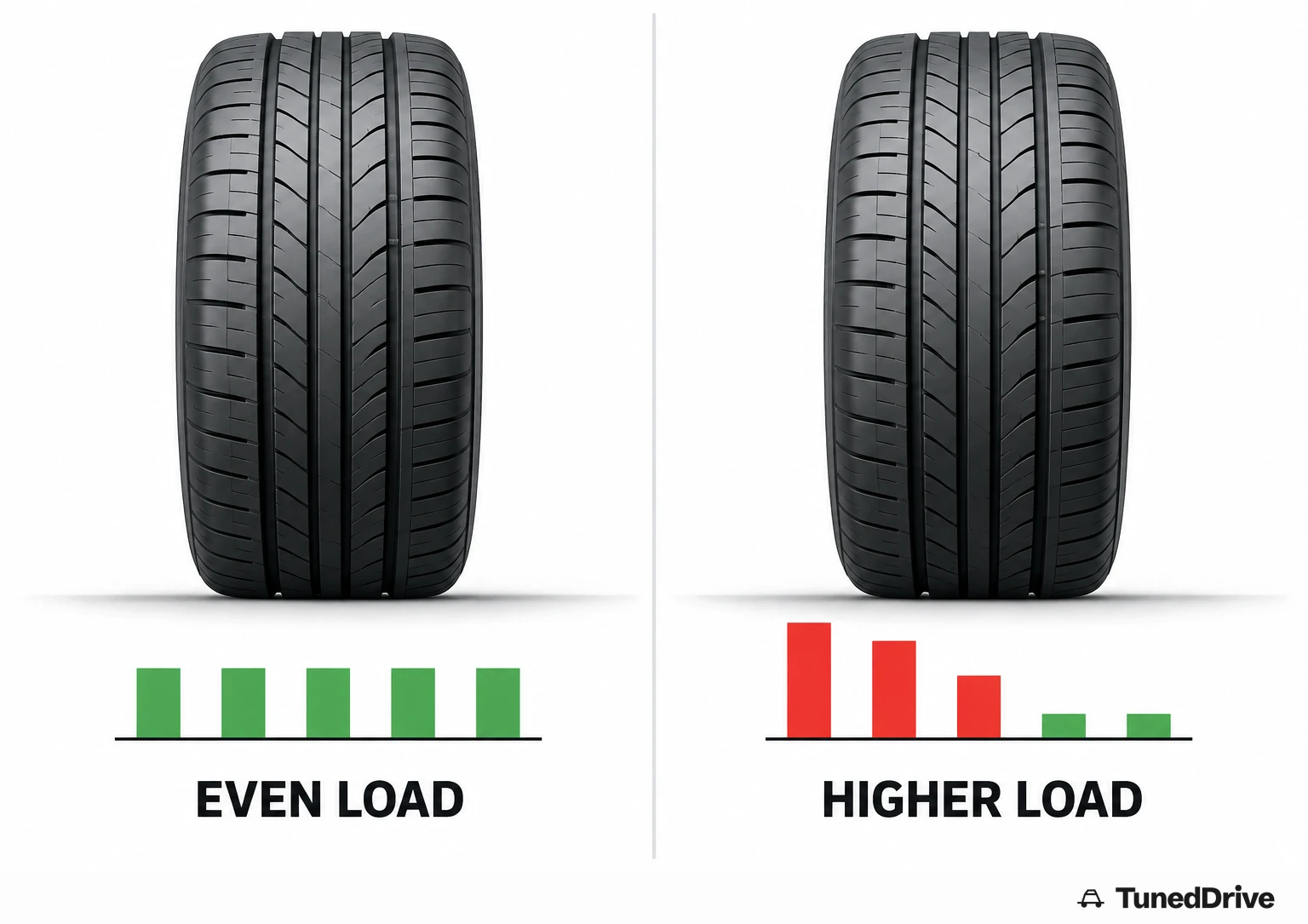
Proper alignment helps preserve handling, tire life and fuel efficiency. Those benefits are connected: the way the tires meet the road affects how the vehicle handles and how the tires wear. This is why alignment matters even when the first thing you notice is a wear pattern.
Alignment and balancing do different jobs
Weight distribution is the key idea behind balancing. Correcting it helps reduce vibration and uneven wear. Alignment deals with suspension geometry and tire angles, helping the tires contact the road correctly and the vehicle maintain its intended course.
If vibration is part of your complaint, ask about balancing as well. That brings the wheel's weight distribution into the discussion. The technician can then explain which concern a proposed service addresses, whether it's vibration associated with balance or tire contact associated with alignment.
The two services share goals, including tire life and driving performance, but they address different things. Toyota recommends regular attention to both for safety, efficiency and comfort. Its comparison of alignment and balancing (opens in a new tab) makes that distinction useful when you're discussing a service recommendation.
What to ask the service center
Ask the technician to explain the intended result of the work in terms of your vehicle's specifications. The meaningful outcome is correctly set wheel angles that support steering stability, even tire wear and driving performance. That gives you a concrete way to understand what the service is meant to accomplish.
Have alignment concerns assessed promptly. Toyota warns that ignoring them may lead to unsafe driving conditions, increased operating costs and more frequent tire replacements. A concern that begins with tire wear still deserves attention because the consequences can extend to safety and handling.
For alignment or balancing service, Toyota directs you to your local Toyota dealership service center to schedule an appointment. Bring your symptom notes and any relevant impact history, then ask how the recommended work addresses what you've described.
More in this category