What you're paying the technician to adjust
- Tire alignment adjusts your vehicle's suspension so the wheel angles match the manufacturer's specifications.
- Uneven tire wear, pulling and a steering wheel that doesn't track straight are reasons to seek an alignment check.
- Start by noting the symptom you've noticed. Pulling can also come from tire, pressure, steering or brake issues.
If a crooked steering wheel or an odd patch of tire wear has you considering service, we'd begin with a clear description of that symptom, because pulling has several possible causes and the technician needs to address the right problem. Your useful starting point is what the car is doing, not which angle you think needs changing.
The suspension connects your car to its wheels. An alignment changes that suspension geometry to help the tires meet the road correctly, support straight driving and wear evenly. The Toyota guidance below applies to U.S. vehicles and gives a general explanation of the service.
Why the angles can change
Think back to a pothole, curb impact or minor accident, especially if you noticed a change afterward. Those impacts can jolt suspension components out of alignment. Components also wear over time, so an alignment issue can develop without one memorable bump.
The connection to tire wear is pressure distribution. Misalignment can put disproportionate pressure on particular areas of a tire, causing those areas to wear unevenly and shortening the tire's life. That helps explain why an alignment concern may first show up on the tire even though the adjustment involves the suspension.
Keep the impact history and the current symptom together in your notes. “It started pulling after a curb impact” gives the shop both the behavior and a relevant event to consider. Wear over time and impact damage are possibilities for the technician to assess, rather than a reason to select an adjustment yourself.
Camber, toe and caster in plain language
Camber, toe and caster describe different parts of the wheel and steering geometry. The easiest way to keep them separate is to picture the car from three directions: the front, above and the side. The technician's target is the manufacturer's specifications for your vehicle.
Camber is the tire's inward or outward tilt when viewed from the front. Picture whether the tire leans inward or outward in that view. This angle matters for grip during turns, and its proper setting contributes to smooth, even movement.
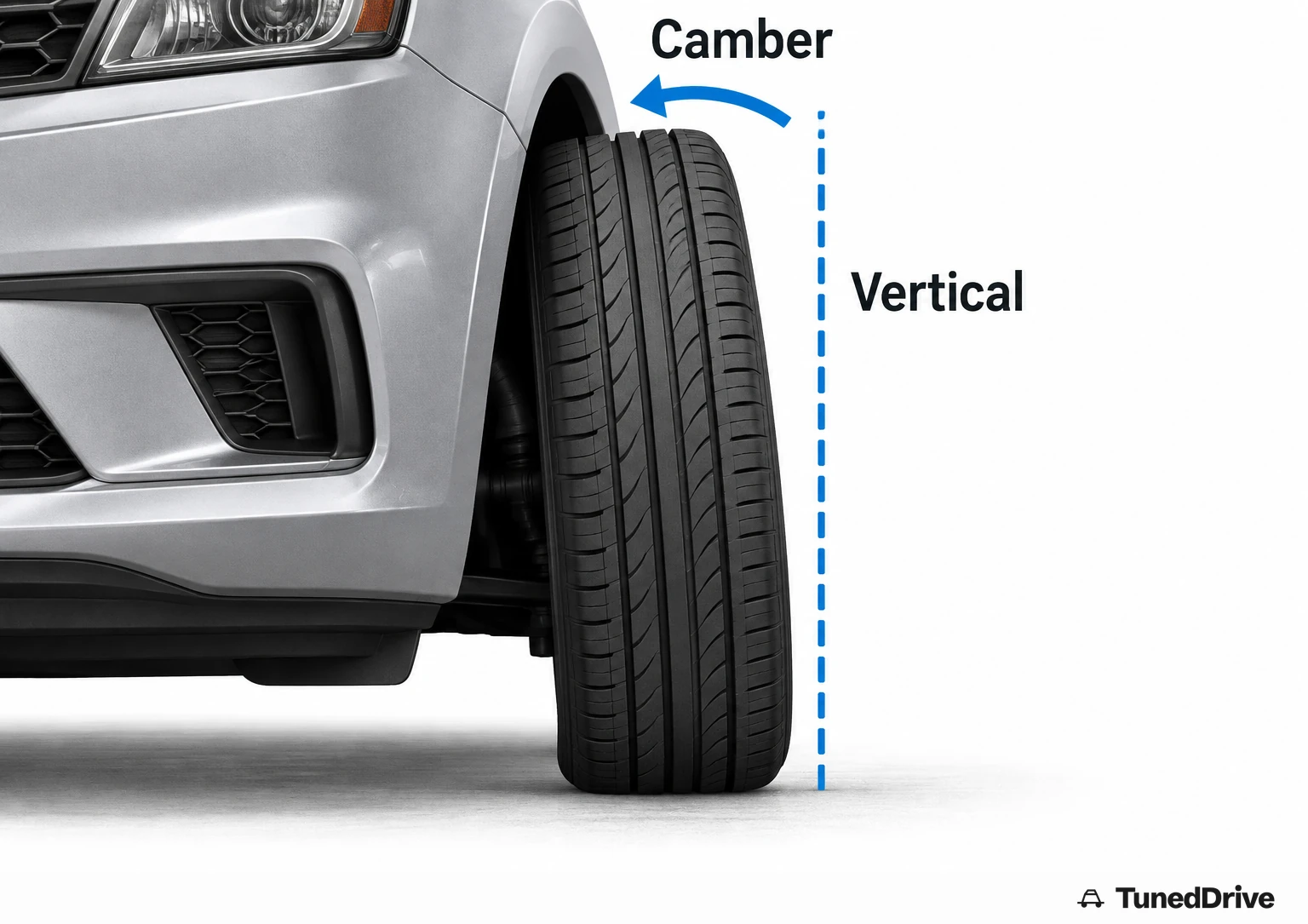
Toe describes the direction the tires point relative to each other when viewed from above. Here, you're picturing their pointing direction rather than their sideways lean. Toe affects how evenly the tires wear, which is why it belongs in an alignment discussion even when tire wear is your main complaint.
Caster is the forward or backward tilt of the steering axis when viewed from the side. The key distinction is that you're picturing the steering axis, rather than the tire's front-view tilt. Caster affects balance and steering stability. Toyota's explanation of alignment angles (opens in a new tab) connects these three terms to what the technician adjusts.
Uneven wear deserves attention
Patchy wear or bald patches on the inner walls of a tire deserve attention. Toyota identifies these as strong indicators of misalignment within its broader list of possible alignment signs. Describe the location and appearance of the wear you've noticed when you discuss the problem with the shop.
Take that wear seriously because its effects extend beyond tire life. Driving on unevenly worn tires can reduce handling ability and make it harder to maintain your intended course. Uneven wear can also compromise safety and make premature tire replacement necessary.
You may notice other effects alongside the visible wear. Unevenly worn tires can produce vibration through the steering wheel and increase road noise. If those changes accompany the wear, include them in the same description so the shop hears the whole symptom set.
A pull can have several causes
A car that veers or pulls to one side on a straight road often has an alignment issue. But Toyota also names tire conicity, uneven air pressure, steering wear and unevenly worn brakes as possible causes. That makes pulling a reason for assessment, with several systems for the technician to consider.
Use the behavior you've already noticed as your description: which way the car pulls, and whether it happens when traveling straight. Tell the shop about the pull itself rather than requesting a particular angle correction. Toyota's guidance on pulling (opens in a new tab) explicitly preserves those competing explanations.
What the steering wheel is telling you
Notice the relationship between the steering wheel and the car's direction. If the car doesn't drive straight with the steering wheel centered, Toyota lists that as a sign it likely needs an alignment. A wheel that doesn't re-center after a turn is another sign in the same guidance.
Keep those two observations separate when describing them. “The car won't travel straight with the wheel centered” describes tracking, while “the wheel doesn't return to center after a turn” describes return behavior. You can give the technician that distinction without deciding whether caster, toe or camber needs attention.
Alignment and balancing do different jobs
Balancing addresses weight distribution around the wheel. Alignment addresses the suspension geometry that sets the tires' angles and road contact. Both services can support tire life and driving performance, but they're doing different jobs.
That difference matters if your main complaint is vibration. Balancing helps reduce vibration and uneven wear by addressing weight distribution, while uneven tire wear itself can also produce steering-wheel vibration. Describe where you feel the vibration and any accompanying wear so the service discussion includes the symptom's context.
Toyota recommends regular attention to both alignment and balancing to help maintain safety, efficiency and comfort. When discussing service, ask which of those two needs attention on your car. Toyota's alignment and balancing comparison (opens in a new tab) explains the separate purpose of each.
Ride and fuel-use changes can accompany the signs
A rougher ride can accompany an alignment issue affecting the suspension, with the change especially noticeable on uneven roads. Include that change when describing your concern, alongside any pulling, steering-wheel behavior or visible wear you've noticed.
Toyota also links misalignment with reduced traction and greater fuel use. It explains that uneven wear can increase resistance between the tires and road, requiring more energy to maintain speed. These are reasons to care about alignment beyond how the steering feels, without attaching a promised fuel saving to the service.
What to tell your Toyota service center
If these signs fit what you've noticed, contact your local Toyota dealership service center to schedule an appointment, as Toyota's U.S. service guidance recommends (opens in a new tab). Bring your symptom description and any relevant impact history so you can explain what prompted the visit.
Give alignment concerns attention instead of leaving them unresolved. Toyota warns that ignoring them can contribute to unsafe driving conditions, higher operating costs and more frequent tire replacement. Ask the technician to assess the concern against your vehicle's manufacturer specifications and explain the service it needs.
More in this category