Search by VIN to see your own car's recalls
- Find the 17-character VIN at the lower-left corner of the windshield or on your registration card.
- Enter it in NHTSA's recall lookup to see any unrepaired safety recalls for that vehicle.
- Recall found? Follow the manufacturer's instructions, including any warning not to drive, and book the free repair with a dealer.
- Zero recalls? Check what the lookup leaves out, and search again twice a year.
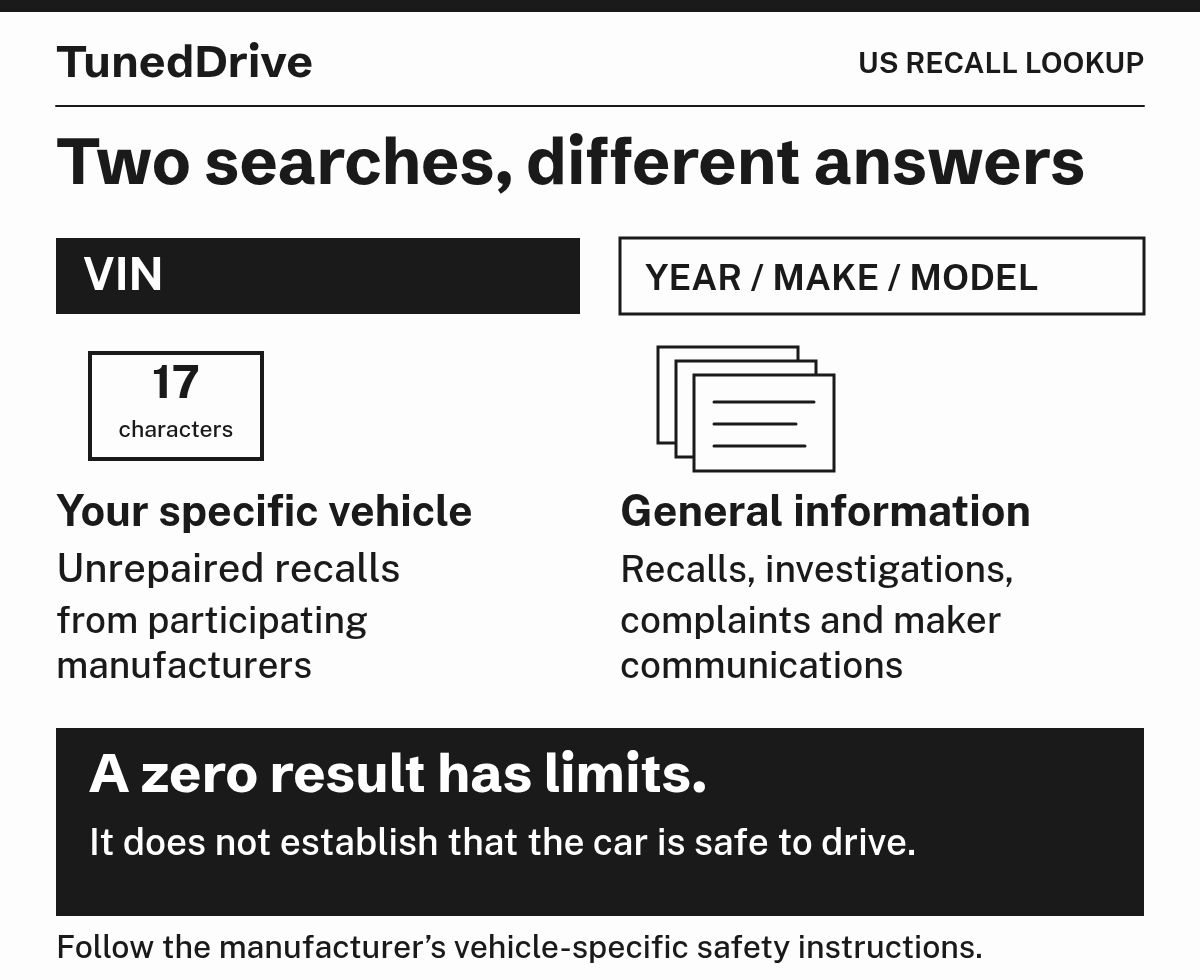
For a US vehicle, NHTSA's recall lookup (opens in a new tab) uses the 17-character VIN to check for unrepaired safety recalls. We'd always search by VIN instead of by year, make and model, because the VIN search is the one that answers for your specific vehicle.
If a recall shows up, follow the manufacturer's guidance and contact your dealer. If the result is zero, read it alongside the list of what the lookup leaves out.
Find the VIN and run the search
The year, make and model search is for general research, covering recalls, investigations, complaints and manufacturer communications. For your own vehicle's recall-repair status, use the VIN search.
- Find the 17-character VIN at the lower-left corner of the windshield or on the vehicle's registration card. It may also be on your insurance card.
- Open NHTSA's recall page and search with that VIN. This checks whether that specific vehicle needs a recall repair, within the lookup's coverage.
- Read the result. If an unrepaired recall appears, follow the repair steps below. If you see “0 unrepaired recalls associated with this VIN,” check the list of exclusions before you draw any conclusions.
An unrepaired recall shows up
Read the manufacturer's recall notice and any interim safety guidance for your vehicle, then contact your local dealer to arrange the free recall repair. Ask the dealer to explain any restrictions and what the next repair step is.
Some recalls come with a warning not to drive and others don't, so go by the manufacturer's instructions for your specific vehicle until it's repaired. If they say not to drive, stop driving and contact the dealer for guidance.
The search shows zero recalls
Zero means the lookup shows no unrepaired recalls associated with that VIN. It isn't a full vehicle history, and the lookup leaves out:
- Safety recalls that have already been repaired.
- Some recent safety recalls, while the affected VINs are still being identified.
- Safety recalls more than 15 years old, unless the manufacturer offers longer coverage.
- Recalls from small vehicle manufacturers, including some ultra-luxury brands and specialty applications.
- Manufacturer customer-service campaigns and other non-safety recall campaigns.
- Recalls involving international vehicles.
Under a federal recall-information rule (opens in a new tab), any manufacturer that builds, sells or imports 25,000 or more light vehicles, or 5,000 or more motorcycles, for the US market in the current or prior calendar year must offer its own online recall search by VIN. That search has to show recalls that haven't been completed, cover campaigns from at least the previous 15 calendar years and be updated at least once every seven days.
If you've received a recall notice but the search shows zero, we'd go by the notice and the manufacturer's safety instructions, and contact the manufacturer or dealer to sort out the mismatch. Some recent recalls don't show up until the affected VINs have been identified.
Check for recalls twice a year. After a new recall is announced, check again regularly, because affected VINs are added continuously.
More in this category