Weak air and warm air point to different problems
- Check that A/C is on, each side is set cool and the vents you're using are open.
- Hardly any air coming out? That's an airflow problem, such as a clogged cabin filter or a blower fault.
- Strong air that stays warm? That's a cooling problem, such as low refrigerant, the condenser or the compressor.
- A recharge won't permanently fix a leak, so ask where the leak is before you pay for one.
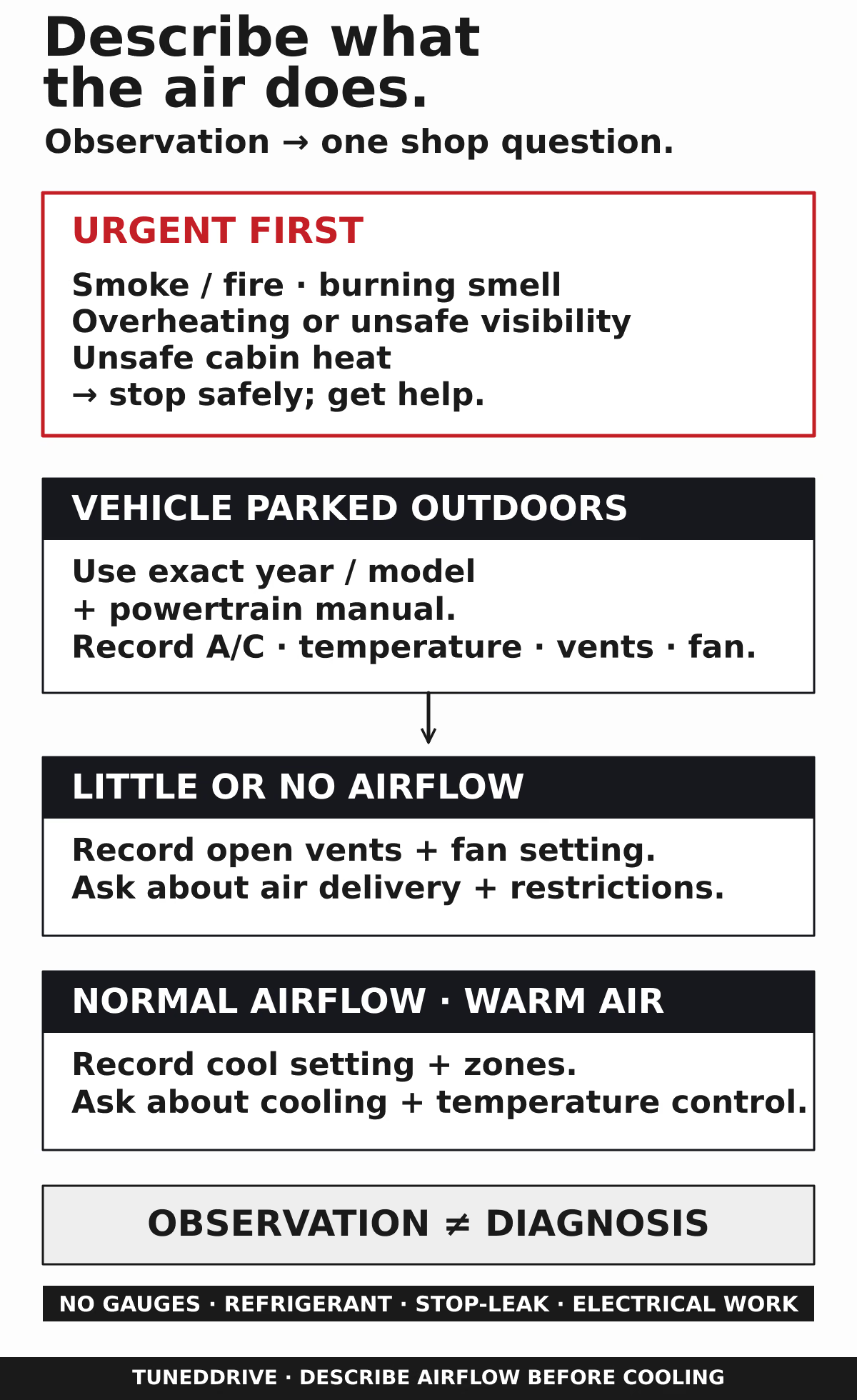
- Smoke, a burning smell, overheating or windows you can't keep clear? Pull over safely.
Maybe the fan is blowing hard but the air stays warm, or you can barely feel anything coming out of the vents. We'd pin down which of those you have before agreeing to a recharge or a new part, because each has its own causes: a dirty cabin filter can restrict airflow (opens in a new tab), while low refrigerant, condenser trouble and compressor faults affect cooling.
If you suspect a vehicle fire, get everyone out, move at least 100 feet away and well away from traffic, and call 911 (opens in a new tab), and don't go back to the car, try to fight the fire, or open the hood or trunk if you think the fire is under it.
Check that A/C is selected, each temperature zone is set cool and the vents you've chosen are open. Then use the section below that matches what you're feeling. Cooling that fades at stops, differs from side to side or fails again after a recharge is useful history for the shop.
If anyone in the car can't stay cool, find cooler transportation, especially for children, older adults and people with health conditions (opens in a new tab). Never leave a child alone in a vehicle.
On a hybrid or EV, follow the car's own warnings and service information, because cabin cooling can share equipment with other systems. On a Tesla Model 3, for example, the AC compressor also cools the high-voltage battery (opens in a new tab). How that's arranged varies by vehicle.
Check the climate controls while parked
Do any control checks while you're parked outdoors. Don't run the car in a garage, and don't sit idling just to make the problem show up. The steps below are for a US 2019 Ford Escape with automatic climate control (opens in a new tab), so check that your car has the same equipment before you follow them.
- Select A/C. The fan can run without cooling switched on.
- Hold AUTO for more than two seconds to turn off dual-zone mode, then turn the driver-side temperature control to a cool setting. Both sides should now show the same temperature setting.
- Select the instrument-panel vents and open them. Press the fan + button to turn up the airflow, and notice whether the output changes.
- For recirculation, press and release the recirculated-air button. The system can switch recirculation off to reduce fogging, and you can't select it with maximum defrost on. Keeping the windows clear comes first.
- If cooling comes back after changing the controls, keep an eye on it during your next ordinary drive. If it doesn't, go to the airflow, warm-air or side-to-side section below.
On another car, check the same things (A/C on, each zone set cool, vents open) using that model's own controls, because button holds and recirculation behavior differ between cars.
An automatic system can slow the fan without anything being wrong. On this Escape, when the weather and cabin are hot, the fan speed may drop until the air cools. If the airflow stays weak, use the airflow checks below.
The air blows hard but stays warm
If air comes out of the open vents strongly and changes with the fan speed, but stays warm or only slightly cool, the problem is cooling. Possible causes include low refrigerant, a dirty or clogged condenser and a faulty compressor (opens in a new tab), along with expansion-valve, electrical or temperature-control faults (opens in a new tab). A diagnosis is what tells them apart.
Book an AC diagnosis if the settings check leaves you with strong airflow but poor cooling. Ask what measurements or tests back up the proposed work, and mention any earlier recharge and how long it helped.
Water dripping under the car after you've used the A/C is normal condensation. A refrigerant leak won't leave a puddle, because the refrigerant escapes into the air. Get any other fluid you can't identify checked, and mention a new smell, smoke or engine warning to the shop as a separate problem.
Little or no air reaches the vents
If little air comes out of the open vents even with the fan turned up, you have an airflow problem. A dirty or clogged cabin filter can restrict airflow (opens in a new tab), and blower problems (opens in a new tab) can also leave you with weak or no air. Those need different checks from a low refrigerant charge.
Ask the shop to check whether the cabin filter is restricting airflow before you agree to a new filter.
Keep your own checks inside the car. Tell the shop whether the fan noise changes with the speed setting, which vents get air, and whether airflow comes back during ordinary driving. Book service if the airflow stays weak or the fan doesn't respond. If you can't keep the windows clear, stop safely.
Cooling fades at stoplights
Cooling that's better while you're moving but fades when you stop can point to too little air flowing across the condenser (opens in a new tab). We'd ask the shop to check that before anyone blames a fan or the refrigerant charge.
Tell the shop whether cooling fades as soon as you stop, after a while in traffic, or only in hot weather, and ask whether their findings explain that pattern. Don't sit idling on purpose to confirm it.
One side stays warmer
Set the driver and passenger temperatures to match first. If both sides then agree, keep an eye on it during ordinary driving. If one side still runs warmer, book a temperature-control diagnosis and tell the shop which side and vents are affected.
A failing blend door actuator (opens in a new tab) is one possible cause of a difference that won't go away. Ask which diagnostic finding identifies the cause before you approve a replacement.
Before you pay for a recharge or repair
We'd find out where the refrigerant went before paying for a recharge. Topping off or an evacuation and recharge doesn't permanently fix a refrigerant leak (opens in a new tab), and too little or too much refrigerant can both hurt performance. If the charge was low, ask where the leak was found and whether fixing it is included in the quote.
Leave everything beyond the cabin controls and your own observations to the shop. The refrigerant is under high pressure, and opening the system can cause injury (opens in a new tab), so that work belongs with qualified technicians.
| Proposed work | What it's for | Ask before you agree |
|---|---|---|
| Diagnosis | Finding the problem and its cause | Which tests and written findings does the diagnostic charge include? |
| Recharge | Restoring the specified refrigerant charge | Was refrigerant loss confirmed, and is leak repair included or separate? |
| Leak repair | Fixing a leak that's been found | Where is the leak, how was it found, and how will the repair be checked? |
| Compressor replacement | Replacing the compressor when the findings support it | Which finding points to the compressor, and what refrigerant service or related work is included? |
For paid AC work in the US, choose a technician with the required Section 609 training and certification (opens in a new tab) and equipment suited to your car and its powertrain.
Check for warranty coverage on your specific car before you authorize work. Under Honda service bulletin 19-091, certain 2016 to 2020 Honda Civic two- and four-door models and 2017 to 2021 five-door models (opens in a new tab) have a condenser warranty extension to 10 years from the original purchase date with unlimited miles, for qualifying defects. The Type R has its own bulletin. The extension covers that condenser defect only, so ask a Honda dealer to confirm eligibility by VIN, purchase date, defect criteria and exclusions.
When you book, give the shop the year, make, model, trim, powertrain and VIN. Describe how strong the airflow is, which vents or zones are affected, when the problem started and when it happens. Mention any warnings or smells, the controls you checked and earlier AC work, including recharges, leak repairs, parts, dye or additives. Ask for written findings and an itemized estimate, and ask how the shop will confirm the original cooling or airflow problem is fixed.
Explore the desk
Continue at the systems desk
More from the wire