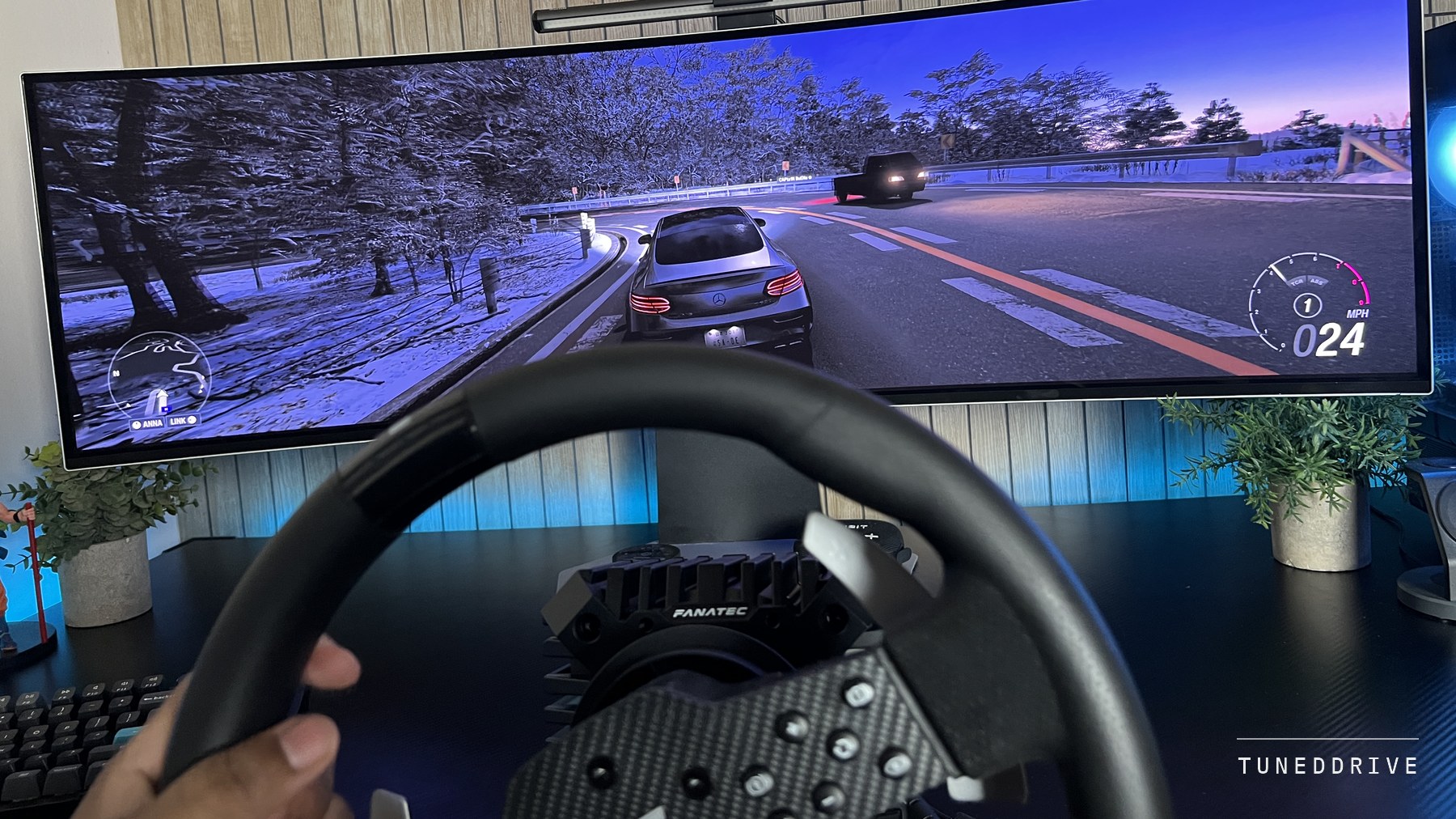
Judged From the Driver's Seat
Fanatec describes the CSL DD as its entry-level direct drive base, and this bundle adds a P1 V2 wheel and a throttle and brake set of CSL Pedals. My impressions come from a Windows PC at the 5 Nm it ships with.
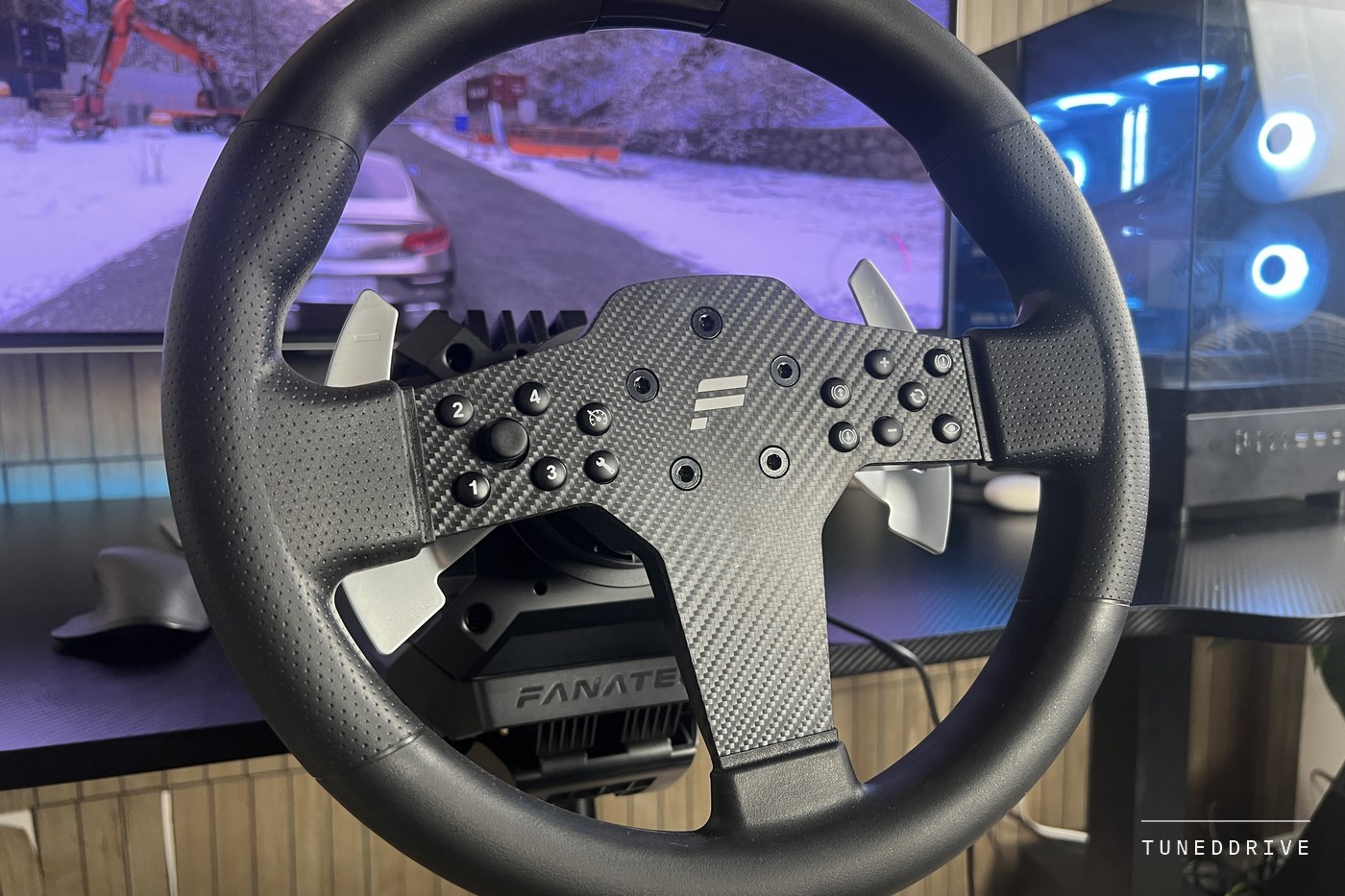
- In the box
- CSL DD base with 90 W power supply, CSL Steering Wheel P1 V2, CSL Pedals
- Peak torque
- 5 Nm, or 4 Nm with Linear scaling. 8 Nm with the Boost Kit 180
- Wheel
- 300 mm rim, 12 buttons, metal paddles, rev lights and a three-digit display
- Pedals
- Steel throttle and brake, 12-bit Hall sensors, spring and foam brake
- Platforms
- Windows PC. Xbox only with an Xbox-licensed Fanatec wheel. No PlayStation
- Not in the box
- Table clamp, stand or cockpit, mounting bolts
- Tested
- At 5 Nm on a Windows PC
I judged it the way a driver would. In a real car the steering is often the first thing to tell you how much grip is left, so the questions are how much of that this wheel passes on, what it asks of your home in return, and whether it earns a place beside a real car hobby.
The first corner answered the first question. The steering was sharp off centre, the road talked back through the rim, and I could feel grip build and then let go.
The Wheel Goes Light Before the Tyres Let Go
In a real car, cornering force acts slightly behind the centre of each front tyre's contact patch, so it tries to steer the wheels back toward the direction of travel. That self-aligning torque is much of the weight you feel in the rim, and it fades before the tyre reaches its limit, which is why the steering goes light just before the front washes wide. Vehicle dynamics research at Stanford used exactly that to estimate the grip limit from steering torque, noting that a skilled driver feels the limit through the wheel.
A sim can only pass that on if the game's physics calculates it and the motor delivers it without smearing it. Direct drive helps with the second, because the wheel mounts straight to the motor shaft with no belt or gears in between.
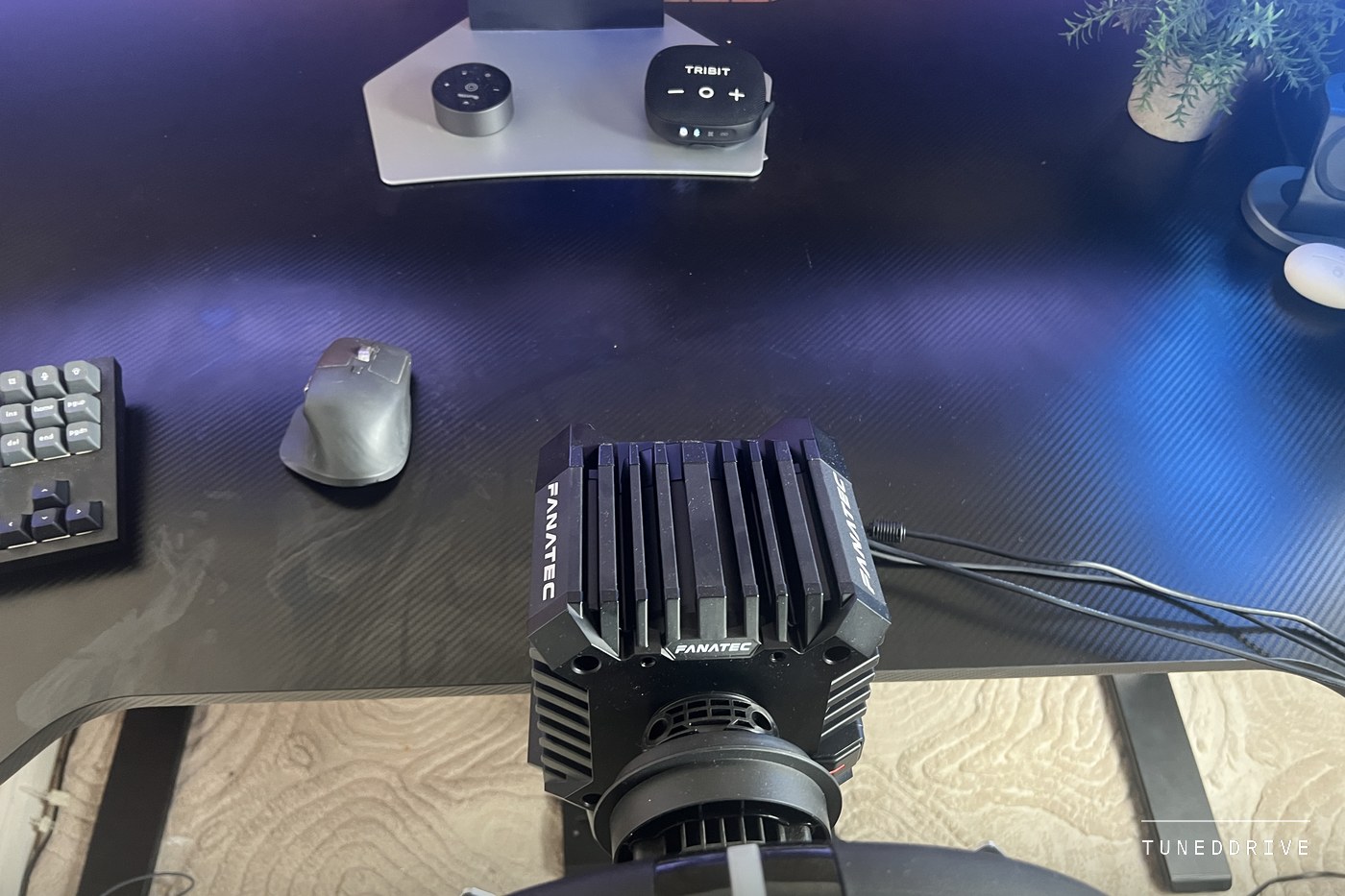
On the CSL DD it came through. Around the straight-ahead the rim felt precise, not woolly, and I could feel the front tyres beginning to give up grip, the tail getting light at a corner exit and the chatter of every kerb I ran over. The feedback stayed smooth rather than notchy, and with no fan in the base it stayed quiet through long sessions.
What Five Newton Metres Means at the Rim
Five newton metres is a peak figure, reached with the default Peak scaling. Switch the tuning menu's scaling to Linear and the ceiling drops to 4 Nm, in exchange for steadier output between peaks and held forces. The Boost Kit 180, a 180 W power supply that replaces the included 90 W one, lifts those figures to 6 and 8 Nm.
| Setup | Peak torque | Force at the rim |
|---|---|---|
| 90 W supply, Linear | 4 Nm | About 27 N, or 6 lb |
| 90 W supply, Peak (default) | 5 Nm | About 33 N, or 7.5 lb |
| Boost Kit 180, Linear | 6 Nm | About 40 N, or 9 lb |
| Boost Kit 180, Peak | 8 Nm | About 53 N, or 12 lb |
A game spends that torque on everything at once, the steady load of a long corner plus every kerb and slide on top. With less headroom, a big hit reaches the ceiling sooner and flattens, which sim racers call clipping, and Fanatec's manual says to raise force feedback on the base rather than in the game to avoid it. Fanatec also notes that a larger or heavier wheel needs more torque to feel the same, and that the light P1 V2 keeps fine detail at low torque.
Day to day, 5 Nm was enough to learn on and suited most cars. It was strong enough to feel grip arrive and disappear without wearing out my arms. The weightier GT cars and the single-seaters ran into its limit, so the Boost Kit 180 is the add-on I would save for early. The wheel will not hold it back, since Fanatec says the P1 V2 limits base torque to about 8 Nm, the CSL DD's own maximum.
A Quick Release Borrowed From a GT3 Car
Fanatec says the tapered shape of the QR2 coupling was first used in the 2022 BMW M4 GT3 race car. The bundle gets the QR2 Lite, the same shape in carbon fibre reinforced composite. Fanatec also sells diecast and billet aluminium wheel-sides, and says the billet one meets FIA requirements. Every QR2 wheel-side fits every QR2 base, so a better wheel later is a straight swap.
No other part does more to make the kit feel pricier. The wheel pushes home with a solid click and next to no free movement, so the joint swallows none of the motor's detail. For most people the Lite is perfectly solid, though I would still seat it firmly every time. Fanatec says you can swap wheels without restarting the sim or the base.
The Wheel in Your Hands
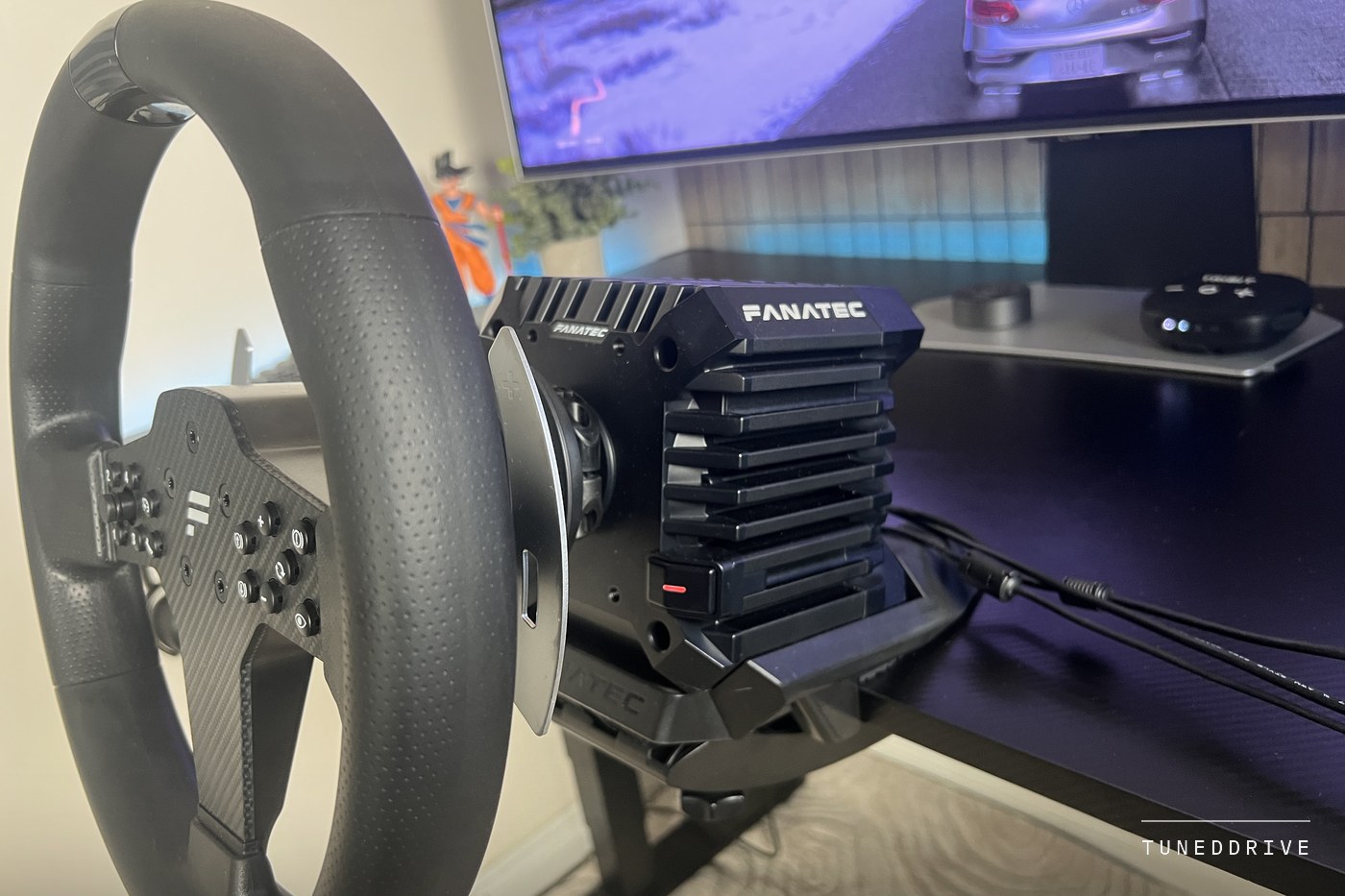
Its 300 mm diameter is true to life for most cars, and the rubber-coated grip was still comfortable deep into long sessions. Across the top of the rim, the RevStripe shift light and a three-digit readout show shift cues, speed or gear in games that support them. There are 12 buttons, a small directional stick and metal paddles that click crisply on every shift.
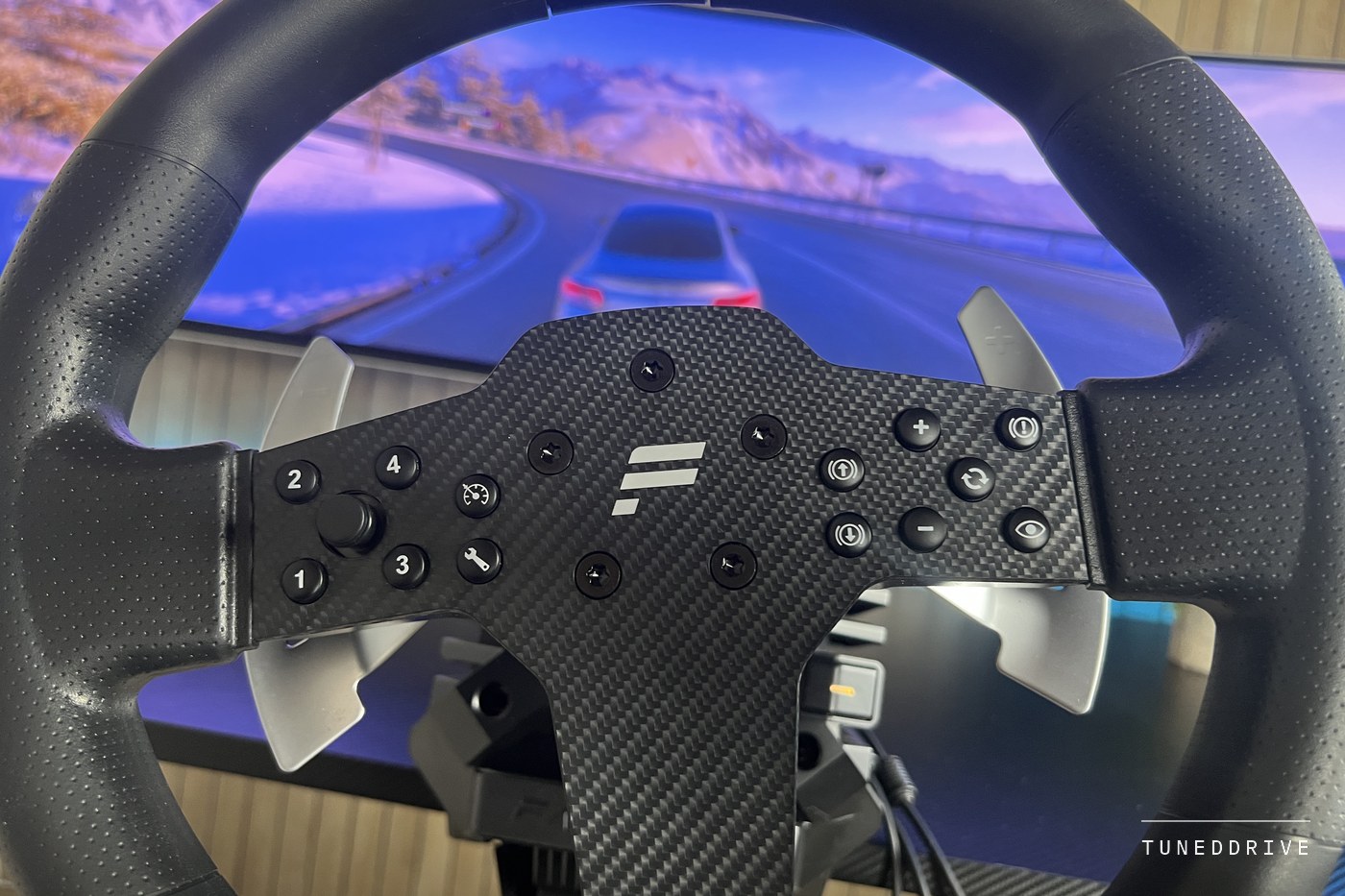
The body is moulded polymer, not the Alcantara and metal of pricier rims, and it is plainly an entry wheel. It never felt flimsy in my hands, and the paddles and buttons, which your fingers work hardest, are finished better than an entry wheel needs. Natural Inertia, which adds simulated steering weight, is the setting Fanatec suggests for light CSL wheels like this one.
Steel Pedals, and a Brake That Wants a Load Cell
The CSL Pedals are the surprise in the box. Made from thick steel, the set is heavy enough to stay put on the floor and feels thoroughly durable, and each pedal tracks position with a contactless 12-bit Hall sensor that should not wear. Spacing and pedal-face height both adjust, the faces in three 15 mm steps, which was enough to find a comfortable position.
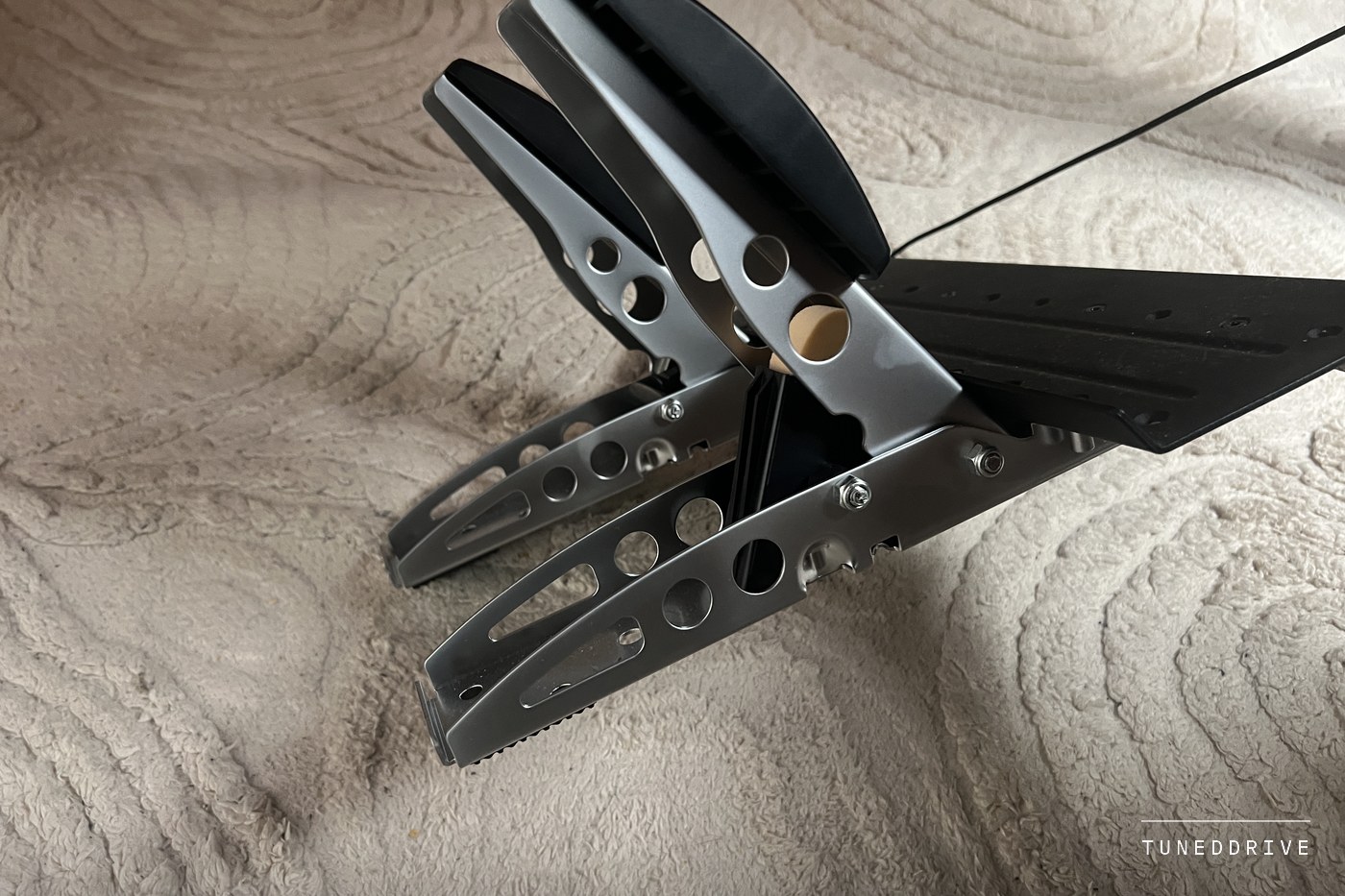
The brake has a stiffer spring than the throttle and a PU foam damper, which makes it firmer and more progressive, but it still stays fairly soft underfoot. That matters to a driver, because a real brake pedal is controlled more by how hard you press than by how far it moves, and a spring pedal measures travel. Fanatec's Load Cell Kit measures force instead, and it adds a third pedal by turning the old brake into a clutch, plus its own USB connection. The cheaper Clutch Kit adds a clutch and nothing else.
Two smaller parts will interest anyone who drives a manual for fun. Fanatec's optional aluminium pedal faces extend the throttle for heel-and-toe downshifts, and the base takes an H-pattern shifter.
What It Takes From the House
Nothing in the box holds the base down. Fanatec sells a CSL DD Table Clamp for desks 5 to 60 mm thick, which tilts the base at a fixed 15 degrees, or you can bolt it to a wheel stand or cockpit with bolts you supply. The clamp saves space, and the wheel then sits at whatever height your desk does.
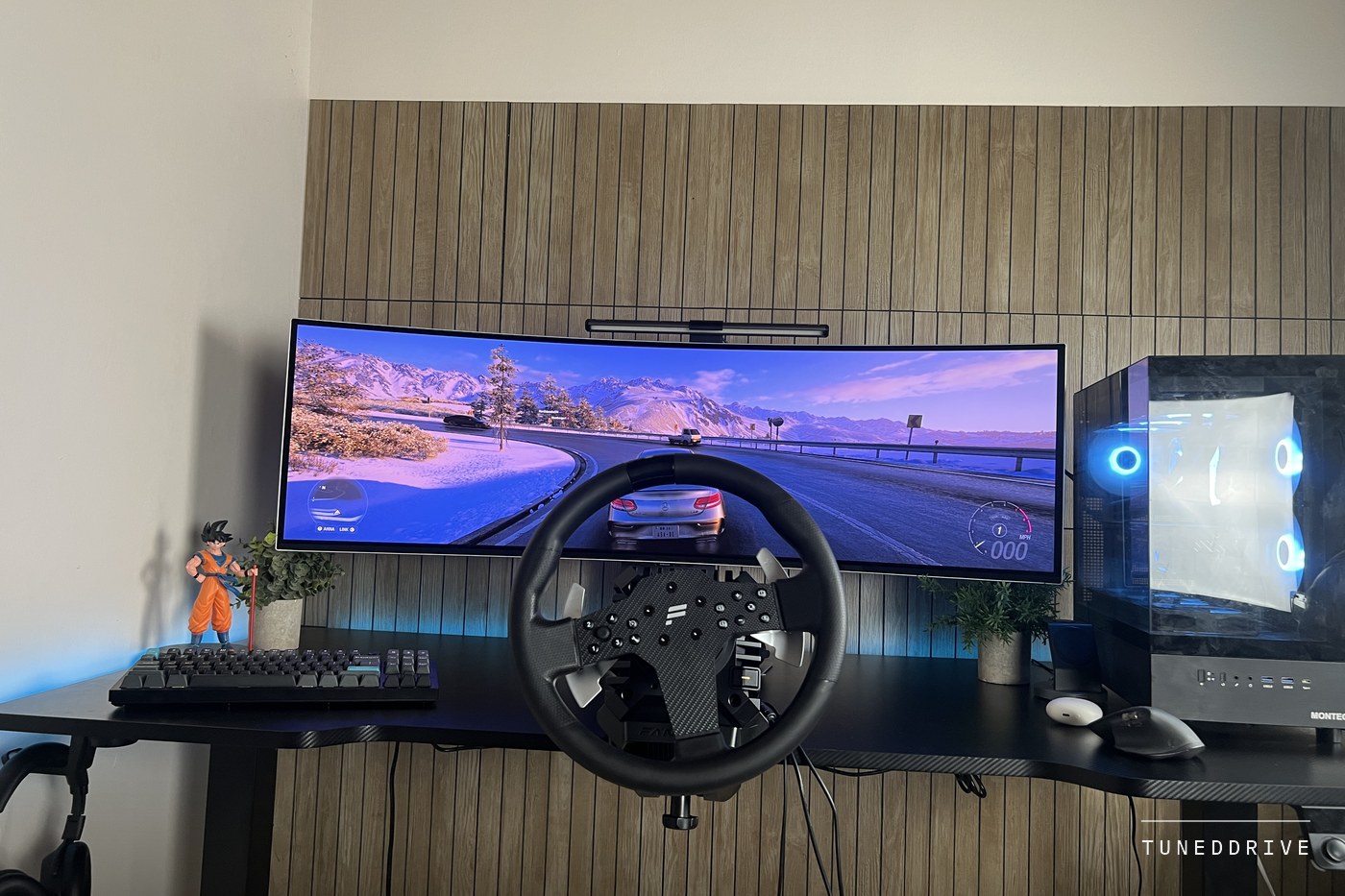
Whatever holds the base becomes part of the steering. On a light desk the base worked, but I lost some of the feel to the desk flexing. Fanatec suggests giving the surface a firm shake before you mount anything, and securing whatever else sits on it, since a hard jolt through the wheel can knock things over.
The pedals need something to push against. Their rear plates are made to brace against a wall, and Fanatec's own space guide warns that an office chair can roll back under braking, so plan on locking castors or a chair that stays put. The pedal cable runs about 2 m and the USB lead about 2.9 m, which decides how far apart everything can live.
Headed for the garage? Fanatec's pedal manual gives an operating range of 15 to 35°C, roughly 59 to 95°F.
The First Evening Is Setup, Not Driving
Assembly is straightforward. Getting it dialled in takes longer, and my first evening was more tinkering than driving. You need a Windows PC. Fanatec's software is now the Fanatec App, which it says is required to run the hardware on PC and to install firmware on every platform, so even an Xbox owner needs a PC for updates.
The tuning is the learning curve. The Standard Tuning Menu limits the on-wheel settings to steering angle, force feedback strength and a natural damper, and Auto Setup hands the values to games that support it. The Advanced menu adds friction, inertia, smoothing, effect intensity and more, and they interact. Once it was set up the changes were meaningful, and a saved profile per game stops you redoing it.
Fanatec's June 2026 firmware added FullForce, which lets supported games layer engine vibration, surface texture and the onset of wheel slip onto the steering signal. Nothing in this review isolates it.
As sold this is a PC kit, since the P1 V2 is not Xbox compatible. The base needs an Xbox-licensed Fanatec wheel for Xbox and, Fanatec says, can never work on PlayStation, where its Gran Turismo DD Pro is the answer.
Where It Fits Beside a Real Car
For someone who already loves driving, the best case for a rig like this is learning. Some experienced track-day drivers learn a circuit's layout, braking points and gear changes on a sim before they arrive, then still walk the track. A sim also lets you explore past the limit without risking a car or anyone else.
Claims beyond that deserve care. A 2024 systematic review of 15 studies of simulator training for young novice drivers found skills improved in the simulator but could not show they carry over to real roads, and rated the evidence low quality. And a home rig gives your body none of the g-forces a car does.
Mindset matters too. Psychology experiments on racing games found players took more risks in a simulated traffic test afterwards, and a follow-up found that happened only with games that reward breaking traffic rules. A circuit sim that penalises track limits and contact looks more like the other kind, which is reassuring rather than proof.
Who Should Clear the Space
As driving hardware, the CSL DD gets the important thing right. It passes on the road, the grip and the moment the grip goes, which is what a car person wants from a wheel. Everything around that is honest work. There is a mount to buy, a desk or rig solid enough not to waste the feel, a brake that wants a load cell and an evening of setup before the first proper lap.
I score it 8.5 out of 10. The feel alone would score higher. The missing mount, the soft brake and the PC-only box keep it just below that.
Buy it if you drive for pleasure, own a Windows PC and a solid desk or room for a stand, and want to feel what a car does at the limit. Budget for a mount now and the Boost Kit 180 soon after.
Look elsewhere if you race on a PlayStation, expect to be on track minutes after unboxing, or have nothing solid to brace the pedals against.
Can I use this kit on a PlayStation 5 or an Xbox?
Straight from the box, it is Windows PC only. The base works on Xbox only with an Xbox-licensed Fanatec wheel, and never on PlayStation. Fanatec's PlayStation direct drive base is the Gran Turismo DD Pro.
Is 5 Nm enough?
For learning and most cars, yes. It shows grip and the loss of it without tiring your arms. Heavier GT cars and single-seaters find its limit, and fitting the Boost Kit 180 lifts peak torque to 8 Nm.
What else do I need to buy?
A mount, either the CSL DD Table Clamp or a stand or cockpit with your own bolts. Then the Boost Kit 180 for torque and the Load Cell Kit for braking.
Will sim racing make me a better driver?
It can help you learn a circuit and how a car behaves near the limit. Research on simulator training for new drivers has not shown the skills carry over to real roads, so treat it as a classroom, not road practice.
Explore the desk
Continue at the systems desk
More from the wire