A hard brake pedal is the big one
- The classic sign is a brake pedal that suddenly takes much more effort to push, often with longer stops.
- A hiss when you press or release the pedal, or an engine that stumbles or stalls as you brake, points to a vacuum leak at or around the booster.
- A pedal that sinks to the floor is typically a brake line or fluid leak, and it needs inspecting right away.
- Any of these means getting the car to a repair shop as soon as possible, because unreliable brakes are dangerous to keep driving.
Something about your brakes feels off, and you want to know whether the booster, the part that multiplies the push from your foot, is behind it. We'd start with the feel of the pedal, because making the pedal lighter is the booster's whole job, so a sudden heavy pedal is the sign most directly tied to it.
The pedal takes a lot more push than it used to
The booster sits between the brake pedal and the master cylinder. When you press the pedal, a valve lets outside air into one side of the booster while engine vacuum holds the other, and that pressure difference pushes a diaphragm forward to add force at the master cylinder.
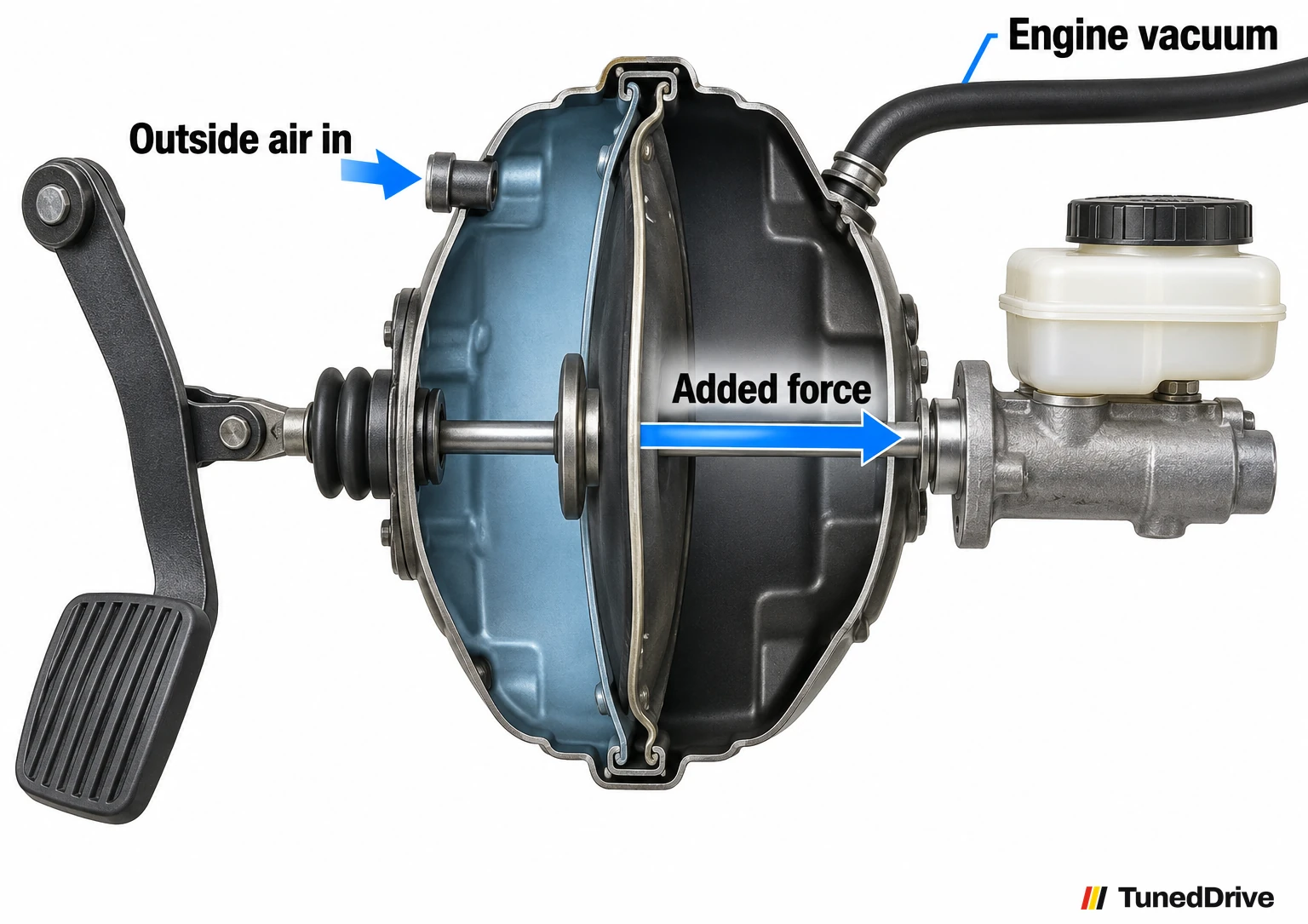
Take that help away and your leg has to supply all the braking force. That's why a hard or unresponsive pedal is one of the earliest and most noticeable signs of a failing booster.
A working booster's job is making the pedal easier to press rather than making the brakes themselves stronger, which is why effort is where you tend to feel the change first.
You may also notice the pedal travels less than normal when you press it and comes back up more slowly when you let go, because the booster's chambers are out of balance. A damaged diaphragm can sometimes leave the pedal feeling spongy or unresponsive instead of rock-hard, so write down exactly how it feels.
The car needs more room to stop
Less assist means less hydraulic pressure reaching the brakes, so stopping distances stretch out even in normal driving. MP Brakes, a brake-parts maker, describes the extra distance as several feet or more, and says it's likely to keep getting worse until the problem is fixed.
This one can creep up on you, because a booster sometimes fails gradually. If you find yourself braking earlier than you should to stop, have the brakes checked.
Booster complaints often trace back to other parts of the brake system, such as worn pads or a fluid or vacuum leak. If the pads and rotors look good, the booster moves up the list.
You hear a hiss or whistle when you brake
A torn diaphragm or a vacuum leak in the booster can whistle or hiss, especially as you press or release the pedal. That's often air escaping the vacuum chamber, and it tells you the fault is vacuum-related, inside the booster or outside it.
Note whether the sound arrives with anything else. A vacuum leak can bring a whistle and a stumbling feel from the engine at the same moment you brake, and that pairing is worth telling the shop about.
The engine stumbles, idles rough or stalls while braking
A vacuum leak in the booster lets unregulated air into the intake manifold and upsets the air-fuel mixture. That can mean rough idle, weaker engine performance or stalling, especially when you're braking at low speed or sitting still.
With a large leak or failed internal seals, the booster can draw so much vacuum when you press the pedal that the engine stumbles, the RPMs drop and it stalls outright.
On newer fuel-injected cars, a hole in the diaphragm may show up as worse fuel economy as the computer compensates. Older cars can run lean instead, which may sound like pinging or feel like lost power, and left alone that can lead to burnt valves or piston damage.
Failed booster seals can even let brake fluid end up inside the booster, and damaged seals in the master cylinder can do the same. That's one reason a stall-while-braking complaint deserves a look at both parts.
The check engine light came on too
A malfunctioning booster can make the car's onboard diagnostics turn on the check engine light and store a trouble code. That light has plenty of other possible causes, so have the code read with a scan tool to find the specific issue.
The pedal sinks to the floor, or the assist comes and goes
A pedal that drops to the floor when you press it is a very different feel from the hard pedal above. It's typically linked to a broken brake line or leaking brake fluid, though sometimes a cracked booster leaking fluid at one of its connections can cause it.
Diesel trucks add a wrinkle. Diesel engines generally make much less manifold vacuum than gas engines, so many diesels use a separate vacuum pump to support the brake booster.
Most of those pumps are electrically powered, so wiring or internal faults can make the brake assist come and go. If the assist on your diesel feels intermittent, or the pedal is stiff and the truck takes longer to slow or stop, contact a diesel mechanic as soon as possible.
Why a healthy booster can still get the blame
Every symptom above can make the booster look bad when something feeding it is the real problem. These are the parts worth having checked alongside it.
- Low vacuum coming from the engine, which leaves even a good booster short of assist.
- A failed check valve or grommet at the booster. The check valve stops air flowing back into the vacuum chamber, and when it clogs or wears the booster can't hold vacuum, especially during heavy braking or after the engine shuts off.
- A cracked, disconnected or incorrect vacuum hose. Even small leaks can add up over time and make the pedal harder to press.
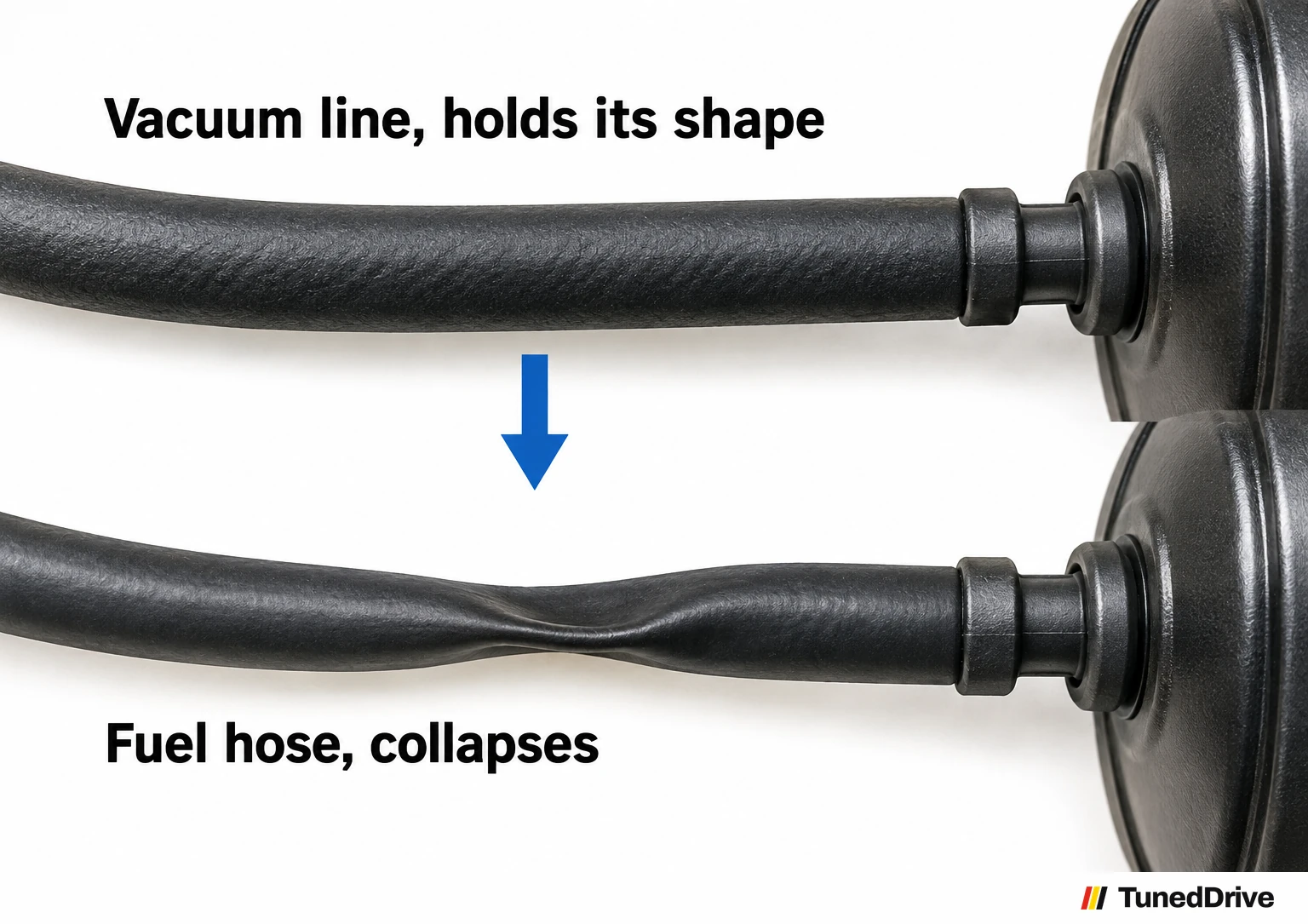
The wrong hose catches people out. If a fuel hose was fitted where a vacuum line belongs, it can collapse and leave the booster without the vacuum it needs, and a new booster won't fix that.
That's why a symptom tells you where to look rather than which part has failed. Pinpointing the exact cause first saves money over throwing parts at the car.
When to get it to a shop
Booster failure is relatively rare, but every symptom here affects how well you can stop. Take action right away rather than waiting it out, because these signs mean the car has become unsafe to drive.
Get the car into a repair shop as soon as possible. Driving on brakes that are unreliable in any way is highly dangerous, and a failing booster can end in complete brake failure.
For a diesel truck, look for an ASE-certified diesel mechanic, who can test drive it, diagnose the problem and repair it.
A few details help the technician narrow it down faster.
Tick what applies and add details; the note above fills in as you go.
More in this category