The color is only your first clue
- Antifreeze can be green, orange, red, blue, pink, violet, purple or yellow.
- Its dye tells you the shade, not the coolant chemistry your car requires.
- Find the specified coolant in your owner's manual before comparing bottles.
If you're holding a bottle because it looks like the coolant already in your car, we'd check your vehicle's specification first. Two yellow coolants from the same maker carry different specifications, so a visual match can point you toward the wrong product. Keep the full specification in front of you when you read a bottle.
Color is useful when you're describing a named product or finding it on a shelf. It becomes a poor buying rule when the product name is lost: manufacturers add dye, and there is no universal standard linking a shade to a formulation. Your car's required coolant type is the detail that moves the choice forward.
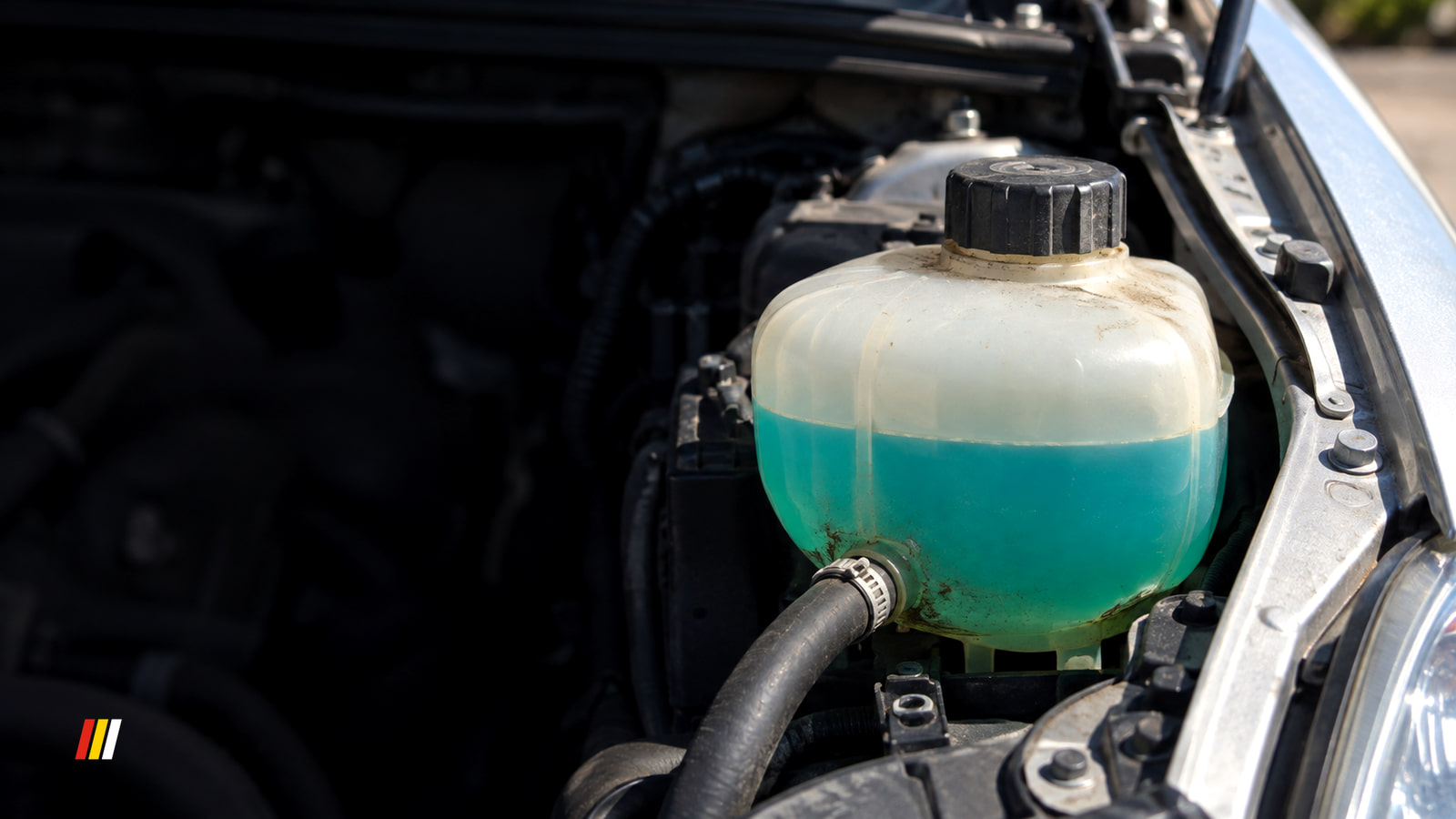
The colors you'll find on bottles
Green is one documented shade, alongside orange, red, blue, pink and yellow. Purple and violet also appear as separate labels on named coolant products. These are examples of products sold in those colors, rather than a chart that assigns a type of antifreeze to each shade.
You can see that range even within one product line: Prestone MAX American Vehicles products include orange and purple versions; its MAX Asian Vehicles products include red, blue and green versions. MAX European Vehicles products include pink and violet, while Prime All Vehicles is labeled yellow. Those regional words are product names, so use your vehicle's specified type to assess a particular bottle.
That distinction matters if you remember only a color from a previous purchase. A product name identifies the bottle you mean; the dye describes how it looks. If you're trying to buy the required coolant, bring the specification from your owner's manual into the comparison.
Why a familiar shade can mislead you
Green doesn't reliably mean IAT, orange doesn't reliably mean OAT, and pink doesn't reliably mean an Asian specification. The same shade can represent different coolant chemistries across brands. Read the formulation and compatibility information for the actual product you're considering.
Coolant types differ in their additive formulations. That difference matters because additives in different types can react when the types are mixed. A dye gives you no way to identify the inhibitor package inside the bottle, even when two fluids look alike.
Matching colors doesn't establish compatibility; it tells you only that the fluids look similar. Use the shade to describe or recognize a known product, then use its stated type and your vehicle's requirement to make the decision. This also works when you don't know the name of an earlier fill: the visible color doesn't have to supply the answer.
Two yellow bottles can carry different specs
On Ford's Motorcraft products, Yellow Prediluted Antifreeze/Coolant is approved to WSS-M97B57-A2, while Yellow Concentrated Antifreeze/Coolant is approved to WSS-M97B57-A1. Motorcraft Gold Antifreeze/Coolant is yellow as well, but its specification is WSS-M97B51-A1. All three descriptions include yellow; their names and specification codes carry the distinction.
If a note from an earlier service says only “yellow,” it hasn't captured which of those products was meant. Look for the complete product name and specification when you have them, and check your particular vehicle's coolant requirement before choosing a replacement. The shared color cannot settle that comparison.
The prediluted and concentrated Yellow products also show why it's worth reading every word of the label. Even closely named products carry different specification suffixes. Keep the suffix attached to the full code when comparing it with your vehicle's requirement.
Find your car's coolant requirement
Open the owner's or service manual for your vehicle and find the coolant type it specifies. The manual may name the intended formulation. Use that requirement as your shopping reference, then compare it with the candidate product's stated type and compatibility.
Use the vehicle instructions for its change interval, cooling system capacity and service directions, too. A coolant color chart can show you products and shades, but those vehicle details come from the owner's or service manual. Keeping them with the vehicle's specification prevents a bottle's broad label from taking the place of your car's instructions.
The specified formulation matters to the water pump seals, radiator metals, heater core and engine block. You don't need to identify those materials from the coolant's appearance. You need the type the vehicle calls for and product information that supports that choice.
What an orange product's claim covers
Prestone claims its American Vehicles (Orange) Antifreeze + Coolant is compatible with DEX-COOL and works with all other fluid colors. That claim belongs to the named orange product. Its color chart is a guide, directs you to the vehicle owner's manual for coolant information, and notes that data and formulas may change.
Valvoline warns against mixing different coolant types because their additives can react. Its guidance calls for the manual-specified type and says to avoid mixing products unless they are explicitly labeled compatible. Keep that restriction beside the orange product's claim when you read compatibility language: neither statement makes color a rule for every bottle.
Read a compatibility claim for the product it actually names, then check the claim against your vehicle's required type. If you're comparing a different orange bottle, find that bottle's own stated compatibility. The name and stated conditions are what you can evaluate; the orange dye cannot carry another product's claim over to it.
A universal label still needs a spec check
For Ford vehicles, the approval boundary is tighter than a broad “universal” label suggests. Ford recommends only coolants it has approved for its vehicles and says no single coolant has been proven to work in every vehicle. For those vehicles, Ford does not recommend mixing coolants unless directed to do so under specific conditions with Ford-approved products; mixing may harm the cooling system.
Motorcraft Gold makes the distinction concrete. Ford vehicles equipped with it require silicates and nitrites. Universal coolants generally lack those ingredients and generally don't meet or carry Ford approval to WSS-M97B51-A1. A bottle's universal claim therefore gives a Ford owner a different piece of information from approval to that exact specification.
Check the approval or specification printed for the candidate product against the one required by your vehicle. For a vehicle calling for Motorcraft Gold's WSS-M97B51-A1, look for that code and the applicable Ford approval when assessing a bottle. Use the same specification-led comparison for another vehicle, with that vehicle's own requirement.
Make the final bottle comparison
When you've found your vehicle's requirement, read the candidate bottle as a complete product: its name, coolant type, stated compatibility and any required approval. Compare those details with the manual's specification rather than choosing from a row of similar colors.
If the bottle gives you only a broad color or universal claim, keep looking for product information that addresses the required type and approval. If its stated details match your vehicle's requirement, you have a specific basis for choosing it. Finish by checking the full specification code, including its suffix, against the one you wrote down.
Preferred source
See more TunedDrive on Google
Select TunedDrive in Google’s source preferences. It takes a few seconds and costs nothing. Our car news, reviews and fixes become more likely to appear in your Top Stories, and AI Overviews can mark them as preferred.
More in this category