The rate depends on the tire and how it's used
- Tire design, how and where you drive, and maintenance all affect how long new tread lasts.
- While parked, inspect each tire for damage and wear, then check its pressure with a gauge.
- Stop using a tire with damage or tread at the replacement limit. Have rapid uneven wear or a change in how the car feels inspected.
If the tires on a recently bought car look worn sooner than you expected, we'd check their condition and pressure before judging the tire itself. Underinflation can cause irregular wear and internal damage, while some performance tires give up tread life for grip. Those call for different next steps.
The tire's materials, construction and tread design affect durability, handling and traction. How and where you drive matters too, as do rotation, balance and alignment. Start with what you can observe on the parked car, then use those observations to decide what needs an inspection.
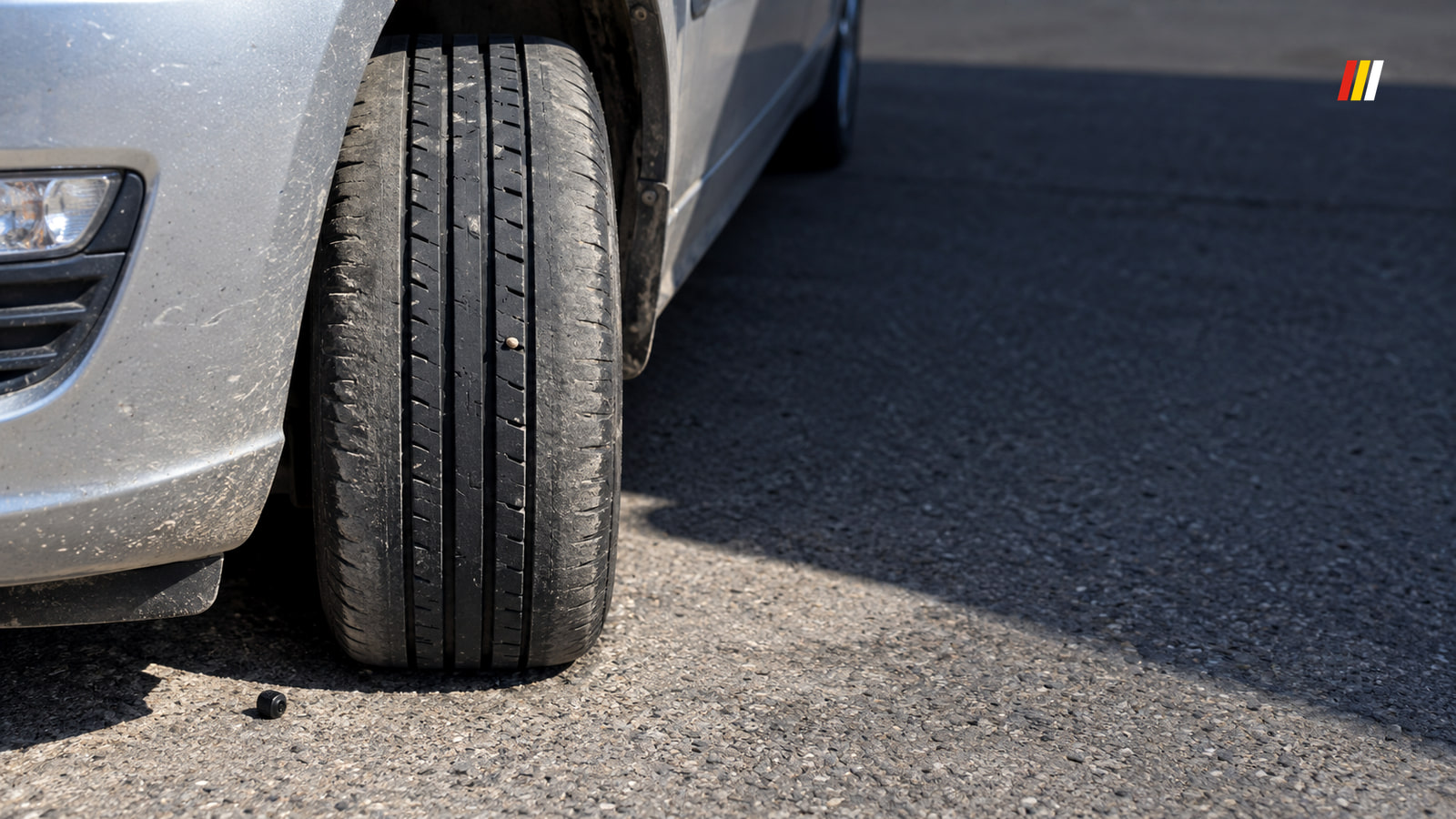
What the tread tells you before you drive
Look over every tire at least once a month when you check pressure. Watch for uneven wear, unusually smooth areas, high and low spots, cuts, cracks and bulges. Notice which tire and which part of its tread looks different, so you can describe what you found.
Tread gives the tire grip, especially on wet or icy roads. The raised wear indicators sit between the tread blocks; when the tread is level with an indicator, replace the tire. You can also put a penny into a tread groove with Lincoln's head upside down and facing you. If you can see the top of his head, replace the tire.
A tire worn to 2/32 inch needs replacement. Check the visible tread across each tire rather than looking at one spot: irregular wear deserves attention even when another part still has tread.
Get a cold pressure reading
Check pressure with a gauge at least once a month, including the spare, after the car has been parked for at least three hours. The target is on the tire and loading label at the driver's door edge or post, or in the owner's manual. Use that vehicle specification, not the number printed on the tire.
Compare each reading with the pressure specified for that tire's position. If it's low, note how many pounds of pressure are missing and add that amount of air. If it's high, gently press the valve stem with the edge of the gauge to release air slowly until the reading reaches the target.
Recheck every tire after adjusting it. Front and rear targets can differ, so keep the vehicle's specified difference instead of making all four readings match. A cold reading matters here because driving warms the tires and raises the pressure you measure.
If the pressure warning appears after a drive
A quiet tire-pressure warning light is your cue to keep using the gauge each month. The system warns when a tire is significantly underinflated; a tire can need attention before that warning appears. If the symbol does come on, inspect the tires and check their pressure as soon as possible.
If you've already driven and think a tire is low, fill it to the recommended cold pressure shown on the vehicle label. That's a temporary response to a warm tire, whose reading can be higher after driving. Once the tires have been parked long enough for a cold reading, check again and adjust to the specified pressure. The warning symbol should go out after the tires are properly inflated.
Pressure and road hits can change the pattern
Too little air creates heat and stress inside a tire, causing irregular wear and internal damage. Too much air makes a tire more vulnerable to cuts, punctures or damage when it hits an obstacle such as a pothole. That makes the vehicle's pressure target useful for both wear and protection against damage.
After a pothole or curb strike, a tire can suddenly lose pressure. A road hazard can also disturb alignment, which can lead to rapid, uneven tread wear. Check the tire while parked, and mention the impact if you arrange an inspection.
Rapid uneven wear needs a vehicle check
Rapid, uneven wear or pulling can point toward an alignment problem. Alignment affects whether the car veers on a straight, level road and how long its tires last. Ask a tire dealer to check and correct alignment when those signs appear, including after a road-hazard impact.
Have a qualified technician assess balance as well when the car shakes or vibrates. Proper balance and alignment matter to tire life and vehicle safety. Tell the shop which tire is changing fastest, what you saw while parked, and whether pressure has been dropping, so the inspection starts with the symptoms you actually have.
The fitted tire changes the trade-off
Once you've accounted for pressure and obvious uneven wear, look at the type of tire fitted to the car. High-performance tires tend to have less tread life than standard passenger-car tires because their design puts more emphasis on grip and performance. Performance tires can trade tread longevity for handling precision and wet and dry grip.
That trade-off depends on the actual tire. A new car can also come with low-rolling-resistance tires, which manufacturers specify for efficiency. Tire design influences durability as well as fuel efficiency, so factory fitment alone doesn't give you a wear-rate answer.
If you're comparing tires, a treadwear grade describes relative wear rate: a higher number indicates tread that should take longer to wear down. Use it as a comparison, then keep your driving conditions and maintenance history in view when judging how your own set is wearing.
Use your car's rotation rules to limit uneven wear
Check your owner's manual for whether the tires can be rotated, how often to do it and which pattern to use. Rotation can reduce irregular wear and help tires last longer. Some vehicles don't recommend rotation, and different-size front and rear tires may limit it.
If the vehicle manufacturer recommends rotation, the guidance is every 5,000 to 8,000 miles or sooner when uneven wear appears. If the manual gives no rotation period, the U.S. Tire Manufacturers Association recommends the same 5,000-to-8,000-mile interval. Let the manual settle the pattern and any restriction for your car.
After a rotation, check that each tire is inflated to the vehicle specification for its new position. Keep checking tread and cold pressure each month; you'll have a clearer view of whether wear is staying even or changing again.
Preferred source
See more TunedDrive on Google
Select TunedDrive in Google’s source preferences. It takes a few seconds and costs nothing. Our car news, reviews and fixes become more likely to appear in your Top Stories, and AI Overviews can mark them as preferred.
More in this category