The comparison that answers 40 PSI
- 40 PSI is right when it matches your car’s recommended cold tire pressure.
- Find that number on the driver’s door label or in the owner’s manual, then check the tire with a good-quality gauge.
- If the reading was taken after driving or in the sun, let the tire cool before deciding whether to change it.
If you saw 40 PSI at an air pump or after a drive, the reading needs one more piece of information: your car’s cold-pressure target. We’d find that target and take a cold gauge reading before touching the valve, because the car maker sets the recommended pressure and heat can raise the pressure you see. Once those two numbers are in hand, you can decide whether to leave the tire alone, add air or let some out.
Use the car’s number, not the tire’s maximum
Look for the tire-pressure label on the post inside the driver’s door, or use your owner’s manual. Its recommended pressure is a cold reading, so keep that number beside the reading from your gauge. If you want help locating it, find your car’s pressure label before adjusting a tire.
The PSI molded into a tire’s sidewall serves a different purpose. It marks the tire’s maximum pressure, while the vehicle’s recommendation is the number to use for everyday inflation. Don’t fill to the sidewall maximum as your target: at that pressure, handling and braking can suffer, and the risk of a blowout rises.
A general pressure range cannot settle this choice for your car. The recommendation belongs to the vehicle, and the measurement needs to be cold. That’s why 40 PSI can be the right reading for one car, above the target for another or below the target for a third.
Where your cold reading lands
| Your car’s cold target | What 40 PSI means | What to do |
|---|---|---|
| Below 40 PSI | The tire is above its recommended pressure. | Release air through the valve, then measure again. |
| 40 PSI | The reading matches the recommendation. | Leave the pressure where it is. |
| Above 40 PSI | The tire is below its recommended pressure. | Add air, then measure again. |
Read the table only after the tire has cooled and you’ve checked it with your own gauge. The direction of the mismatch matters: a tire below its recommended pressure needs air even when the gauge shows 40 PSI, while a tire above its recommendation needs some air released. Stop adjusting when the gauge matches the vehicle’s cold target.
If you saw 40 PSI after driving
Driving or direct sun can raise tire pressure by several PSI. A 40 PSI reading taken under either condition calls for another check after the car has been still for at least three hours, preferably before driving and with the tire out of direct sun. Use that cold reading for the comparison with the door label or owner’s manual.
Leave the valve alone while you wait. Letting air out of a warm tire to reach a cold-pressure target could leave it below that target once it cools. After the cold check, follow the matching row in the table and make any needed adjustment then.
Get a cold reading with a gauge
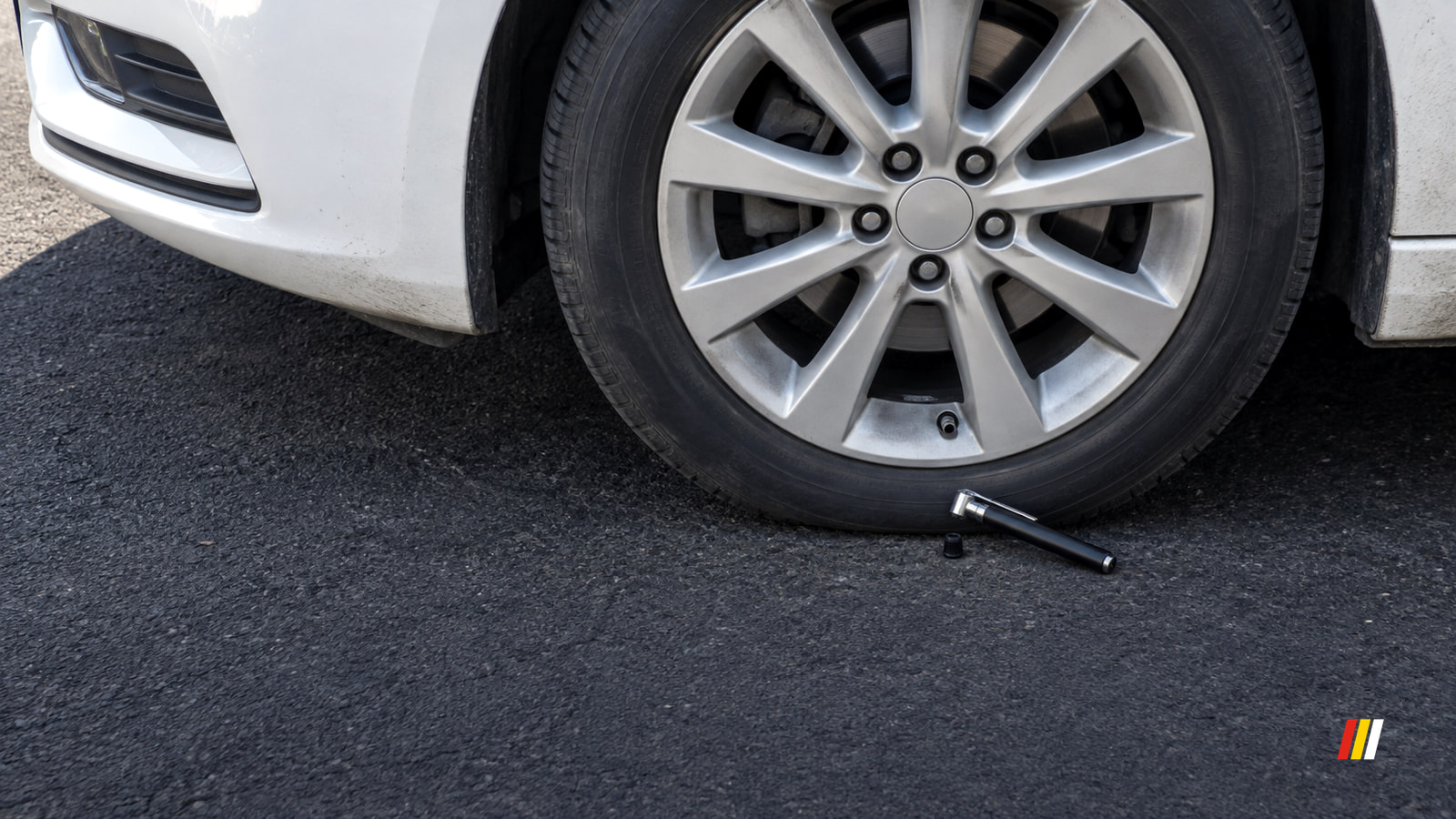
Bring a good-quality tire gauge to the car. A tire can look properly inflated when it isn’t, and the gauge on an air pump isn’t the one to rely on for this check. Your own gauge gives you a reading to compare with the recommended cold pressure.
- Let the car stand for at least three hours, with the tire out of direct sun or heat. You’re ready to take a cold reading.
- Remove the cap from the tire’s valve. The valve is ready for the gauge.
- Press the gauge firmly onto the valve until air stops hissing around its edge, then read the PSI shown on its dial or rod. You now have a number to compare with your car’s recommendation.
If the number matches the recommendation, the pressure check is finished. If it differs, keep the gauge handy for another measurement after you change the pressure. That second reading, rather than the amount of air you think you added or released, tells you when you’ve reached the target.
Bring a cold mismatch back to target
When a cold reading is below the car’s recommendation, add air until the gauge reaches that number. Check again with your own gauge as you fill, especially if you’re using a pump with its own display. For more help at the pump, follow the tire-filling steps.
When a cold reading is above the recommendation, press the metal stem in the center of the valve to release air. Measure again with the gauge and continue until the reading matches the vehicle’s target. Use the recommended pressure you found on the car or in its manual, not the tire’s sidewall maximum.
Put the valve cap back on after the final reading. It helps keep dirt and moisture out and helps prevent leaks. The check is complete when the cold gauge reading matches the recommendation and the cap is back in place.
Why the target matters
Pressure below the recommendation can build excessive heat in a tire and weaken it to the point of failure. It can also increase fuel use and wear the tire more quickly and unevenly. That’s why a cold 40 PSI reading still needs air if your car calls for a higher pressure.
Too much pressure can make the ride harsh and wear the tire unevenly. Overinflation can also wear the center of the tread early. Bringing a cold tire down to the vehicle’s recommendation addresses that mismatch without using the sidewall maximum as an everyday setting.
Keep checking after you set the pressure
Check tire pressure about once a month with a good-quality gauge while the tires are cold. Tires can lose pressure in cold weather, and their appearance won’t reliably tell you when they need air. Keep using the car’s recommended pressure for the comparison, even when no tire looks low.
Include the spare tire in that monthly check. Give the tires at least three hours at rest, measure with the gauge and replace the valve caps when you’re done. You’ll finish with readings you can compare with the recommended pressure instead of judging the tires by sight.
Preferred source
See more TunedDrive on Google
Select TunedDrive in Google’s source preferences. It takes a few seconds and costs nothing. Our car news, reviews and fixes become more likely to appear in your Top Stories, and AI Overviews can mark them as preferred.
More in this category