Find your vehicle’s pressure recommendation
- Find the Tire Information Label inside your vehicle’s doorframe. It gives the recommended cold tire pressure for your vehicle.
- Use a quality gauge to compare your current cold pressure with that recommendation. A rest of at least three hours meets the cold-check condition.
When you’ve got a gauge in hand but no target number, we’d find the label first because it gives you a recommendation for your own vehicle. That turns the check into a useful comparison: the pressure you measure against the pressure your vehicle calls for.
Look inside the doorframe for the Tire Information Label and read its recommended cold pressure. Chevrolet’s tire-checking guidance (opens in a new tab) identifies that location in its general checking instructions. Keep the recommendation available while you check, so you can compare your reading directly with the label.
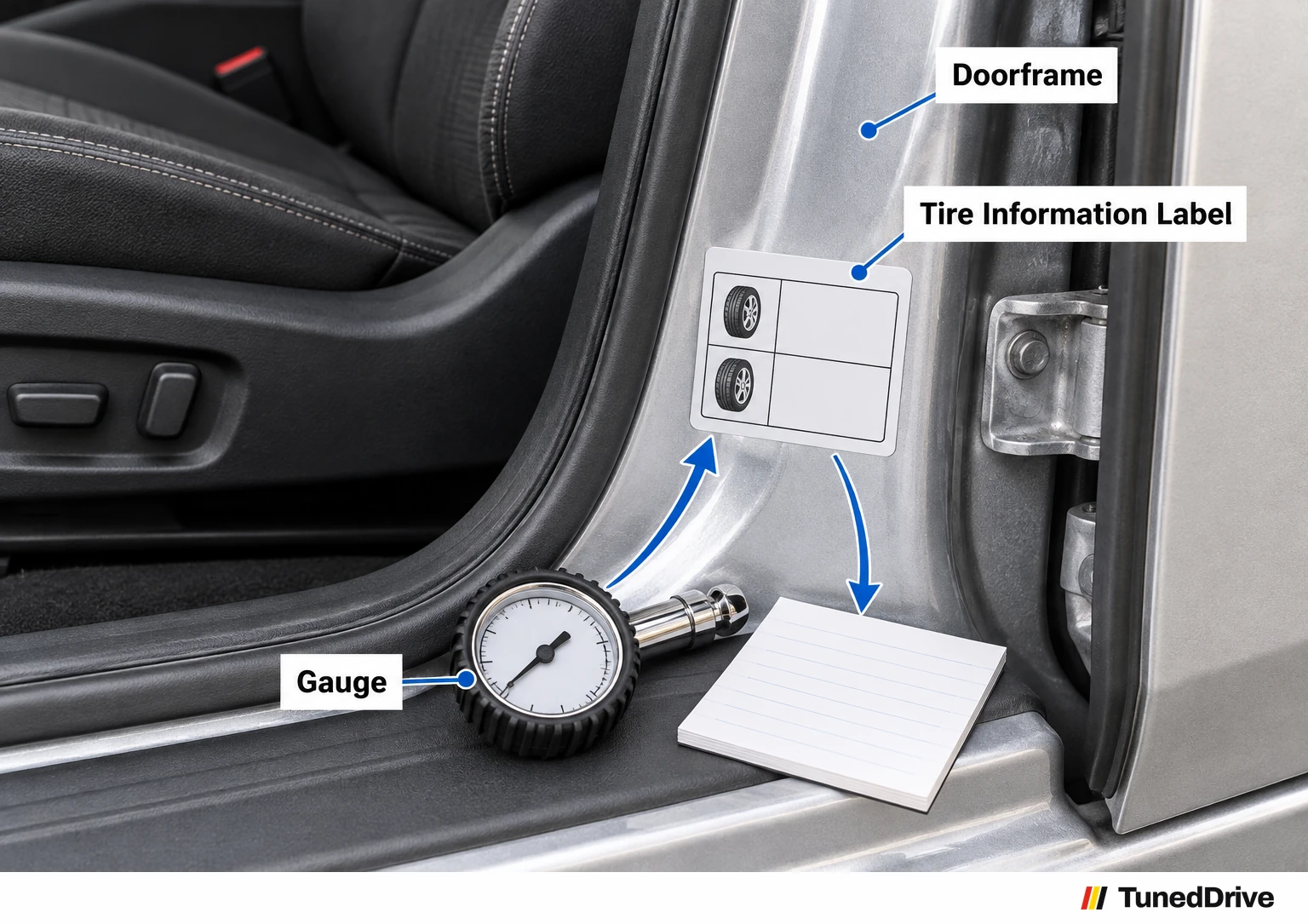
Keep the word “cold” with the number when you note it down. It’s part of the recommendation: the label supplies the target, while the condition of the tires determines when to measure. Those two pieces belong together when you’re checking whether the current pressure matches.
Give the tires their cold resting period
Plan your measurement for after the vehicle has been parked for at least three hours. Both Nissan and Chevrolet include that resting period in their cold-tire definitions. If you’ve just used the car, arrange the check around that rest before comparing the reading with the cold recommendation.
“Cold” here describes the checking condition, rather than a particular season. The three-hour rest gives you a concrete preparation rule to follow. You can use that rule without having to decide whether the outdoor temperature feels cold enough for a pressure check.
There’s a reason temperature matters to the reading: air expands when heated and contracts when cooled. Measuring under the specified cold condition keeps your comparison tied to the condition named on the label. The recommendation and the measurement then answer the same question about cold pressure.
A gauge gives you the reading you need
Use a good-quality tire-pressure gauge to get the current reading. Don’t judge pressure by the tire’s shape or how normal it looks. Radial tires can appear fine while they’re underinflated, so appearance can leave you unaware that the measured pressure is below the recommendation.
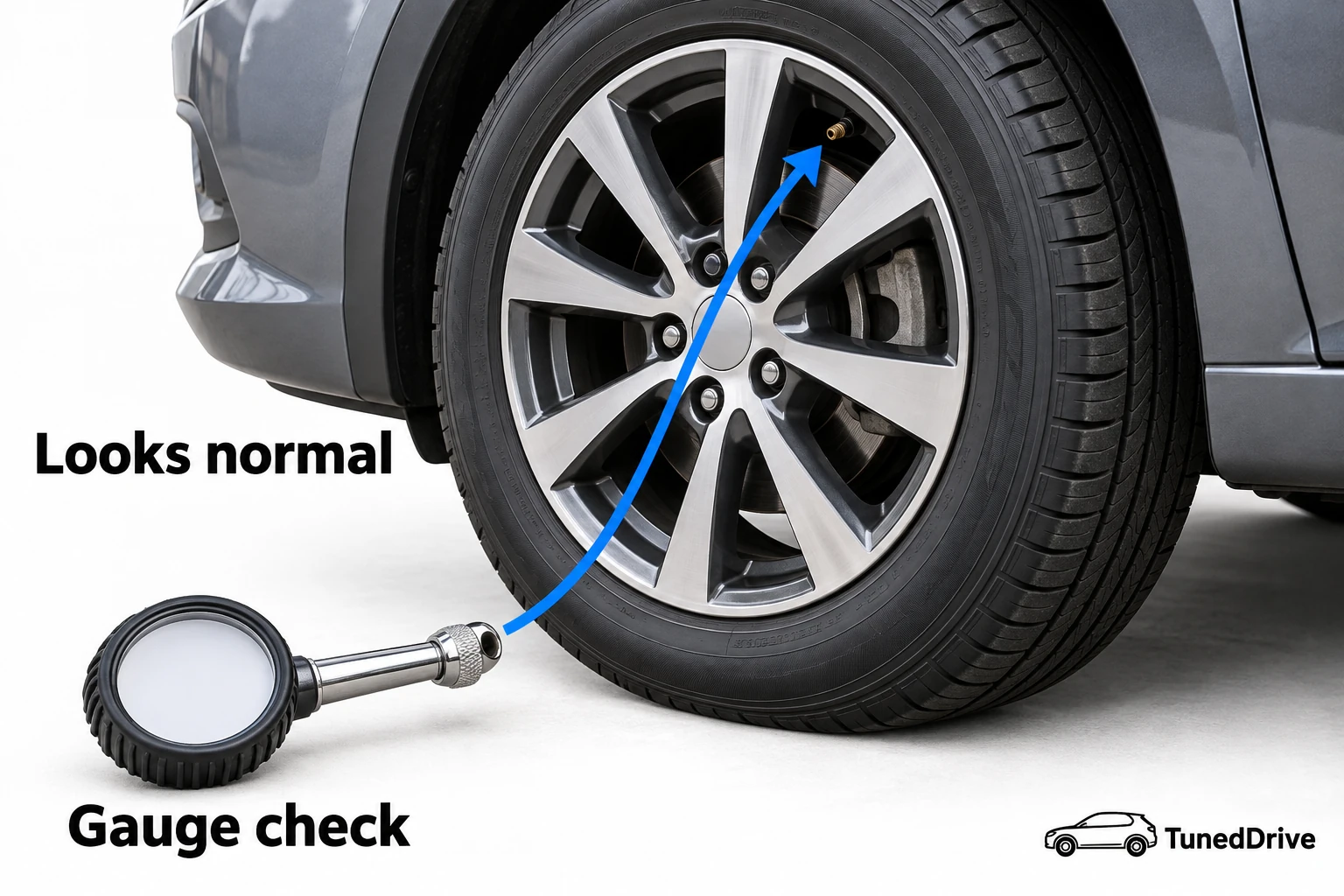
Check each tire and keep its reading associated with that tire as you work around the vehicle. The useful observation is the actual pressure you measured at each position. A reading from one tire answers the question for that tire, so carry the check through the others.
If writing the readings down helps, put each one beside the vehicle’s applicable recommendation. This keeps the target and the measurement separate: one is what the vehicle calls for, and the other is what your gauge shows now. You’re looking for a match or a difference between them.
Read the result in both directions
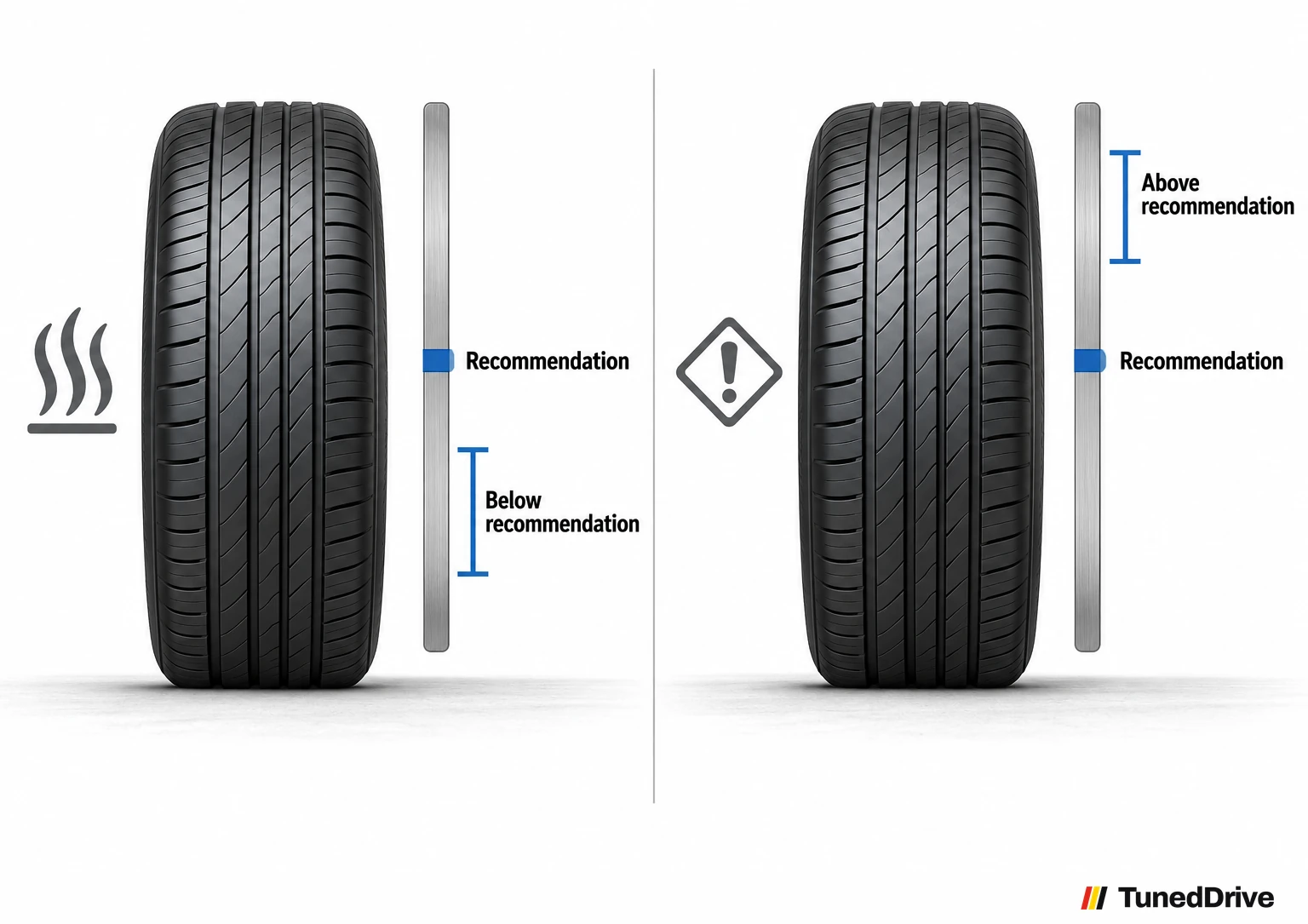
Treat readings above and below the recommendation as two distinct results. A lower reading means the measured cold pressure is below the vehicle’s recommendation. A higher reading means it’s above. Keep the actual number with that result so your comparison is more useful than a general impression that the tire seems low.
Nissan warns that driving on underinflated tires generates excessive heat, which can weaken the tire until it fails. Rapid deflation at high speed can cause loss of vehicle control. That’s why a below-recommendation reading deserves attention even when the tire looked normal before you measured it.
Higher pressure has consequences too. Nissan identifies a harsh ride and uneven tire wear as results of overinflation, and says proper inflation helps prevent accelerated wear and premature replacement. The recommendation is the comparison point in both directions, rather than treating a higher reading as a better result.
Chevrolet’s tire-pressure safety guidance (opens in a new tab) also identifies overheating that could lead to a blowout and a greater risk of damage from road hazards. Your measured comparison establishes whether pressure matches the recommendation, not whether a tire is safe to drive on.
Check the tread for objects and include the spare
While you’re beside each tire, look for objects wedged in the tread. Chevrolet explains that these can work farther into the tire and cause air loss. This visual check has a different job from the gauge: it looks for an object that could affect the tire’s ability to hold air.
Include your spare in the pressure check if you have one. Chevrolet includes the available spare in every tire check, so keep it on your checking list alongside the tires on the vehicle. Finish with a measured reading for it as well.
A Nissan example of the monthly check
For a Nissan, the manufacturer’s checking routine (opens in a new tab) calls for a monthly check with a good-quality gauge, including the spare. Its cold-tire condition is a rest of at least three hours or driving less than one mile. Use the gauge even when the tires look fine.
Chevrolet’s short-distance alternative is worded differently: no more than one mile, alongside the same three-hour rest option. Nissan’s wording is less than one mile. If you use a distance-based condition for either brand, keep that distinction when deciding whether the tires meet its checking condition.
Nissan also flags cold weather as a time when tires can lose air pressure. Its monthly routine therefore remains useful when a previous check showed the pressure you expected. You’re checking the current condition of the tires, including the spare, each time you take the readings.
Weather gives you a reason to keep checking
A change in outdoor temperature can help explain why a later reading differs from an earlier one. For Chevrolet owners, the brand highlights fall and early winter across most of North America as especially important checking periods, because tire pressure drops as the surrounding temperature falls.
Chevrolet’s temperature rule of thumb (opens in a new tab) is about 1 psi of pressure change for every 10 degrees Fahrenheit of temperature change. Pressure rises as temperatures rise and falls as they fall. That gives you a reason for weather-related movement while the gauge supplies the current reading.
Put a recurring check on your calendar. Nissan describes once a month as a best practice, while Chevrolet recommends at least once a month. Choose a time when the vehicle can meet the cold-check condition, so the reminder leads to a reading you can compare with its recommended cold pressure.
More in this category