The number to look for
- Tire aspect ratio is sidewall height expressed as a percentage of tire section width.
- In 235/55R18, the 55 means the sidewall height is 55% of the 235 mm width.
- For a replacement, start with your car’s specified size. Ask a tire professional to check any proposed change before installation.
That middle number gives you a proportion, so you need the width beside it to understand the sidewall’s height. We’d read the whole size and check the car’s specified size before choosing a profile for comfort, because the factory size reflects a balance chosen for that vehicle.
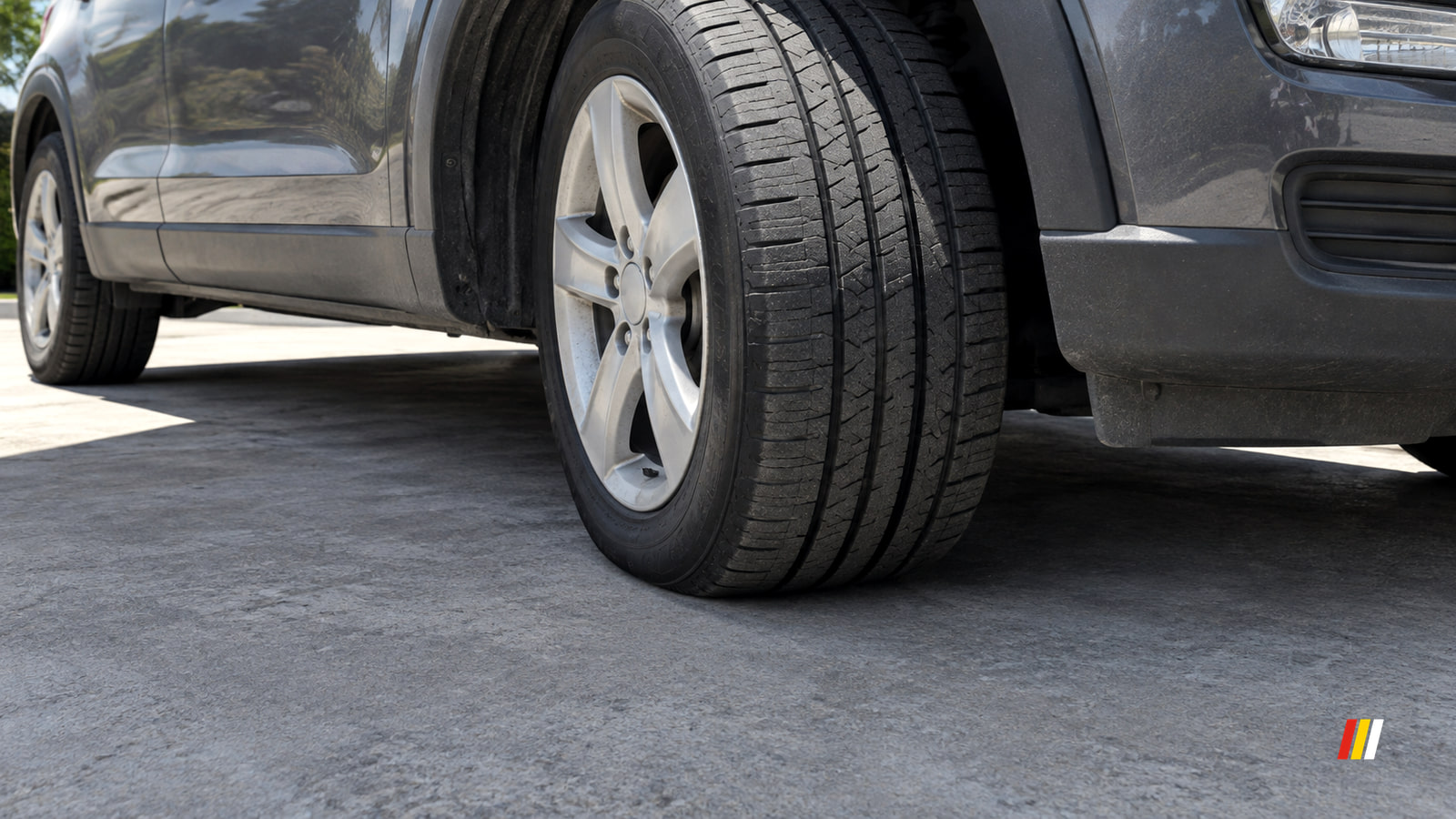
The tradeoff is useful to know while you shop. A taller sidewall absorbs more road impact but flexes more in corners. A lower profile can feel sharper when you steer and harsher on rough pavement.
Read the full size code
Look at 235/55R18 as an example. The 235 is the tire’s section width in millimeters, measured at its widest point. The 55 after the slash is the aspect ratio. It describes sidewall height as 55% of that width, rather than giving a height in millimeters.
The same reading works for the passenger tire marking P225/60R16 97T: 60 describes a section height equal to 60% of the section width. You may also hear aspect ratios called “series” or “profile” numbers. Those names refer to the same percentage relationship.
Keep the complete marking in view when comparing tires. The width and aspect ratio are separate parts of a size designation, and the characters after them carry more size and service information. The middle number tells you about the sidewall’s proportions; it isn’t the car’s complete replacement specification.
Work out the sidewall height
To work out the height described by a size marking, multiply the section width in millimeters by the aspect ratio, then divide by 100. You’re applying a percentage to a width, just as you would with any other percentage. The result is the sidewall height described by those nominal size numbers.
For 235/55R18, calculate 235 × 55 ÷ 100. That gives 129.25 mm. The calculation explains what the printed 55 means: the sidewall height is 55% of a 235 mm section width. You don’t read 55 as 55 mm.
Now compare the P225/60R16 marking. Its 60% ratio applies to a 225 mm width, giving 135 mm of sidewall height from the size numbers. The two calculations show why you need both numbers when comparing heights: each ratio is a percentage of its own tire’s width.
How the sidewall changes the ride
When width stays the same, a higher aspect ratio means a taller sidewall. More sidewall can absorb more of a road impact, which is the comfort appeal of a higher profile. That extra height also brings more flex in corners, so cushioning and steering feel move in different directions.
A lower profile goes the other way in the ride comparison. It can feel sharper when you turn the wheel, while rough surfaces can feel harsher. Think of those as tendencies to weigh against the roads you use, rather than a comfort score assigned by the number alone.
Your car’s factory size represents its maker’s balance of these tradeoffs for that vehicle. That makes the specified size a practical starting point even if another profile sounds appealing. First understand the change in sidewall height; then have the complete proposed size assessed for your car.
What changes with a different ratio
Changing the ratio while keeping the same section width changes the sidewall height. With the same wheel size, that also changes the tire’s overall diameter. That’s why moving from one middle number to another is a change to the tire’s dimensions, even when the first number still matches.
Overall diameter matters beyond how the car feels over bumps. A change can affect speedometer accuracy and the space between the tire and wheel well. It can also affect how the ABS and stability control systems behave. Those are fitment questions to settle before a different size goes on the car.
Changing width introduces another consideration: it can affect handling balance. Read width and aspect ratio together when comparing two markings, then use the vehicle’s requirements to judge the complete proposed size. A preferred sidewall height is a reason to explore an option, not a replacement-size approval.
Find the size your car calls for
Check your vehicle’s tire placard or certification label for its original tire size before looking at alternatives. It’s usually on a door edge, door post, glove box or fuel door. Compare that complete size with the marking on the tire you’re considering, not just the number after the slash.
The placard also lists recommended cold inflation pressures for the front and rear tires. Check the owner’s manual for any additional tire replacement instructions, then follow the vehicle maker’s recommendations and restrictions. Those instructions matter when you’re weighing a different size against the original one.
If your car has no tire placard or certification label, use its owner’s manual or consult the vehicle or tire manufacturer for the specified size. Some vehicles call for different tire sizes on the front and rear axles, so check what your car specifies for each position.
Make the replacement choice
For replacement tires, use the original equipment size designation or an approved option recommended by the vehicle or tire manufacturer. Never choose a smaller tire size or one with less load-carrying capacity than the original tire size at the specified placard pressure. Keep any manufacturer-specified front and rear size difference in the decision.
If you want a size or wheel other than the vehicle maker recommends, consult a trained tire service professional before installation. Have them assess the proposed size against the car’s requirements, including the effects of a changed overall diameter on clearance, speedometer accuracy and vehicle systems.
Bring the full size from your car’s placard, the marking on its current tires and the size you’re considering. Compare the complete markings with the professional and follow the vehicle maker’s replacement restrictions. Once they’ve confirmed a compatible, approved option, you’ll know which size to buy.
Preferred source
See more TunedDrive on Google
Select TunedDrive in Google’s source preferences. It takes a few seconds and costs nothing. Our car news, reviews and fixes become more likely to appear in your Top Stories, and AI Overviews can mark them as preferred.
More in this category