Let trapped heat out first
- Briefly air out the cabin, then turn on the A/C. Don't idle with the A/C running to precool before driving.
- Use your car's intended cooling controls. If you're considering refrigerant service, ask about the charge amount and leak repair before approving it.
When heat is trapped inside, we'd let it escape first because that reduces the A/C's workload and helps the cabin cool faster. Turn on the A/C after briefly airing out or after you begin driving. Most systems cool the vehicle faster while driving, as FuelEconomy.gov's hot-weather guidance (opens in a new tab) explains.
When you park, choose shade or use a sunshade to keep the cabin from getting as hot. Once you're cooling it, don't use more A/C or a lower temperature setting than you need.
Check your owner's manual for your car's control layout and operating advice. The two examples below cover the 2025 Chevrolet Equinox in the U.S./Canada manual, with the procedure matched to the controls installed.
2025 Chevrolet Equinox with basic controls
If your Equinox has the basic panel with a fan knob and ON/OFF button, use Chevrolet's cooling-control instructions (opens in a new tab). Press ON/OFF to turn the system on, then turn the temperature knob counterclockwise to lower the setting.
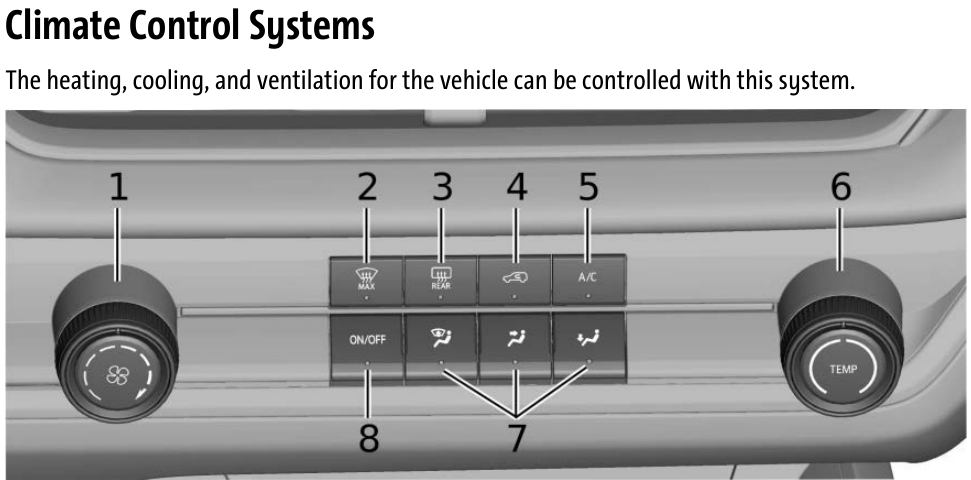
Turn the fan knob clockwise to increase airflow or counterclockwise to decrease it. Select the instrument-panel airflow mode in the climate display to send air through the dashboard outlets. The display shows the selected mode.
Press A/C to turn cooling on or off. The air conditioner won't run with the climate system off or when the outside temperature is below freezing.
Press recirculation for quicker cabin cooling. Its indicator lights up when selected. Recirculation can fog the windows in cool or cold weather, so turn it off if fog appears to help clear the glass.
2025 Chevrolet Equinox with dual automatic controls
If your Equinox has dual automatic climate control, press AUTO, select a temperature and let the system stabilize before adjusting it for comfort. It manages fan speed, airflow direction and A/C to reach your chosen temperature. Follow Chevrolet's automatic-control procedure (opens in a new tab).
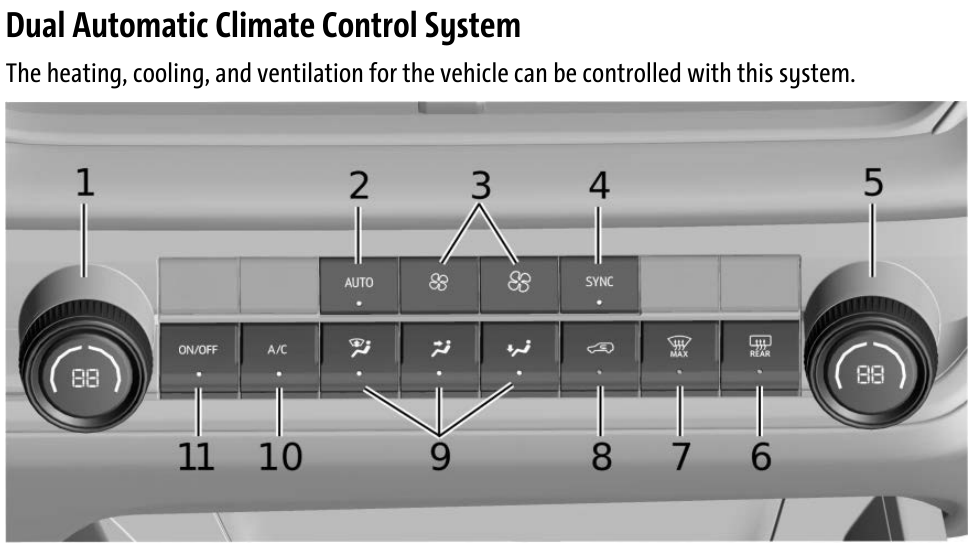
Keep the solar sensor on top of the dashboard near the windshield uncovered. The system uses its readings to adjust cooling and airflow, so covering it can interfere with automatic operation.
In warm weather, the system may automatically select recirculation to cool the cabin faster with A/C on. You can also press recirculation to select it, then press again for outside air. Turn recirculation off if the windows fog, which can happen in cool or cold weather.
If equipped with the humidity sensor, Auto Defog may switch to outside air, turn on A/C and slightly increase fan speed to help prevent fogging. Normal operation returns when the system no longer detects possible window fogging.
Chevrolet describes the A/C button both as an on/off control and as cancelling automatic A/C and turning cooling off. Use AUTO to return to automatic cooling, which runs the air conditioner as needed. A/C won't run with the climate system off or with outside temperatures below freezing.
Choose the refrigerant service deliberately
If you're considering refrigerant service after adjusting the controls, ask the shop which service it proposes. A top-off adds refrigerant to what's already inside. EPA explains that technicians must estimate the amount to add because they can't determine the existing quantity, risking undercharging or overcharging, either of which hurts performance.
An evacuation and recharge removes the refrigerant, cleans it with recycling equipment and recharges the system, adding refrigerant to replace what's leaked out. This lets the technician restore the manufacturer's specified amount. EPA's service comparison (opens in a new tab) explains the distinction.
Either service should improve cooling, but neither permanently fixes a refrigerant leak. If a leak is found, ask about repairing or replacing the leaking component for longer-lasting benefits.
EPA doesn't require evacuation and recharge instead of a top-off, or leak repair before charging, although state or local rules may require leak repair. For either service, choose certified technicians using recycling equipment that meets EPA standards, and ask the shop which local requirements apply.
More in this category
Continue at the systems desk
More from the wire