Look for damage before checking pressure
- If the tire is flat or visibly damaged, leave it parked and use a suitable spare if you need to travel.
- If it looks intact, check its pressure with a gauge when the tire is cold and compare it with the pressure specified for your vehicle.
- If you’re adding air every few days, have a tire dealer inspect the tire, wheel and valve.
A tire can look properly inflated while its pressure is low. We’d look for visible damage before reaching for the gauge, because a cut or bulge means leaving that tire parked, while an intact tire can be measured against its cold-pressure target. Check the tire’s condition first, then use the reading to decide what needs attention.
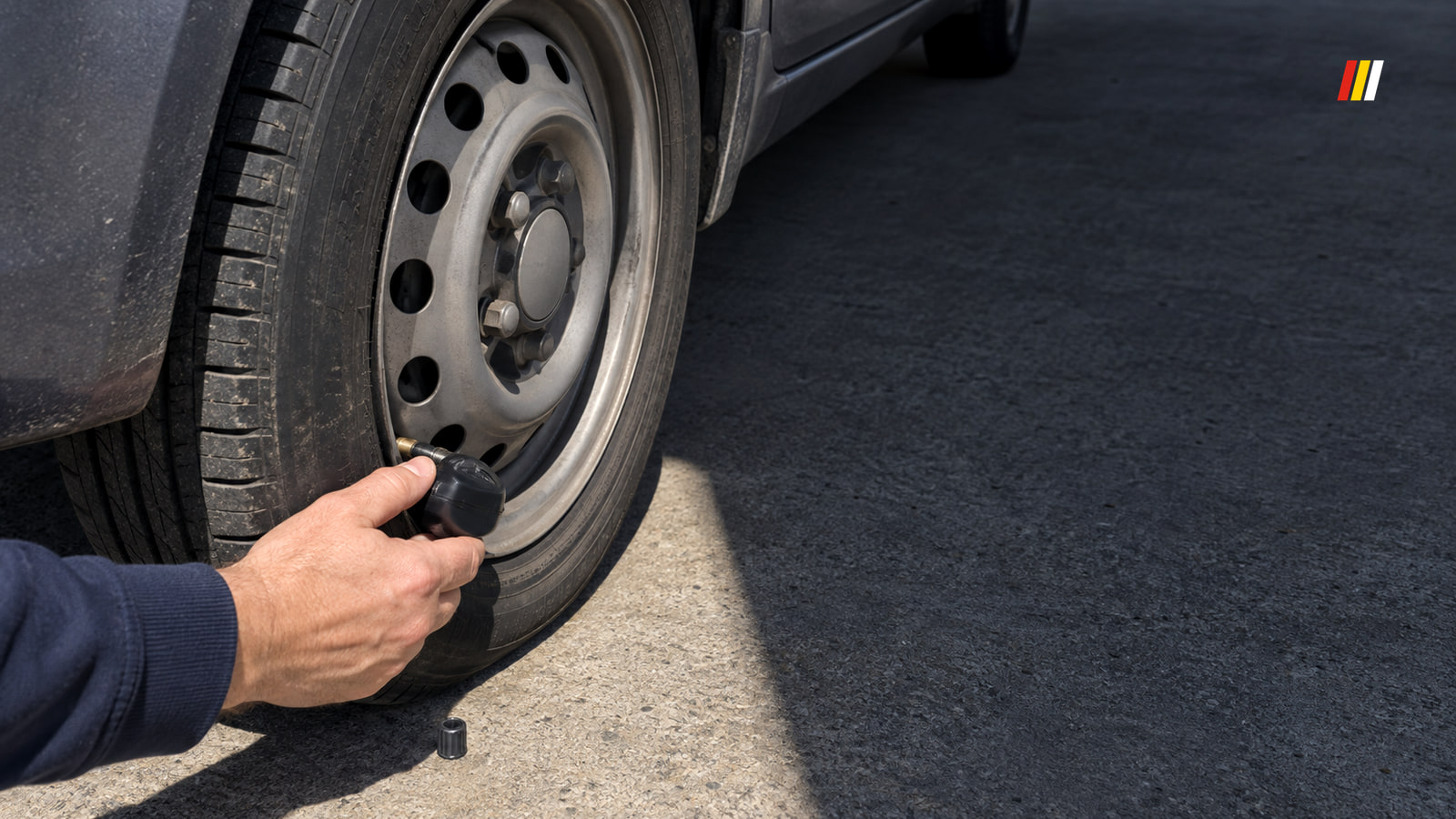
A flat, damage or vibration changes the trip
Look at the tread and the sides of the tire you can see. Cracks, cuts, splits, punctures, holes and bulges can signal serious damage. If you’re unsure about a mark, have a tire dealer examine it before you use that tire.
A tire that has lost most or all of its air needs a tire professional to remove it from the wheel and inspect it inside. Even a short distance driven while flat can damage it beyond repair. Tell the dealer if it was driven flat, including if you’ve since added air.
Before relying on a spare, check that it’s in good condition and properly inflated. If it’s a temporary spare, use the pressure and follow the speed and mileage limits shown on its sidewall.
If you feel vibration or another disturbance while driving, reduce speed and pull off safely to inspect the tires. Use a suitable spare if you find damage. If you can’t see damage or identify the source of the vibration, take the vehicle to a tire dealer for a thorough inspection.
Get readings you can compare
For a tire that isn’t flat or visibly damaged, take the pressure reading after the vehicle has been stopped for at least three hours and before you’ve driven more than one mile. Tire pressure changes as the tire warms, so use a cold reading when you compare it with the vehicle’s specified pressure.
Use an accurate tire-pressure gauge on each tire. Write down each reading, which tire it came from and when you took it. You can then compare the tire that needs air with the others and with its next cold reading. A tire’s appearance can’t replace the gauge because an underinflated tire can look fine.
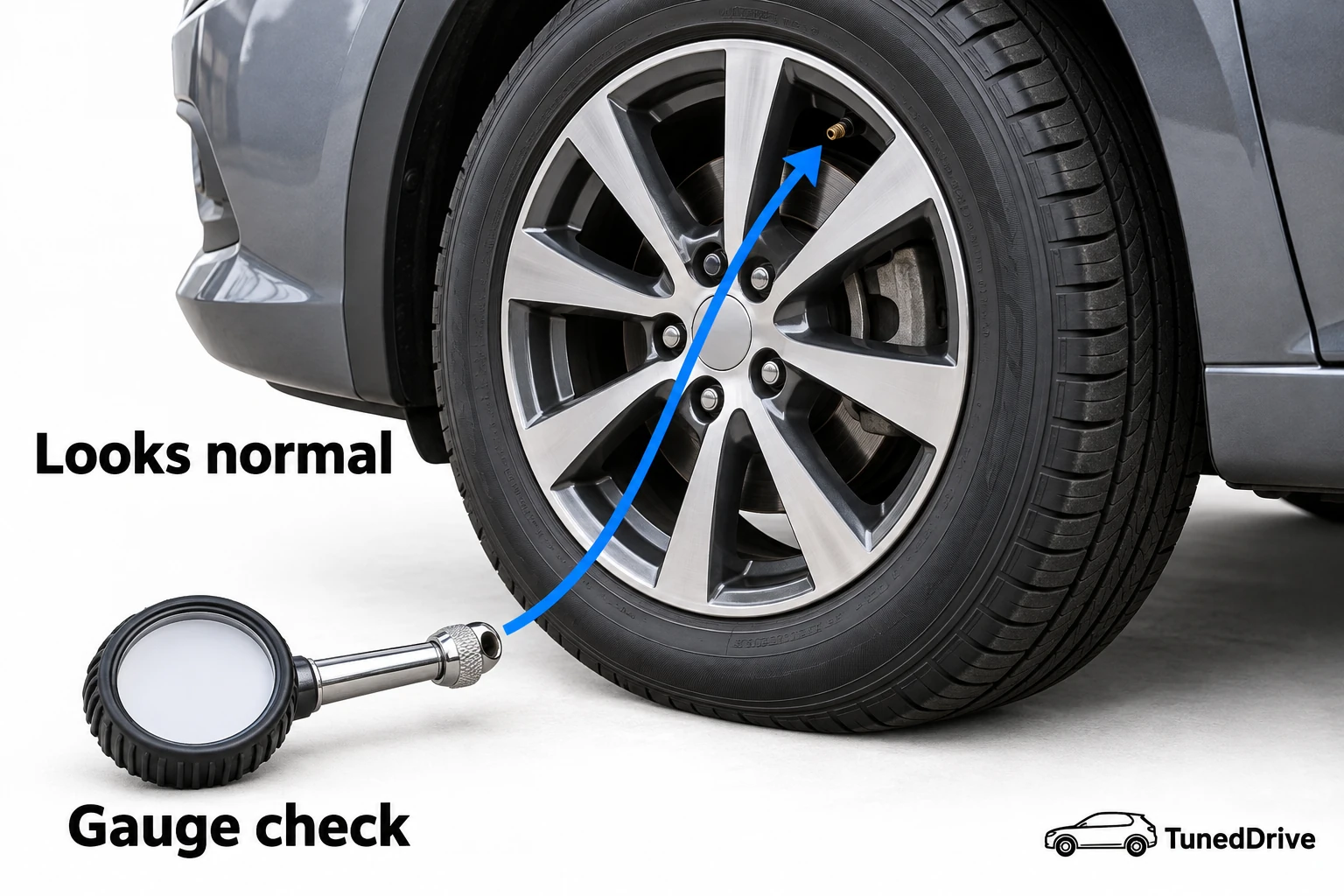
If the tires are hot, wait until they’re cold to make that comparison. Don’t let air out of a hot tire to bring its reading down to a cold target. It can end up underinflated after it cools.
Use the pressure meant for your vehicle
Find the recommended inflation pressures on the vehicle placard inside the driver’s door or in the owner’s manual. The vehicle maker sets those pressures for the tire size and type selected for that vehicle. If your tires are the same size as the original equipment tires, use the placard pressures as your cold targets.
If the tire size has changed, ask a tire dealer to confirm the pressure for your setup before using the original-size placard value. Keep cold pressure at or below the limit molded on the tire’s sidewall.
For an intact tire of the original equipment size that reads low, add air while checking with the gauge until it reaches its placard pressure. Keep that reading with the date and any earlier refills so the next cold check shows whether the pressure is holding.
Getting the pressure right matters for the trip, not just the reading. Underinflation makes a tire flex and build heat that can lead to failure, and a rapidly deflating tire at high speed can cause loss of control. Too much or too little pressure can affect handling; overinflation can also cause a harsh ride and uneven wear.
Several low tires and one repeat offender
Compare readings taken when the tires are cold. Colder weather lowers measured pressure: a 10°F temperature drop corresponds to about 1 psi less. If several intact tires read low after a temperature drop, check each against its applicable vehicle pressure and add air where needed.
Tires also gradually lose about 1 to 2 psi over a month or so. The dates beside your readings help separate that gradual change from a tire that needs another refill after only a few days. If one tire keeps falling while the others hold steadier, bring that pattern to the tire dealer when you arrange an inspection.
Air can escape through the tire, valve or wheel
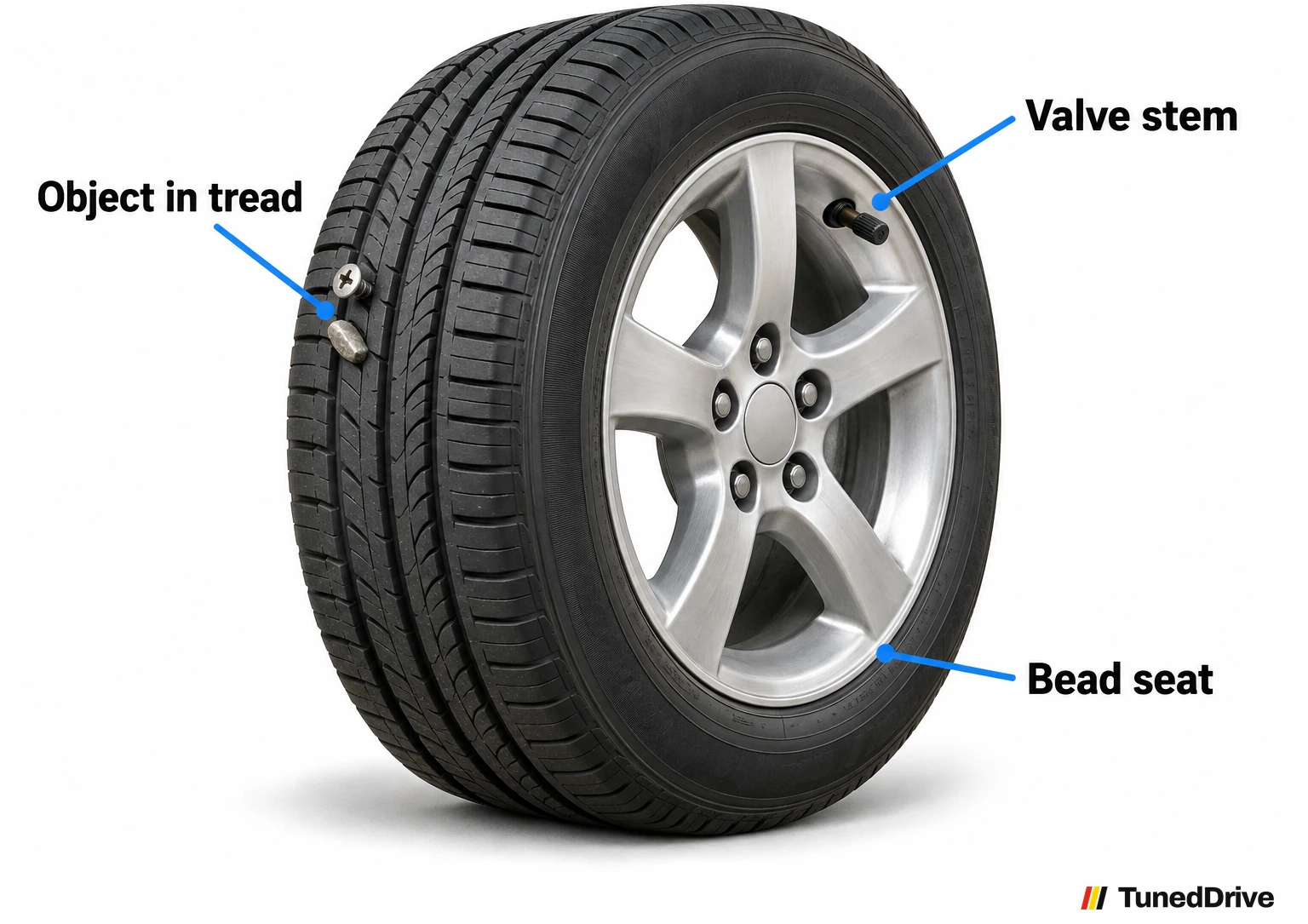
A road-hazard injury can let air escape. Nails, screws, rocks and other small debris can puncture a tire without making it go flat at once. Cuts and impact damage can affect tire material you can’t see during a parked inspection, so tell the dealer if the pressure loss followed an impact.
Air can also escape through the valve stem or core if it’s damaged, loose or aged. Look for visible valve damage as part of your parked check and mention what you see when you book the inspection.
Another possible leak path is the bead seating area, where the tire seals against the wheel. Corrosion on the wheel, material caught at that joint, damage during tire mounting or dismounting, or a bent wheel flange can disturb the seal. Mention recent tire work or a wheel impact if either happened before the loss began.
Repeated refills need an inspection
If you have to add air every few days, have a tire dealer check the tire, wheel and valve. Tell them which tire is affected, your dated cold readings, how often you’ve refilled it and whether you noticed visible damage, vibration, an impact or recent tire work. Those details give them the pressure pattern and the events that may matter to the inspection.
Leave tire repairs to trained personnel. The dealer can inspect the assembly and decide whether the tire needs repair or replacement.
See whether the pressure holds
After adding air to an intact tire or having the loss addressed, check it again with a gauge when it’s cold. Compare that reading with the applicable vehicle pressure and your earlier dated reading. You’ll see whether it’s holding pressure or continuing to lose air.
Keep checking tire pressure at least monthly and before extended driving, including the spare. Use the gauge even when the tires look properly inflated.
Preferred source
See more TunedDrive on Google
Select TunedDrive in Google’s source preferences. It takes a few seconds and costs nothing. Our car news, reviews and fixes become more likely to appear in your Top Stories, and AI Overviews can mark them as preferred.
More in this category