Cupping starts when a tire stops rolling smoothly
- Cupping usually comes from something that stops the tire keeping smooth, steady contact with the road.
- The possible culprits are alignment, worn suspension or steering parts, an unbalanced tire and wheel, wrong pressure and skipped rotations.
- Start with a cold pressure check and a slow look at all four tires.
- Scalloped tread, growing noise, vibration or pulling means it's time to have the tires, balance, alignment and suspension inspected.
- Fixing the cause stops the damage spreading, but cupped tread usually can't be restored.
Maybe you've spotted scooped-out patches on the tread, or a hum or vibration has crept in that wasn't there before. We'd start with a tire gauge and a parked look at every tire, because pressure is the one suspect you can check and correct yourself, and your notes on the tires and their service history give the technician a head start on the rest.
We'd also ask the shop to look at more than alignment. More than one factor can contribute to cupping, and an alignment fixes only one possible cause while leaving worn tread exactly as it is.
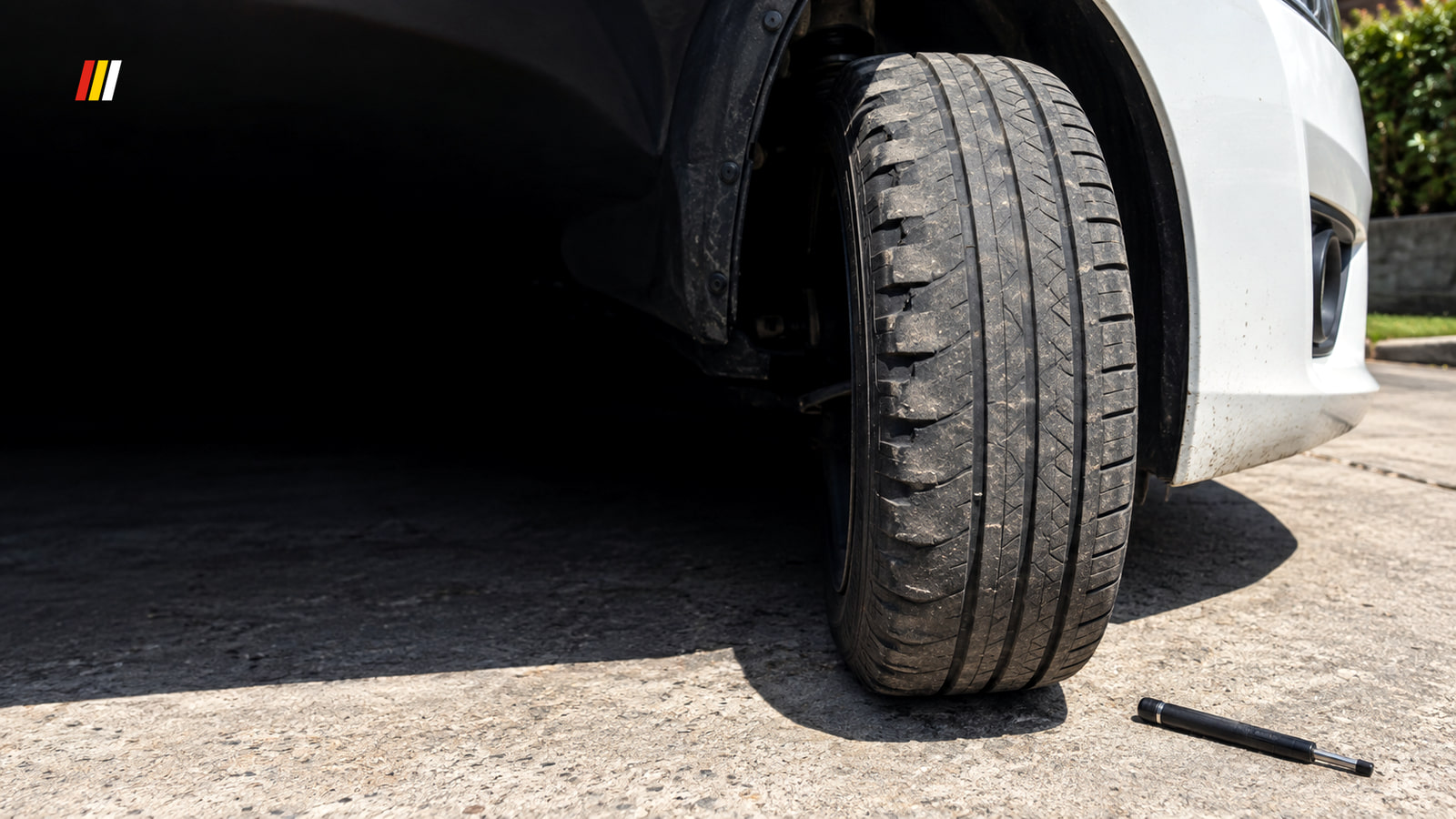
Scooped-out patches every few inches
Picture someone taking an ice cream scoop to the tread every three to four inches around the tire. That's cupping, which you'll also hear called scalloping or scalloped tires.
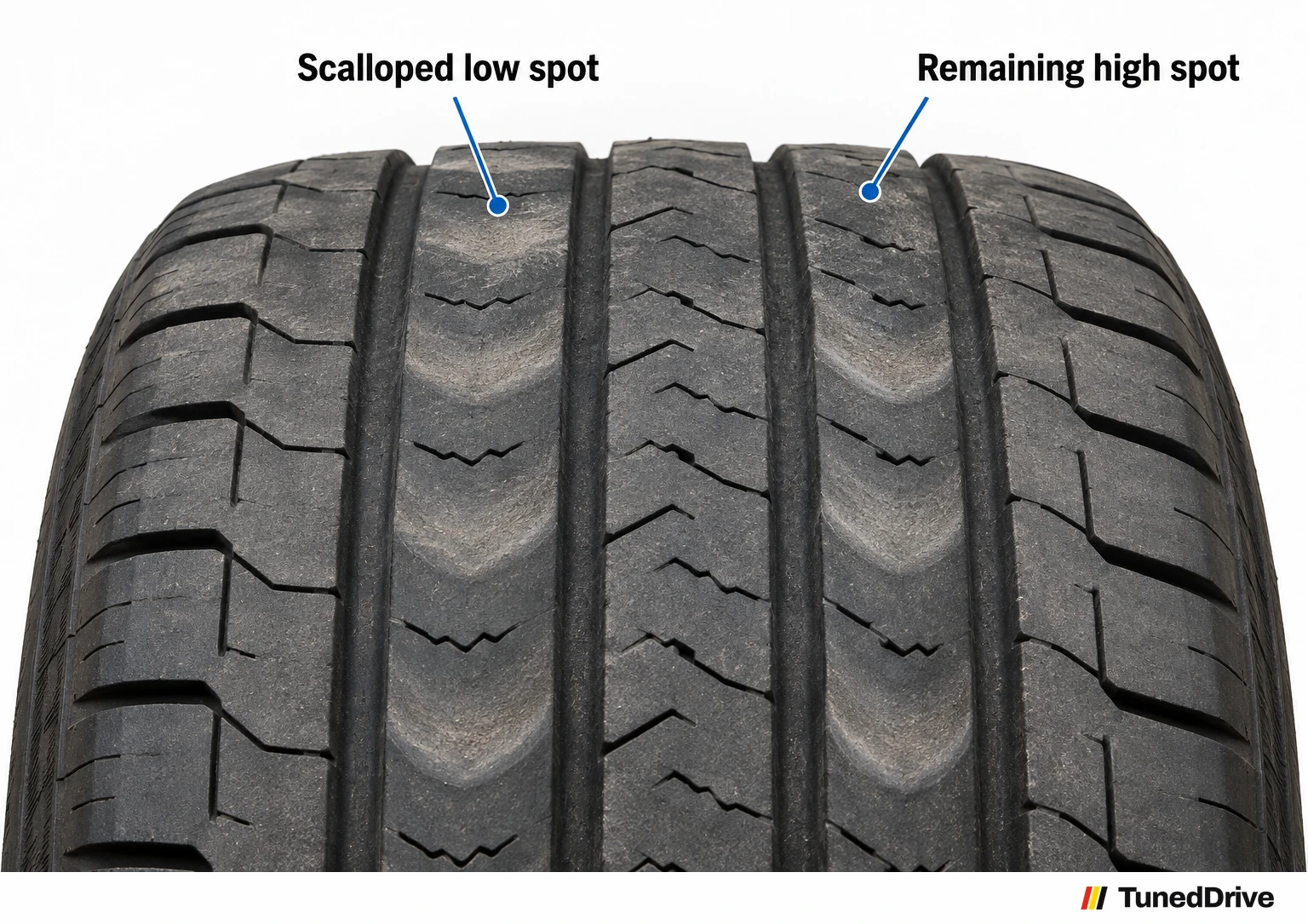
The pattern grows because the tire keeps meeting the road and lifting off it as it rolls. Each time, small high and low spots in the tread get a little more pronounced, so the wear becomes more noticeable over time.
The conditions that set it off
Anything that stops a tire holding steady, even contact with the road can start the pattern, and more than one of these can be at work on the same car. The pattern tells you something needs attention, and the inspection tells you what.
| Possible cause | What's going on | Signs you might notice | Who sorts it |
|---|---|---|---|
| Alignment out of specification | The suspension angles that set how the tire meets the road are off, so it may not roll straight or may load the tread unevenly | Pulling, drifting, off-center steering or irregular wear | An alignment check |
| Worn shocks, struts, bushings, ball joints or steering parts | Extra movement between tire and road means the tire isn't controlled evenly | Cupping, noise, vibration or a change in ride | A technician inspecting for looseness, wear, leaks or damage |
| Unbalanced tire and wheel | Uneven force every time the tire turns | Vibration, especially after new tires, a rotation, a pothole hit or wheel service | A certified mechanic checking the balance |
| Wrong or uneven pressure | The tire's contact patch changes shape | Often nothing visible, since tires can look fine while underinflated | You, with a gauge and your car's recommended pressure |
| Skipped or irregular rotations | Front, rear, steering, braking and drivetrain loads wear tires at different rates | Small wear differences growing into a pattern | Rotation on your vehicle maker's schedule |
Pressure works in both directions. An over-inflated tire rides harshly and wears the center of the tread faster, while too little air or uneven pressure from tire to tire can also increase irregular wear.
Tire quality plays a part too. Tires built with lower-quality materials, such as steel belts that give the tread less support or rubber more prone to uneven wear, may cup more readily on a car with worn suspension or less-than-perfect balance.
Hard driving adds strain on top. Quick acceleration, sudden braking, sharp turns and hitting a curb or pothole all shorten tire life.
What to look for with the car parked
Give every tire a slow walk-around once a month. You're looking for two things here, wear and damage, across the tread and both sidewalls.
- High and low spots or scooped patches in the tread
- Unusual smooth areas on the tread
- Cuts, cracks, splits, punctures or bulges in the tread and on both sidewalls
- Objects wedged in the tread, which can work deeper in and cause air loss
- Tread depth, with a monthly tread depth test
- Tread wear indicators, the narrow strips of smooth rubber across the tread that appear as the tire wears
Once those wear indicators show, the tire needs replacing. Look up the recommended maximum tire age in your owner's manual too, and replace tires that reach it.
Write down which tire shows the pattern, plus any recent tire installation, rotation, pothole hit or wheel service. Those are the moments when balance is most worth checking, and a good diagnosis starts with the tire, the wheel and the maintenance history.
Check the pressure cold, with a real gauge
Pressure is the check you can't do by eye. Radial tires can look fine even when they're underinflated, so a good-quality gauge is the only way to know.
- Check before driving, or after the car has sat at least three hours or gone no more than a mile, so the tires are cold.
- Find your car's recommended cold pressure on the tire label inside the driver's door frame or in the owner's manual.
- Read each tire with a good-quality gauge and compare it with the recommended figure.
- Check the spare too, if your car has one.
- Correct any tire that's off so every tire sits at the recommended pressure.
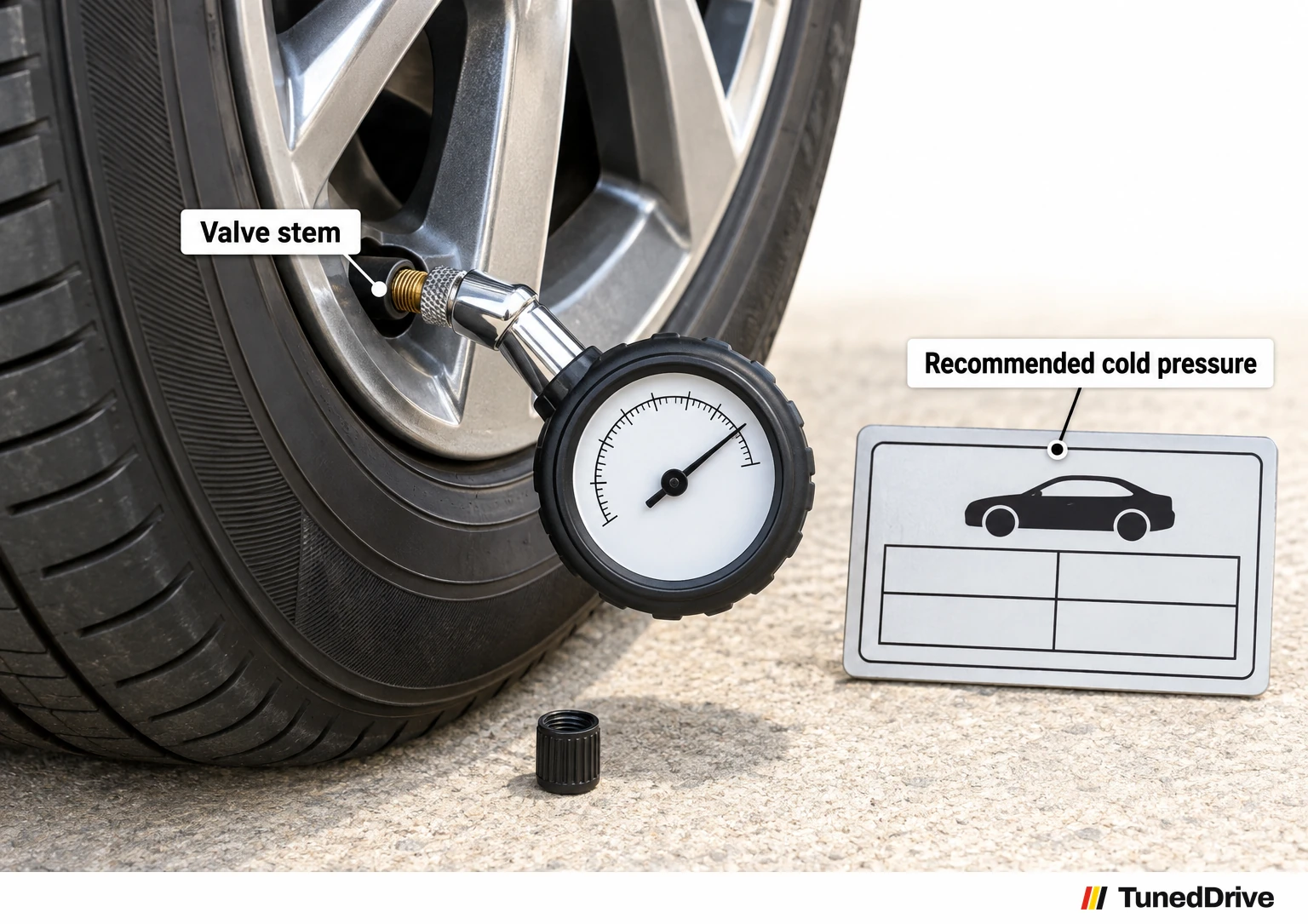
Repeat the check monthly and before long trips, and expect pressure to drop when the weather turns cold.
Is it safe to keep driving on cupped tires?
It comes down to severity. A lightly cupped tire may stay usable for a while, as long as its tread depth, structure and traction are still acceptable.
Severe cupping, noise or vibration that won't go away, low tread depth, visible damage or traction worries can make replacement the most practical next step.
This is where the owner checks end. If you see scalloped tread or notice growing tire noise, vibration, pulling or handling changes, have the tires, balance, alignment and suspension inspected, so a technician can check the suspension and steering parts for looseness, wear, leaks or damage and a certified mechanic can deal with any imbalance.
If you drive a Nissan, your service advisor can book a complimentary tire inspection at a Nissan dealer (opens in a new tab).
Bring these notes so the inspection starts at the right corner.
Tick what applies and add details; the note above fills in as you go.
What fixing the cause can and can't do
Cupped tread usually can't be brought back, but the cause behind it can often be corrected. Depending on what the inspection finds, that might mean an alignment, balancing, pressure correction, a better rotation plan or suspension and steering repair.
An alignment can fix one possible cause, yet it won't put back tread that's already worn away. Get the cause sorted either way, so whatever tires you run next can keep steady, even contact with the road.
Can balancing get rid of cupping?
Balancing deals with an unbalanced tire and wheel, which is one possible cause and can make existing cupping feel more obvious. It won't restore tread the cupping has already taken.
Why do my front tires wear faster?
In general, the front tires carry more of the car's weight with the engine up front, and turning puts extra pressure on their outer edges. Rotation balances out that difference.
Should I replace all four tires at once?
Sets of four are preferable, and regular rotation keeps wear even enough to make that possible.
Does alignment matter beyond cupping?
Yes. Misaligned wheels pull the car to one side, so you work harder to keep it straight, and the uneven tread wear shortens tire life.
Keeping the next set smooth
Prevention comes down to helping each tire keep steady, even contact with the road. A regular routine catches pressure, balance, alignment and suspension problems before they turn into a deeper tread pattern.
- Rotate on your vehicle maker's schedule, and sooner if uneven wear appears.
- Rebalance when vibration appears, after new tires go on, or after any service that calls for balancing.
- Have the alignment checked if the car pulls, the tires wear unevenly or the steering feels off.
- Get the suspension and steering inspected if cupping, noise, vibration or ride changes appear.
- Keep an eye on tread depth and visible wear at every routine service.
On Chevrolet vehicles, rotation comes every 7,500 miles, and all-terrain tires are worth rotating more often if irregular wear shows up, since their tread can wear faster. Chevrolet's tire care page (opens in a new tab) has the details.
Keep the monthly pressure and tread checks going after the repair. Steady upkeep lowers the risk of cupping and keeps your tires performing the way they were designed to, mile after mile.
Preferred source
See more TunedDrive on Google
Select TunedDrive in Google’s source preferences. It takes a few seconds and costs nothing. Our car news, reviews and fixes become more likely to appear in your Top Stories, and AI Overviews can mark them as preferred.
More in this category