A Month of Overnight Parking and One Real Question
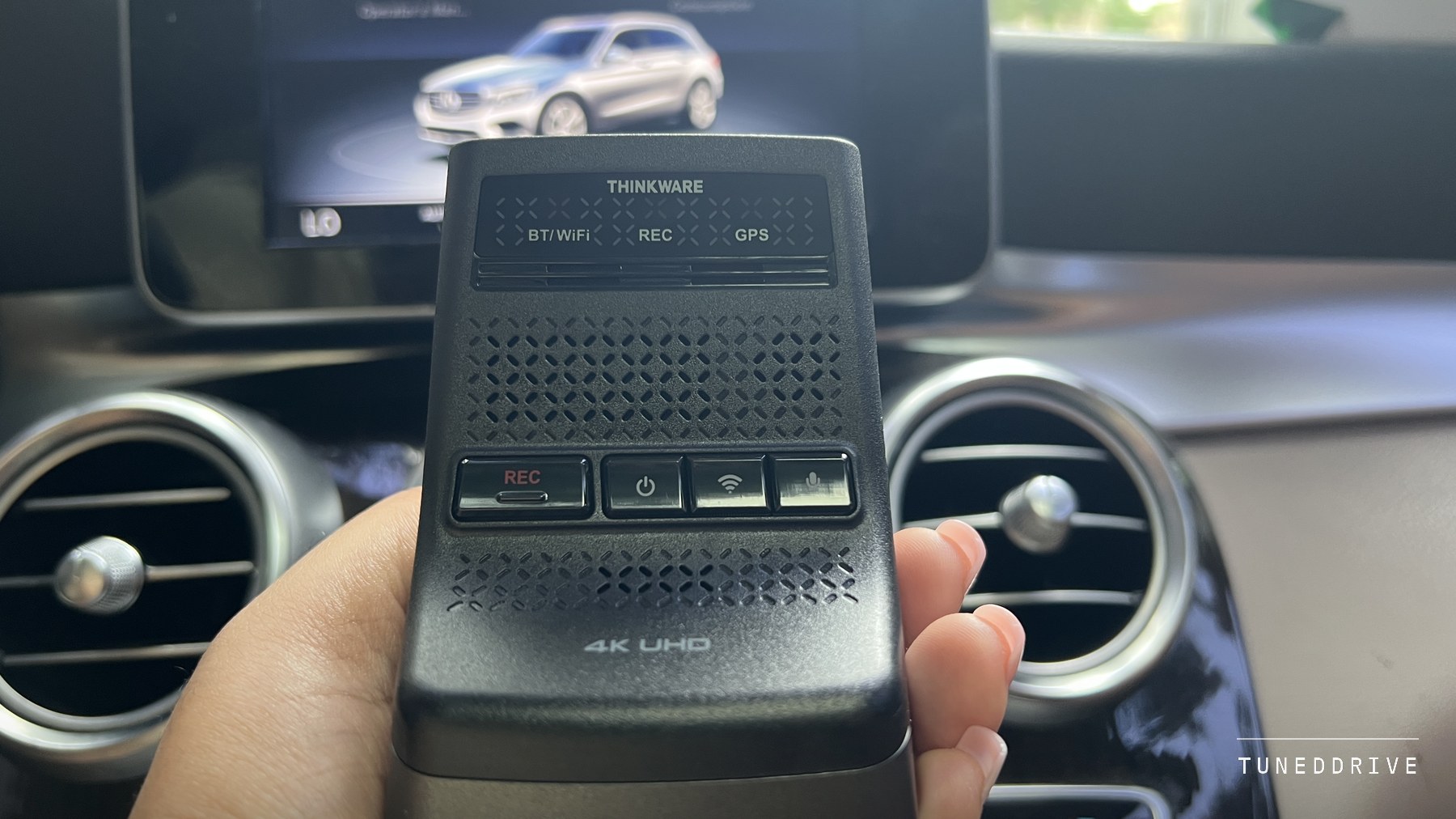
The U3000 PRO went onto my windshield as a two channel kit, front and rear, and stayed a month of commuting and a lot of overnight parking on a street I do not entirely trust. It is a good camera, and that took about a week to settle. The question that took the rest of the month is what a camera watching a switched-off car does to the battery underneath it.
- Price
- $549 direct, around $579.99 at retail
- Front camera
- 4K/30 or 2K/60, Sony STARVIS 2 IMX678
- Rear camera
- 2K/30, Sony STARVIS 2 IMX675 with HDR
- Parking modes
- Radar, Smart, Motion and Impact, Time Lapse, Energy Saving
- Constant power
- OBD-II cable included
- Cutoff range
- 11.6V to 13.2V, set in the app
- Tested
- One month, mostly street parked
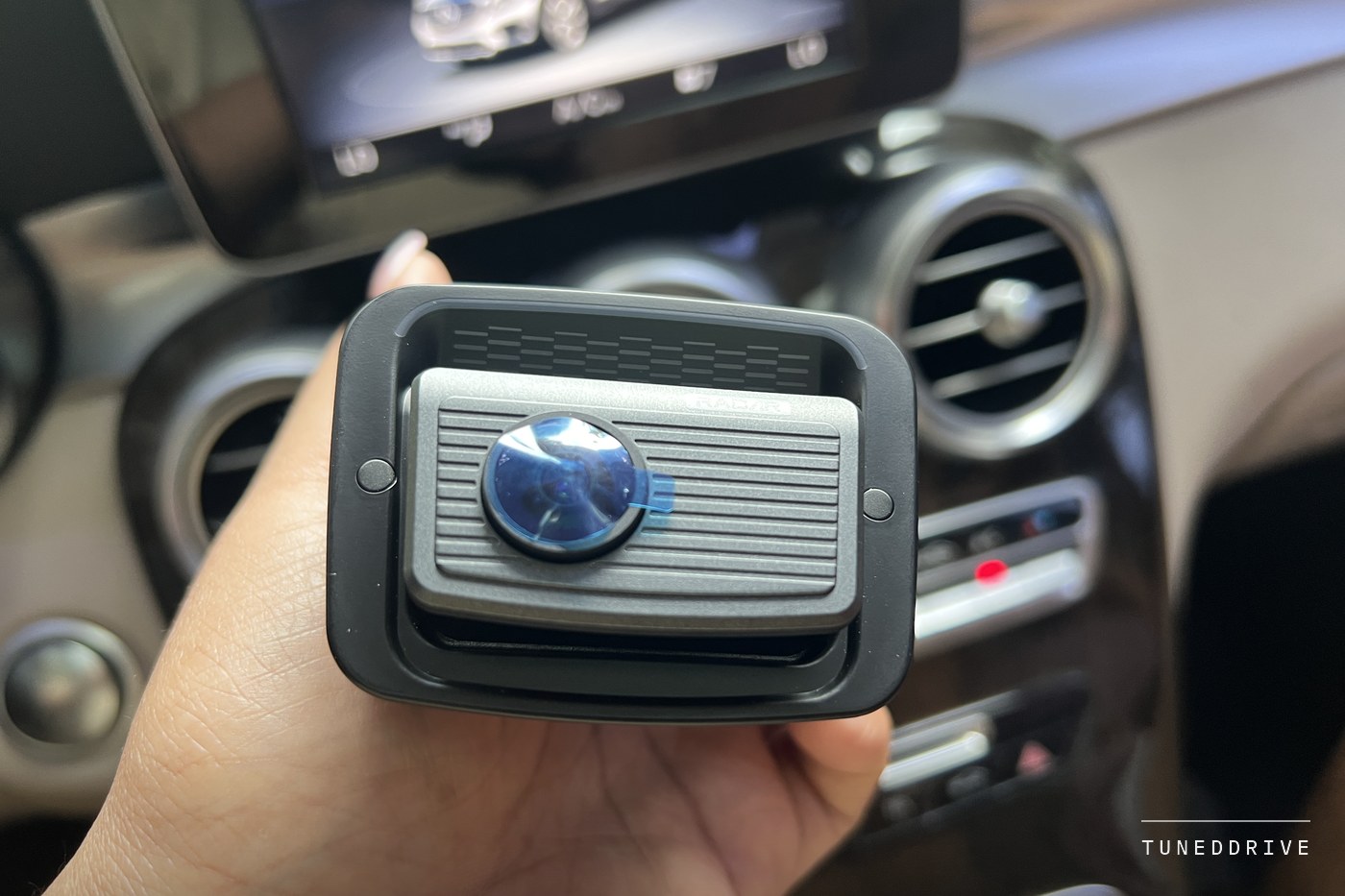
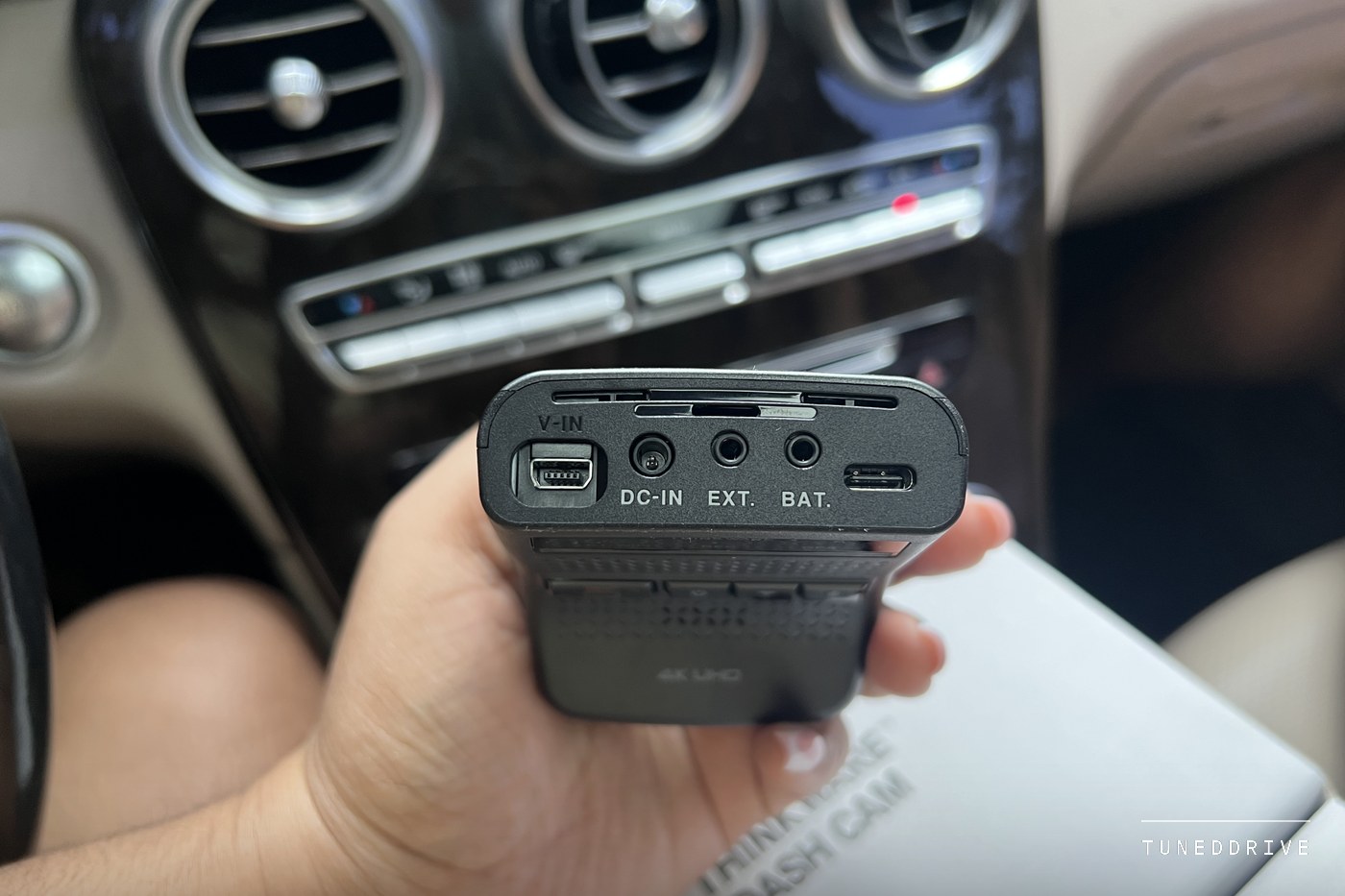
Radar sits in both bodies, and an OBD-II cable gives the camera constant power without anyone opening a fuse box. My install ran forty minutes, nearly all of it routing the rear cable. A hardwire kit makes you think about the electrical system because you are standing in it. An OBD cable does not, and the driver who never thinks about it blames the wrong part on a cold morning.
What the Camera Draws While You Sleep
Continuous recording on two channels at 4K and 2K pulls close to four hundred milliamps. That is the number in people's heads when they say parking mode kills batteries, and it is the wrong one, because continuous recording only runs while the engine runs.
Radar parking is a different state. The image sensors are asleep, and what stays awake is a low power radar watching a few metres around the car. Published bench figures for the non-PRO version put that in the low tens of milliamps, and Thinkware rates the PRO about ten percent lower again. One owner reading his own car with a monitor got closer to eighty, and that gap is the distance between a camera you can ignore and one you cannot.
What I have from the month is behavioural, not instrumented. I did not put a meter in series with my own battery. Over repeated multi-day stretches of street parking with radar on and the cutoff set deliberately, the car never cranked slowly and the camera was always still armed. That is the outcome you want, and it is not a measurement.
The Cutoff Voltage Is the Setting That Does the Protecting
Every parking mode here sits underneath one setting. The camera watches its supply voltage and shuts down when that voltage stays below your chosen level for more than five minutes. The range runs from 11.6 volts to 13.2, the usual recommendation is 12.2, and the value it arrives with is not the value every car wants.
A flooded battery at rest reads about 12.6 volts full, 12.4 at three quarters and 12.2 at half. So 12.2 lets the camera take it down to half charge. An AGM rests higher, near 12.8 full and around 12.3 at half, so that same 12.2 stops below half on a chemistry plenty of stop-start cars fit. The label on the case tells you which you have.
| Cutoff | Flooded battery stops near | Who picks it |
|---|---|---|
| 11.6V to 11.8V | Deep discharge | Nobody with a starting battery |
| 12.0V | Quarter charge | Short parking, a new battery |
| 12.2V | Half charge | Default for a healthy flooded battery |
| 12.4V | Three quarters | AGM, a battery past its third summer, cold climates |
One more setting is worth finding. A wintertime option lets you pick the months where the cutoff is raised automatically by two tenths of a volt, which is a sensible admission that the battery in January is not the one you set the number against in July.
Telling Camera Draw From a Real Parasitic Drain
The moment you fit a parking camera you lose the ability to blame anything else. A car that is properly asleep still draws something. Twenty to fifty milliamps is ordinary, and a newer car with more modules stirring can sit near eighty five with nothing wrong. Above about a hundred is where people look for a fault, so adding a radar camera to a car at the top of that band roughly doubles a figure that was already high.
What this camera gives you is a boundary a real drain does not have. The cutoff is a floor, so read resting voltage on a morning after the car has sat. At or a little under your cutoff means the camera did what it was told, and the problem is the number you chose or a battery too tired to give up that much. Well below it means the camera is not your problem, because it had already stopped.
The clean test costs one night. Unplug the OBD cable, leave the car the same time in the same place, and read again. The same drop with the camera out of the circuit means it was never the cause.
What to Measure, and What to Measure It With
None of that needs a shop. It needs a voltmeter and some patience.
- Read resting voltage across the battery posts after the car has sat four to twelve hours, so surface charge has gone.
- Write it down with the date and the overnight temperature. One reading tells you nothing, four mornings tell you a trend.
- For current, put the meter in series between the negative post and its cable, on the ten amp jack.
- Give the car twenty to forty five minutes to put its modules to sleep, and remember that breaking the circuit restarts that clock.
A cheap clamp meter drifts badly at the tens of milliamps scale and hands you a number that means nothing. A good one measures down there honestly and costs more than the meter already in your drawer. If you would rather not open the circuit at all, resting voltage across four mornings answers what matters, which is whether the battery ends each night in the same place or lower.
OBD or Hardwire, Read as an Electrical Decision
The OBD cable is sold as convenience and as convenience it is excellent. Forty minutes, no trim tools, no fuse tap, no ground screw. But it is an electrical decision and it reads differently as one.
On most modern cars the diagnostic port stays live with the ignition off, which is the whole point. On some it does not, and there the camera never records while parked, a failure you discover on the morning you need the footage. Check your own car.
The rest is about what protects the battery. A hardwire kit brings its own cutoff and lets you choose the circuit and the ground. With the OBD cable the camera's own cutoff is the entire protection, on a circuit somebody else specified. On my car it behaved, and a month produced no symptom. I would still hardwire a car that sits for a week at a time, for the second cutoff alone.
Where the Battery Is the Answer and the Camera Is Not
Heat kills batteries and cold only reveals it. The working rule is that every fifteen degrees Fahrenheit of average operating temperature above about 77 roughly halves service life, which is how a battery good for five years in a mild climate manages two or three somewhere hot. The failure usually shows up in autumn, caused by the summer that just ended.
A battery that has lost capacity still reads a convincing resting voltage, and that is the trap. Voltage tells you state of charge, not how many amp hours sit behind it. A four year old battery in a hot climate can show 12.6 and hold far less reserve than that implies, and parking mode is the load that finds it out.
The Front Camera Is Excellent and the Rear One Is Not
The front camera is the reason to buy this instead of something cheaper. A 4K sensor behind a 152 degree lens, and the output is genuinely sharp rather than the soft, over-processed 4K a lot of cameras claim. Plates on the car ahead are legible at ordinary following distance, and at night oncoming headlights do not blow out the middle of the frame. Unlit rural road is the honest limit.
You choose 4K at thirty frames or 2K at sixty, not both. Sixty gives you twice as many chances at an unblurred frame at highway speed. Thirty at 4K puts more pixels on the frame you get. I left it at 4K, but if your miles are mostly interstate the other choice is legitimate.
The rear camera is a STARVIS 2 part too, the IMX675, with HDR, and on the PRO that is what the extra money buys over the plain U3000. It holds up after dark far better than the budget rear channels bolted to most 4K fronts. It is still 2K against the front 4K, so side by side it reads a tier below, and in bright light it leans toward overexposure. It documents the vehicle that hit you and the lane it came from. If you need rear plate detail at distance, this is the wrong pairing.
The App, the Radar Reach and the Rear Glass Problem
The app matters more here than usual, because the power settings live in it. Bluetooth first, so getting into settings takes seconds, then a handoff to Wi-Fi to move video. Both worked reliably, and cutoff, timer, parking mode and radar sensitivity are sensibly organised.
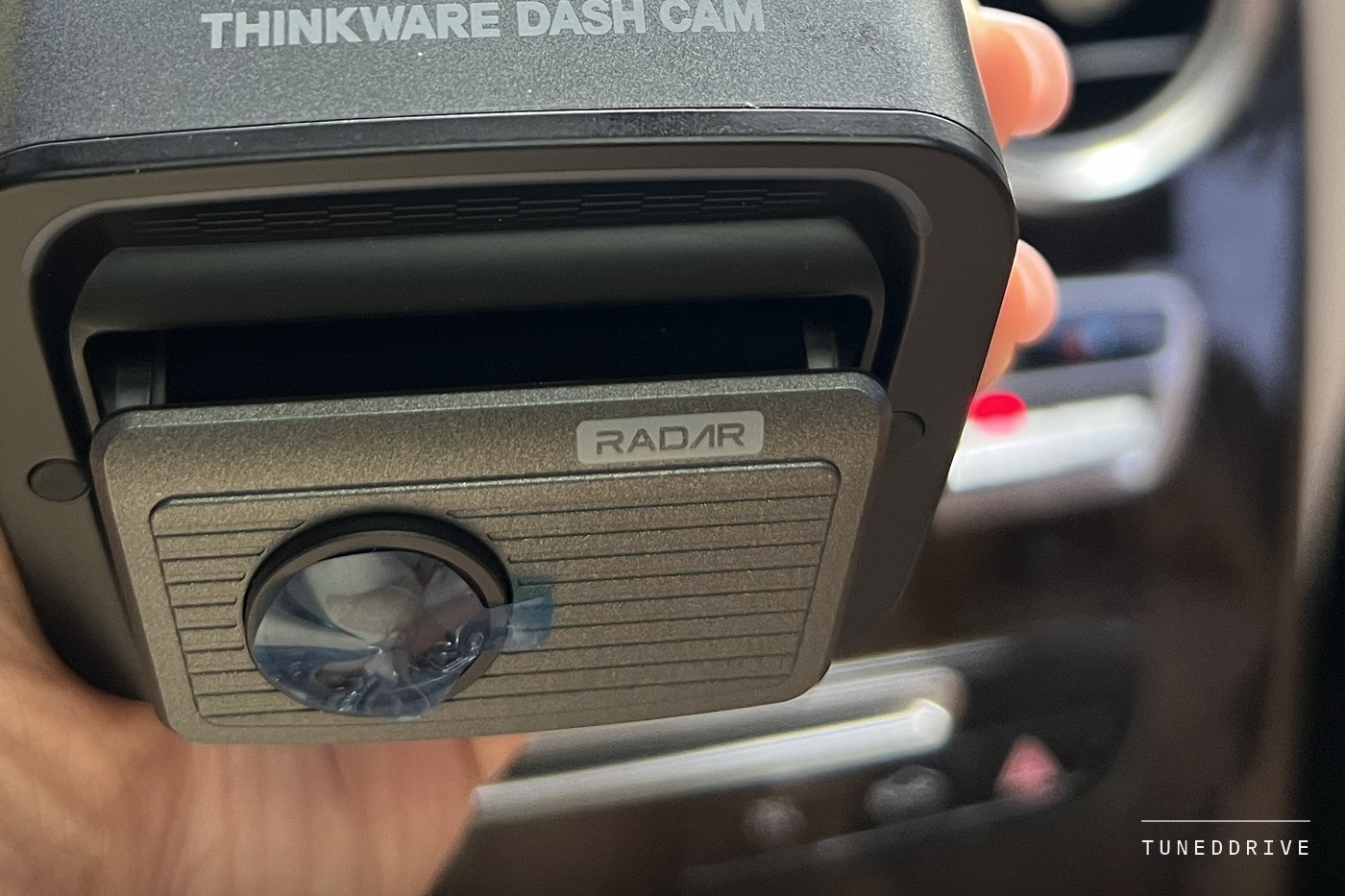
The radar is a proximity trigger, not area surveillance. Detection runs from under a metre out to about ten on the PRO's dual radar, and you set the distance, which is the right shape for catching someone who walks up to the car rather than a leaf.
Its limitation is geometric. The radar is fixed in the camera body while only the lens pivots, so rear glass close to vertical, which covers most pickups and plenty of boxy SUVs, aims it at the sky or the pavement. Mine is raked and it worked as advertised. If rear radar is your reason for buying, check your glass angle first.
Where a Month Left Me
A parking camera moves your car from drawing whatever it drew before to drawing that plus a little more, every night, with nothing charging. On a healthy battery in a car that gets driven, the margin is there and you will never think about it. On a battery in its fourth summer, the camera is not the cause of the failure, but it brings the date forward and then takes the blame.
So set the cutoff on purpose, know which chemistry is in the car, and read resting voltage on four consecutive mornings before concluding anything. Steady means leave it armed and stop thinking about it, which is the point of buying one. Walking downwards means you have found something the camera was only ever going to reveal.
Buy it if your car sleeps on a street and you have put off parking coverage because hardwiring means a shop visit. The front footage justifies the money and radar is cheap enough to leave running.
Think harder if your rear glass is near vertical, if you need rear plate detail at distance, or if the battery is already the thing you worry about.
Will radar parking mode drain my battery overnight?
Not on a healthy battery in a car that gets driven regularly. Radar keeps the image sensors asleep, and the cutoff stops the camera before the battery reaches a level it cannot start from. The risk is real on a battery that has already lost capacity.
What cutoff voltage should I choose?
12.2 volts on a healthy flooded battery, which is roughly half charge. Go to 12.4 for an AGM, a battery past three years, a cold climate, or week-long parking. Never 11.6 or 11.8 on a starting battery.
How do I tell the camera from a real drain?
Read resting voltage after the car has sat overnight. At or just under your cutoff points at the camera. Well below it points at something else, because the camera had already stopped.
Do I still need to hardwire it?
No, though a kit is still better for week-long parking because it adds a cutoff independent of the camera. Check that your car keeps the diagnostic port live with the ignition off.
More in this category
Continue at the systems desk
More from the wire