Two Weeks With a Camera Facing the Seats
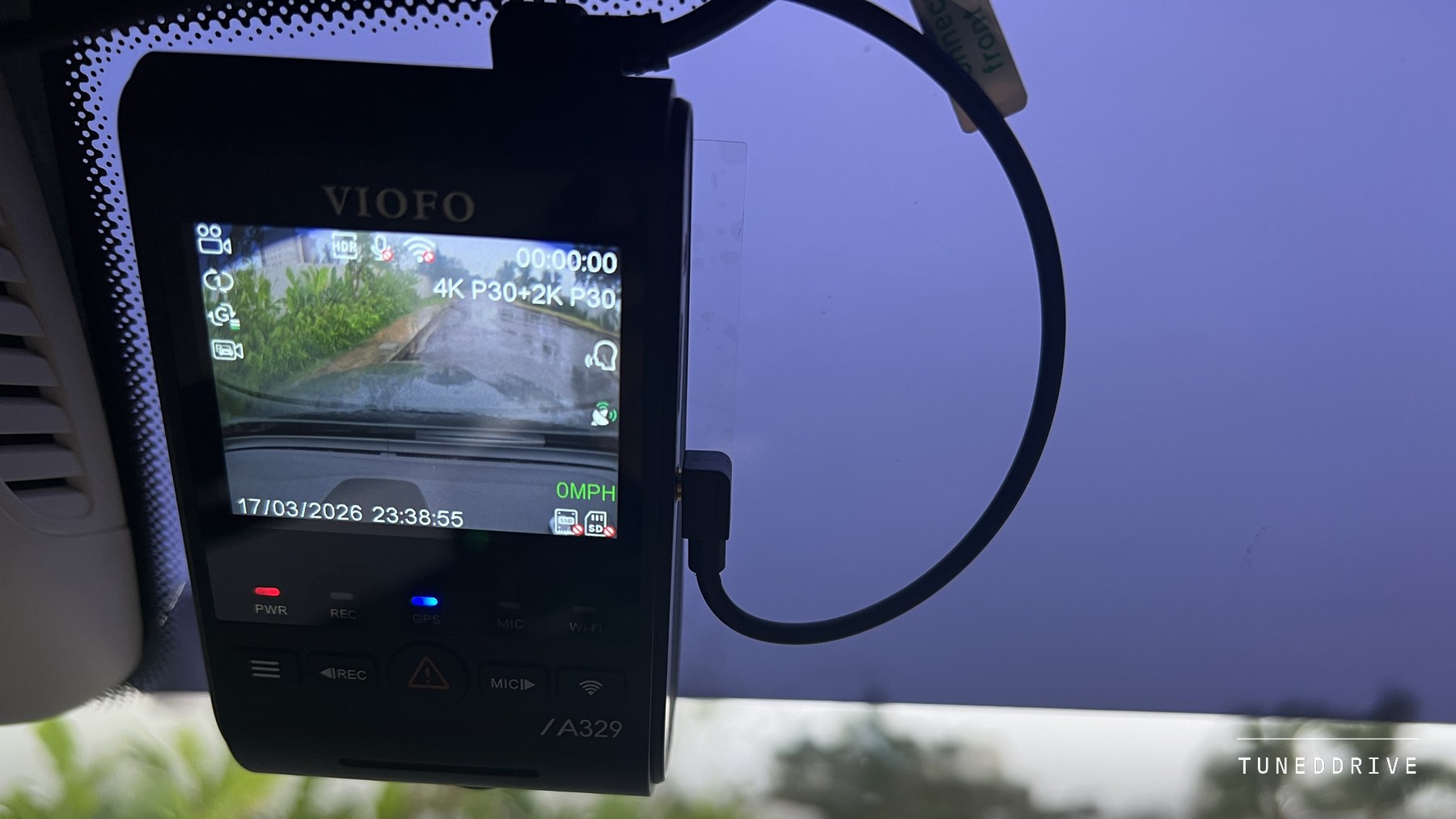
The A329S went onto my windshield as the three camera kit for two weeks of highway commutes, late drives and parking lots. Its front and rear cameras are the best I have seen on a three camera system. The third camera is why this review exists: a fisheye on the windshield that looks back at the seats, with infrared lamps of its own, recording whoever is in the car.
- Cameras
- 4K front, 2K rear, 2K infrared cabin
- Front with all three connected
- 4K at 30fps, HDR on by default
- Cabin lens
- 210 degree fisheye, F2.2, four infrared LEDs
- Sensors
- Sony STARVIS 2, IMX678 front, IMX675 rear and cabin
- Storage
- microSD to 512GB or SSD to 4TB, one at a time
- Parking power
- HK4 or HK6 hardwire kit, sold separately
- Tested
- Two weeks of daily driving
A camera facing the road needs no argument. A camera facing your passengers is a different purchase. It takes the front camera's 60fps mode, fills a memory card in hours, adds a cable and usually a hardwire kit, and points a lens at people who never agreed to it. This review is about whether that trade is worth making, and for whom.
What an Infrared Cabin Camera Is Actually For
VIOFO pitches this kit at rideshare drivers, taxis and fleets, and that is the obvious job. When a fare is disputed or a passenger turns on the driver, the cabin camera is the only witness that saw inside the car. Delivery drivers get a record of every stop, provided a hardwire kit keeps the camera running with the engine off.
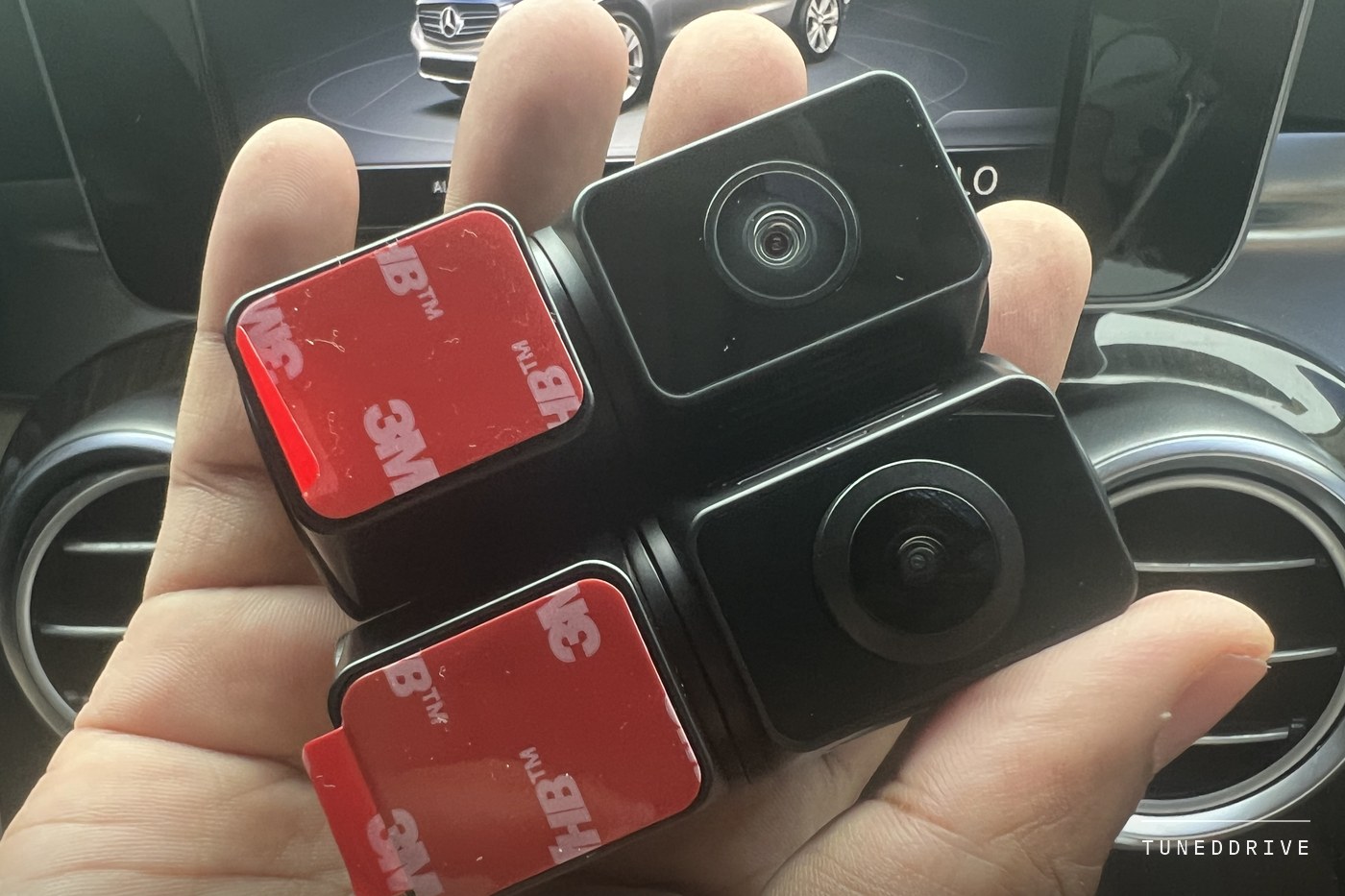
The use I did not expect is the side windows. In my footage the 210 degree lens kept the side glass in frame on both sides, which is exactly where a front and rear pair sees nothing and where a car drifting into your door does its damage. Spread that wide, 2K gives each degree less than half the front camera's detail, enough to show what happened but no promise of a plate through the side glass.
Night works because the sensor sees light your eyes do not. Sony builds STARVIS 2 for near infrared as well as visible light, and the camera's four infrared LEDs light the cabin in that band, which carries no colour, so the footage turns black and white. In my car the lamps came on by themselves as the light went, and the cabin stayed readable in complete darkness.
Know the limit. Infrared lamps light a cone, not the whole fisheye circle, and one independent measurement found the usable view closing from roughly 180 to 200 degrees to about 105 with them on. At night, count on the cabin, not the side windows.
The Front Camera Gives Up 60fps for the Third Channel
The first thing the third camera takes is frame rate. With rear and cabin cameras connected, the front records 4K at 30 frames a second. VIOFO's manual and product page say so plainly. The processor is splitting its work three ways, so 60 is reserved for one and two camera setups, and even there only with HDR off.
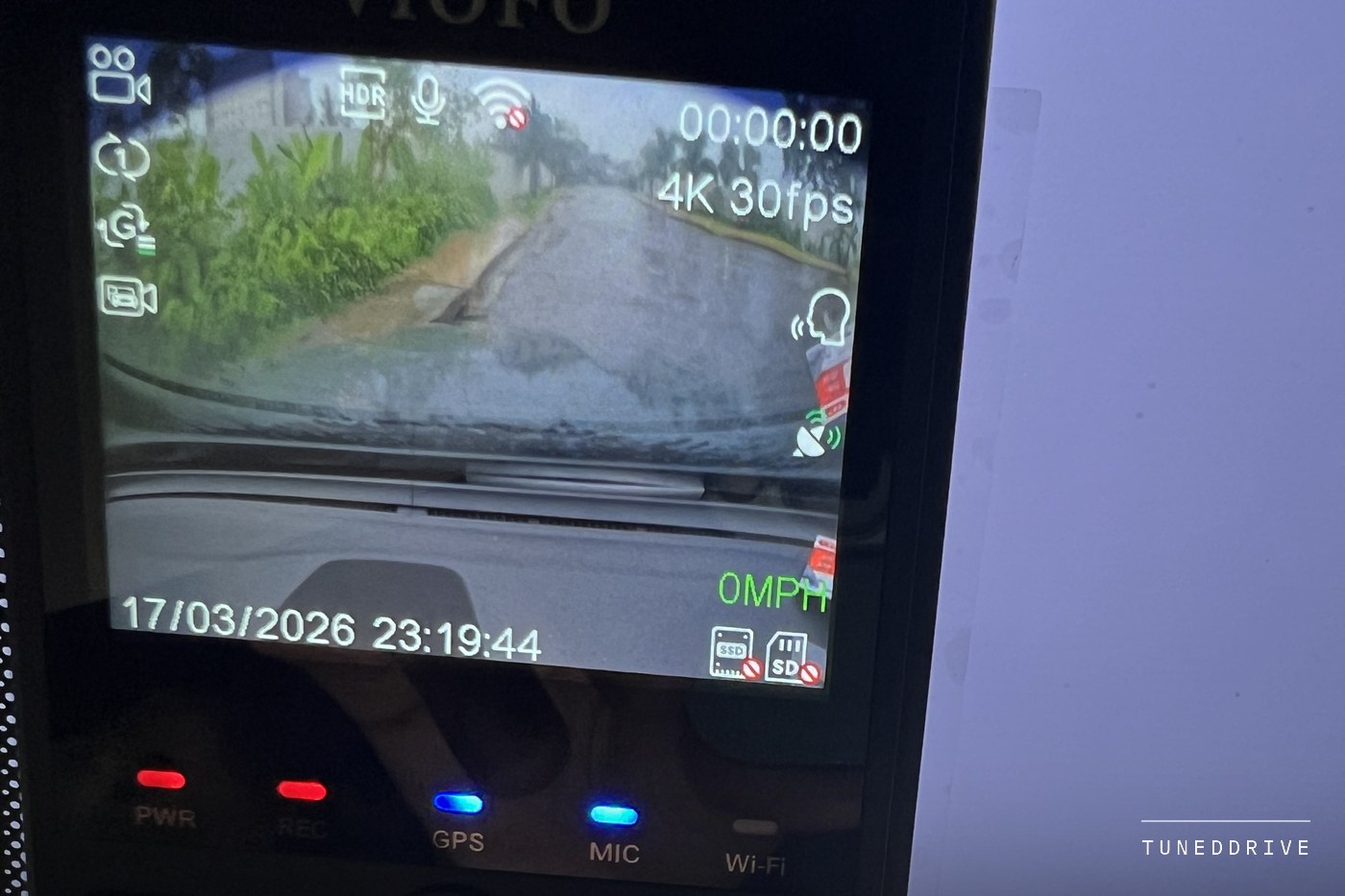
Sixty earns its keep at highway speed, where twice the frames means twice the chances at a clean plate. Thirty with HDR is the better night setting anyway. If plates at speed are the job, the two camera versions keep 60, including one that pairs the front with the cabin camera instead of the rear.
The front camera is still the reason this kit costs what it does. By day I read plates two to three car lengths ahead. At night oncoming headlights did not wash out the frame, and zooming in on the car ahead gave me its plate. The 2K rear kept plates legible at ordinary distances, and Wi-Fi 6 pulled a one minute 4K clip to my phone in under ten seconds.
Three Streams Fill a Card in Hours, Not Days
Three cameras write three files at once. VIOFO's own SSD figures at the normal bitrate work out to about 37 GB per hour of driving. At the maximum bitrate an independent tester measured one minute files of about 384 MB front and 172 MB each for rear and cabin at night, more by day, or 46 to 54 GB an hour. VIOFO's FAQ promises 15 to 20 hours on a 256GB card. Its own table says half that or less.
| Storage | Normal bitrate | Maximum bitrate |
|---|---|---|
| 128GB microSD | About 3.5 hours | About 2.5 hours |
| 256GB microSD | About 7 hours | About 5 hours |
| 512GB microSD | About 14 hours | About 10 hours |
| 1TB SSD | About 27 hours | About 20 hours |
| 4TB SSD | About 105 hours | About 80 hours |
At the normal bitrate, an eight hour rideshare shift overwrites its own first hour on a 256GB card. Size storage to the longest gap between something happening and you hearing about it. A scrape found that evening needs hours. A complaint two days later needs days, and days means the SSD.
The SSD has conditions. It needs a separately sold cable, VIOFO recommends the hardwire kit to power it, and the camera records to the SSD or the card, never both. Hybrid and low power parking files go only to the card, so you still need one. The camera can also copy the card's last 24 hours or 7 days to the SSD.
Whatever you fit, lock what matters when it happens. An impact locks the current file itself, the protect button does it by hand, and locked files sit where the loop cannot overwrite them.
Wiring Three Cameras Is Two Long Runs and One Short One
Power runs from the front unit to the socket or fuse box, and the rear cable runs the length of the headliner to the back glass. The cabin camera sits on the windshield beside the front unit on a one metre lead, so its run is barely a run, and it turns on its mount to aim at the back seats or a side window.
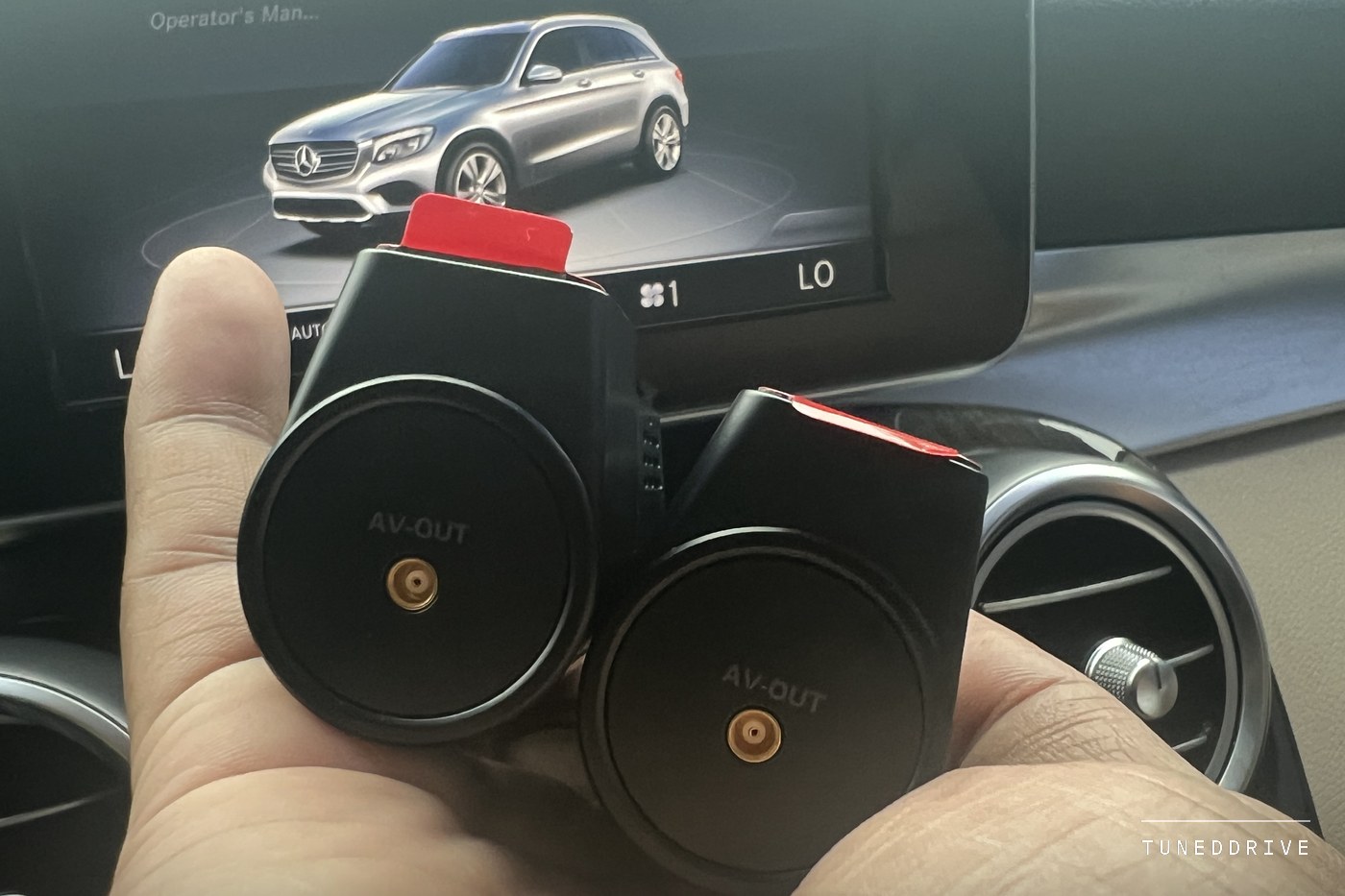
Size the rear cable when you order. VIOFO offers 6 metres for a sedan, 8 for a mid-size SUV, 10 for a large one, 15 for a van and 20 for commercial vehicles. The coaxial cable is 2.8 mm thick, and on my car it went along the headliner and down the pillar more easily than any dash cam cable I had fitted before, and looked close to factory once tucked.
On the included charger, plan on twenty to thirty minutes to be recording and longer to hide the wiring properly. With the hardwire kit, allow about two hours, most of it spent hiding cable. The charger has a second USB-C port, so the phone still gets one.
The Hardwire Kit Decides What the Parked Car Gets
On the charger the camera records while you drive and stops when you park. Parking modes need constant power from the fuse box through VIOFO's HK4 or HK6 kit, and neither is in the box. The HK4 covers motion detection, time lapse and low bitrate recording on a timer. Only the HK6 adds hybrid parking, the cut-off voltage and a live battery reading on the video.
Hybrid is the mode worth paying for. It records in time lapse, low bitrate or motion detection for a set time or down to a set voltage, then drops into low power impact detection, which sleeps until the car is hit, wakes in about two seconds and records a minute. VIOFO rates that sleep under 40 mA, and an independent bench test agreed, against about ten times that for continuous low bitrate recording. Cut-off choices are 12.4, 12.2 and 12.0 volts.
The cabin camera has its own parking setting. Only On while Parking records the interior when nobody should be in it and leaves it alone while you drive, which suits a family car parked in a lot overnight.
For most people, fitting the kit is shop work. It needs a fuse that stays live with the ignition off, one that goes live only with it on, and a clean ground, and finding them means probing fuses with a circuit tester. VIOFO warns that some slots run airbags, stability control and the horn and should be left alone. The HK6 is sold with a choice of fuse taps, so check your fuse box first, and VIOFO puts a shop install at 30 to 60 minutes.
The Rules for Recording Passengers Depend on Where You Drive
Start with sound, because the law usually does. The microphone is in the front unit, so a dash cam with audio on was always recording the car. The cabin camera adds a picture of who is talking. Federal law allows recording a conversation with the consent of one party to it, and about eleven states require everyone's. Either way the consent comes from someone in the conversation, and two passengers talking to each other are not talking to you.
Consent rules generally apply where people reasonably expect privacy, and whether a back seat qualifies has local answers. This is the shape of the question, not legal advice, so check your state and city.
The platforms add their own rules. Uber allows dashcams, offers stickers that tell riders, says some places require riders to consent or be told in advance, and treats sharing a rider's image or recording on social media as a violation. Lyft says recording devices may fall under local regulations and bans broadcasting anyone's image or recording without express prior consent.
In the UK, the data protection regulator tells businesses to put a sign in the vehicle and keep dashcam audio off by default. Infrared makes notice matter more. VIOFO says the lamps give off no visible light, so at night a passenger cannot see the camera working. Mine came with a warning sticker. Put it where a passenger reads it before the door closes.
The Settings That Keep the Cabin Camera Fair
Most of what fairness to passengers needs is already in the menu.
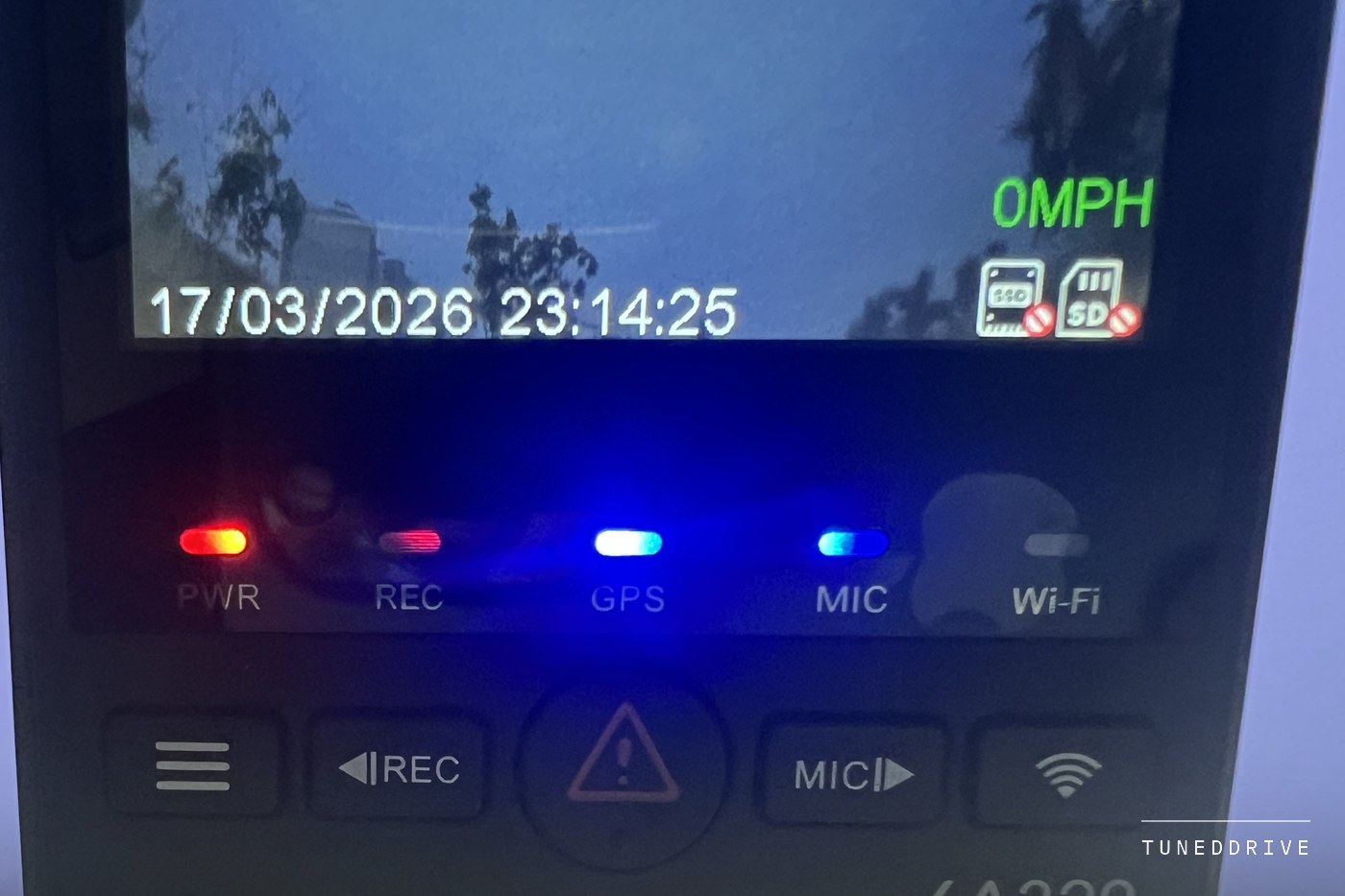
- Record Audio off unless you have a reason and have told people. One press of the microphone button switches it. Turn Off Audio also works by voice, though voice control struggled over music or an open window in my car.
- Interior Camera on, off, Only On while Driving or Only On while Parking, to match who rides with you.
- IR LED on Auto. If you switch the cabin camera off, switch the lamps off too, since on at least one early firmware they kept running.
- Privacy Mode keeps only the six newest normal files on three channels, about the last two minutes from each camera.
- G-sensor on low while driving, as VIOFO recommends, so potholes do not fill the locked folder.
- A high endurance card and the Format Reminder at 15 or 30 days, since VIOFO advises formatting periodically.
The last setting is a habit. A 4TB drive invites keeping everything. Lock what matters the day it happens, download it and let the loop do its job. The UK regulator's rule of thumb, about a week when nothing has happened, is a sensible default anywhere.
Where Two Weeks Left Me
The A329S 3CH is two excellent road cameras and one camera that changes what the product is for. If strangers ride in your car, or you want the side windows on record, the cabin camera is worth what it costs, frame rate included. If you mostly drive alone, it watches an empty seat.
Whichever you buy, the work is the same: a card sized to how late you would find out, the hardwire kit if the parked car matters, and a notice if anyone rides with you who did not choose the camera.
Buy the 3CH if you carry passengers who are not family, or if a side impact is the incident you worry about.
Buy a two camera A329S if you mostly drive alone on highways. You keep 60fps, store less, and can add the cabin camera later.
Does the front camera record 4K at 60fps with all three cameras?
No. With rear and cabin cameras connected it records 4K at 30fps with HDR. 60fps needs a one or two camera setup with HDR off.
What size card do I need for three channels?
About seven hours of driving fit on a 256GB card at the normal bitrate, and about fourteen on 512GB. Size it to how late you would hear about an incident, and add an SSD if that means days.
Can passengers see the infrared lamps at night?
VIOFO says they give off no visible light, which is why the warning sticker from the box belongs where passengers see it.
Is it legal to record my passengers?
It depends where you drive. Audio is usually the more regulated part, about eleven US states require everyone's consent to record a conversation, and Uber and Lyft add their own rules. This is general information, not legal advice.
More in this category